


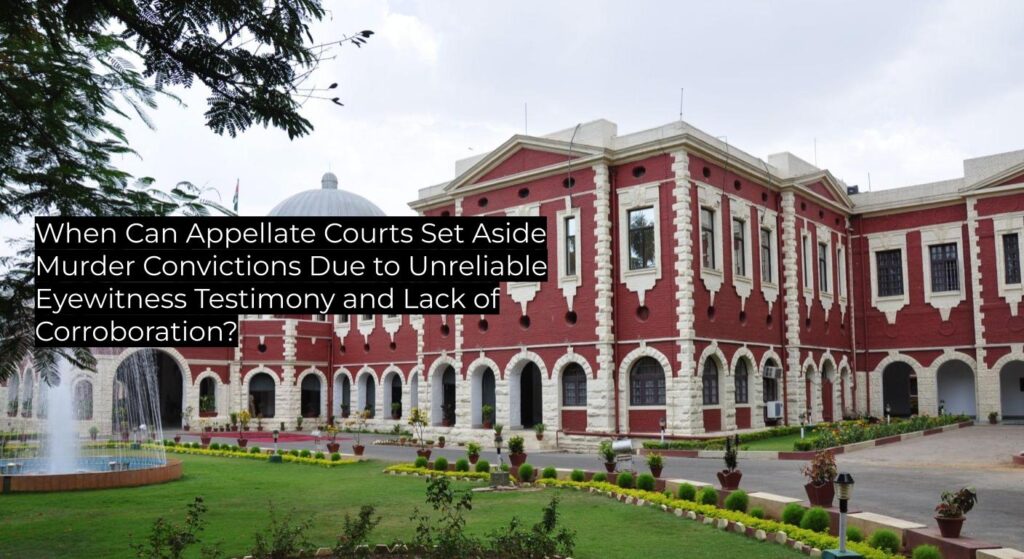
The High Court clarified that, where the entire prosecution evidence consists mainly of hearsay witnesses or is marred by contradictions, lack of corroborative forensic evidence, and absence of proven motive, the conviction for murder under Sections 302/149 IPC cannot be sustained. The court set aside the conviction, reaffirming and applying existing evidentiary principles for criminal adjudication. This judgment serves as binding authority for all subordinate courts in Jharkhand.
Summary
| Category | Data |
|---|---|
| Case Name | Cr.A(DB)/778/2002 of Bandhana Oraon And ORS. Vs STATE OF JHARKHAND |
| CNR | JHHC010088942002 |
| Date of Registration | 20-11-2002 |
| Decision Date | 30-10-2025 |
| Disposal Nature | Allowed |
| Judgment Author | HON’BLE MR. JUSTICE RONGON MUKHOPADHYAY, HON’BLE MR. JUSTICE PRADEEP KUMAR SRIVASTAVA |
| Court | High Court of Jharkhand |
| Bench | Division Bench: JUSTICE RONGON MUKHOPADHYAY, JUSTICE PRADEEP KUMAR SRIVASTAVA |
| Precedent Value | Binding on subordinate courts in Jharkhand |
| Type of Law | Criminal Law (Indian Penal Code, Evidence Act, Criminal Procedure Code) |
| Questions of Law | Whether conviction under Sections 302/149 IPC can be sustained where most witnesses are hearsay, evidence is inconsistent, and corroboration is lacking? |
| Ratio Decidendi |
The court concluded that prosecution evidence relied predominantly upon hearsay testimony from family members, and the only purported eyewitnesses (informant and his wife) gave contradictory accounts that cast doubt on their reliability. No independent or village witness corroborated the occurrence, and no credible forensic evidence (such as an F.S.L. report linking the seized articles to the crime) was presented. The prosecution failed to establish motive or prior enmity. The post-mortem findings did not correspond to the manner of assault alleged. The court found it legally unsafe to sustain the conviction, holding that the trial court erred in law by selectively appreciating evidence and ignoring contradictions and lack of corroboration. |
| Facts as Summarised by the Court |
The deceased was allegedly assaulted and killed by multiple accused with various weapons; most witnesses were related to the deceased, and their testimony was contradicted or hearsay. The only claimed eyewitnesses gave inconsistent accounts. Forensic corroboration was absent, and motive was not established. |
Practical Impact
| Category | Impact |
|---|---|
| Binding On | All subordinate courts in Jharkhand |
| Persuasive For | Other High Courts considering similar evidentiary issues |
What’s New / What Lawyers Should Note
- The judgment emphasizes the inadmissibility of heavily hearsay, non-corroborated witness testimony to sustain convictions for serious offences like murder.
- Contradictory accounts—even by purported eyewitnesses—must be carefully scrutinized, and lack of immediate reporting or forfeiture of corroborative opportunities (like prompt police intimation or informing villagers) may be fatal to prosecution.
- Failure to present forensic corroboration (such as F.S.L. analysis of blood-stained exhibits) weakens the evidentiary chain.
- Trial courts must not selectively appreciate prosecution evidence but must consider contradictions and lack of material corroboration holistically.
- Acquittal is warranted where the prosecution fails to prove motive, manner, or participation beyond reasonable doubt due to unreliable, self-contradictory testimony.
Summary of Legal Reasoning
- The court undertook a detailed analysis of the oral testimony presented by the prosecution, observing that the main witnesses were all close relatives of the deceased, mostly providing hearsay accounts.
- The only two witnesses who claimed to be eyewitnesses (the informant and his wife) gave inconsistent and mutually contradictory accounts, including on when they reported the offence and whether they remained inside their house during the occurrence.
- No independent villagers were cited or examined as witnesses; neither any villagers were told about the occurrence promptly nor did any come forward.
- Forensic evidence (the blood-stained soil and the deceased’s clothes) was neither linked through an F.S.L. report nor otherwise shown to confirm any connection to the accused.
- The post-mortem report (which described injuries consistent with hard, blunt object trauma) clashed with the prosecution story of indiscriminate assault with a mix of sharp and blunt weapons.
- The prosecution could not establish any motive or prior enmity between the accused and the deceased.
- The court found that the trial court had failed to appraise the prosecution evidence as a whole, ignoring major contradictions and lack of corroboration, and thus held that conviction could not be legally sustained.
Arguments by the Parties
Petitioner (Appellants):
- All main prosecution witnesses are family members and their evidence is hearsay, not genuinely eyewitness.
- The only purported eyewitnesses gave inconsistent versions, both as to their presence and reporting of the occurrence.
- No incriminating articles or weapons linking the accused to the offence were recovered.
- The trial court wrongly appreciated prosecution evidence in isolation, ignoring material contradictions.
Respondent (State):
- The trial court correctly appreciated and analyzed the evidence, properly convicting the appellants.
- No illegality or infirmity exists in the judgment and no ground for appellate interference is made out.
- The suggestion of false implication due to enmity is baseless.
Factual Background
On 9 February 2001, the deceased, Ramji Oraon, was allegedly attacked and killed near the informant’s home as he returned from Kashir Bazar. The prosecution alleged that multiple accused, armed with different weapons, assaulted the deceased, with the informant and his wife claiming to have witnessed part of the incident. Most prosecution witnesses were family members who provided either hearsay or inconsistent accounts. The FIR was registered under Sections 147, 148, 149, and 302 of the IPC. Following trial, the appellants were convicted and sentenced to life imprisonment, which was challenged in this appeal.
Statutory Analysis
- The court considered Sections 302 and 149 of the IPC (murder with common object by an unlawful assembly).
- Standard for appreciation of evidence, including assessment of hearsay, contradictions, and corroboration, referenced through general principles under the Indian Evidence Act.
- The necessity for corroborative forensic evidence (such as F.S.L. reports) was discussed in context of establishing guilt beyond reasonable doubt.
Dissenting / Concurring Opinion Summary
No separate dissenting or concurring opinions were recorded in the judgment.
Procedural Innovations
No new procedural innovations or guidelines were set in this judgment.
Alert Indicators
- ✔ Precedent Followed – The decision reaffirmed settled standards of evidence-appreciation and the necessity for corroboration and credible eye-witness testimony in criminal convictions.