


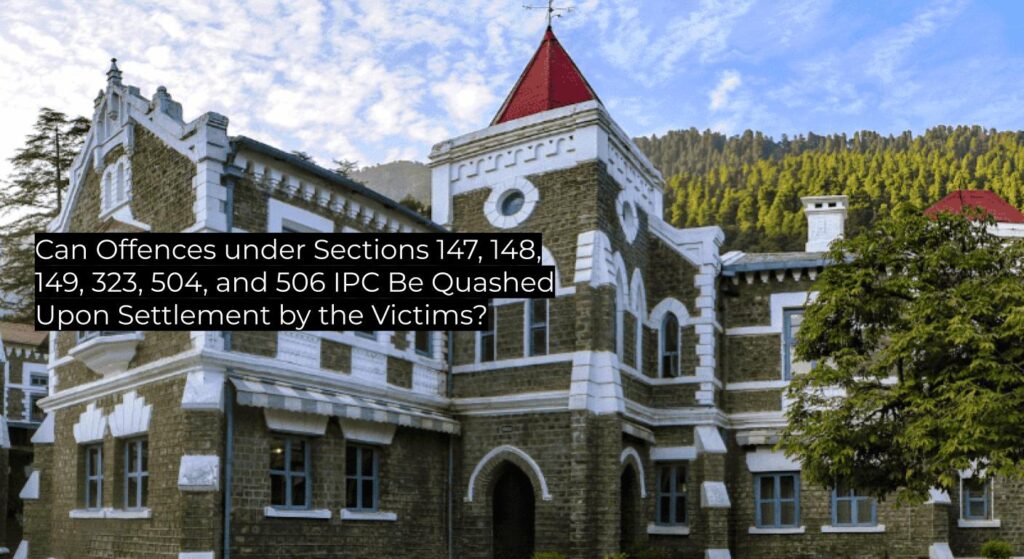
The Uttarakhand High Court affirms that criminal proceedings under Sections 147, 148, 149, 323, 504, and 506 IPC can be quashed where victims and accused have compounded the offences voluntarily and without coercion. This judgment, applying Section 528 of the Bharatiya Nagarik Suraksha Sanhita, 2023, upholds existing precedent on settlement-based quashing and serves as binding authority for subordinate courts in Uttarakhand.
Summary
| Category | Data |
|---|---|
| Case Name | C528/1646/2025 of GAYYUR AND ORS Vs STATE OF UTTARAKHAND CNR UKHC010145562025 |
| Date of Registration | 15-09-2025 |
| Decision Date | 29-10-2025 |
| Disposal Nature | ALLOWED |
| Judgment Author | HON’BLE MR. JUSTICE ALOK KUMAR VERMA |
| Court | High Court of Uttarakhand |
| Bench | Single Judge Bench |
| Precedent Value | Binding on subordinate courts in Uttarakhand |
| Type of Law | Criminal Law (Quashing of proceedings, Compounding of offences, BNSS 2023) |
| Questions of Law | Whether criminal proceedings under Sections 147, 148, 149, 323, 504, and 506 IPC can be quashed where parties have compounded the offences. |
| Ratio Decidendi | The court held that in cases where the informant and all injured persons have compounded the specified offences voluntarily and without coercion, and have affirmed so by affidavits, criminal proceedings can be quashed. The lack of opposition from the State supports the conclusion that quashing serves the ends of justice. The court applied Section 528 of the BNSS, 2023, granting such relief. |
| Facts as Summarised by the Court | Applicants and all victims appeared via video conferencing, identified by their respective counsel. Both sides filed affidavits stating voluntary settlement and seeking quashing. The State did not oppose the application. |
Practical Impact
| Category | Impact |
|---|---|
| Binding On | All subordinate courts in Uttarakhand |
| Persuasive For | Other High Courts; may be cited before Supreme Court |
What’s New / What Lawyers Should Note
- The court recognizes settlement-based compounding as a valid basis for quashing proceedings for offences under Sections 147, 148, 149, 323, 504, and 506 IPC.
- Application of Section 528 of the Bharatiya Nagarik Suraksha Sanhita, 2023, is affirmed as the procedural foundation for quashing.
- The voluntary nature of compounding, evidenced by affidavits and unopposed by the State, is key for the exercise of inherent powers to quash criminal cases.
- This order sets a clear precedent for future quashing petitions involving similar offences and settlements in Uttarakhand.
Summary of Legal Reasoning
- The court noted the appearance of all accused and the informant/injured parties via video conferencing, identified by counsel.
- Both applicants and victims filed affidavits confirming voluntary settlement, compounding the offences without pressure.
- The State was represented but did not oppose the application for quashing.
- The court found that the totality of circumstances—including the parties’ requests and affidavits—justified quashing to serve the ends of justice.
- Section 528 of the BNSS, 2023 was cited as the legal basis for the court’s inherent powers to quash criminal proceedings in such settlement cases.
Arguments by the Parties
Petitioner
- All applicants and victims have compounded the said offences.
- Compounding and settlement affidavits submitted were given of their own free will and without any pressure.
- A joint request was made to quash the entire proceedings of the relevant criminal case.
Respondent (Informant and Injured)
- Confirmed the offences have been compounded.
- Affidavits filed indicating voluntary settlement.
- Requested quashing of the proceedings.
State
- No opposition to the quashing application.
Factual Background
The case concerned a criminal prosecution pending before the Judicial Magistrate / Ist Additional Civil Judge, Roorkee, District Haridwar, under Sections 147, 148, 149, 323, 504, and 506 of the IPC. During pendency, all applicants and victims/injured parties appeared via video conferencing and, through affidavits, stated that the offences had been compounded voluntarily. The State, through its counsel, did not oppose the quashing application.
Statutory Analysis
- The court considered Section 528 of the Bharatiya Nagarik Suraksha Sanhita, 2023. This provision confers power upon the High Court to quash criminal proceedings when it is deemed necessary to serve the ends of justice.
- No other statutes or constitutional provisions were analyzed or interpreted in the judgment.
Dissenting / Concurring Opinion Summary
No dissenting or concurring opinions were recorded in the judgment.
Procedural Innovations
- The court relied on the voluntary presence of all parties via video conferencing, as well as the submission of affidavits from both sides confirming free will in reaching the settlement.
- Amended memo and compounding application were admitted and processed.
- No new procedural innovations or guidelines were set forth beyond established practice.
Alert Indicators
- ✔ Precedent Followed – Existing law regarding quashing upon settlement for specified compoundable offences is affirmed.
- 📅 Time-Sensitive – Proceedings quashed expeditiously upon settlement and application.