


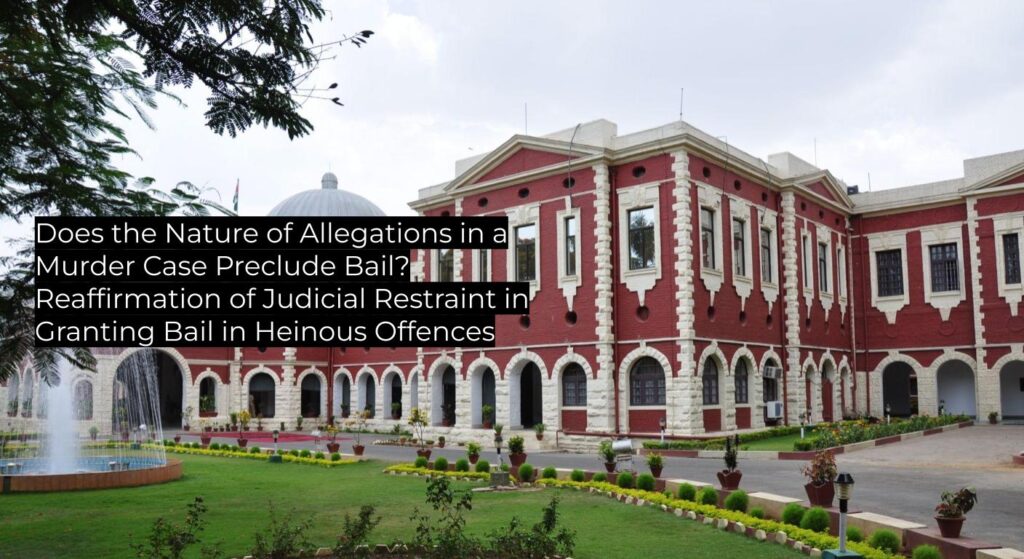
The High Court of Jharkhand, reaffirming existing precedent, has refused bail in a murder case involving allegations of a father killing his child based on suspicions regarding legitimacy. The judgment upholds a strict interpretation of bail jurisprudence in grave offences under Section 302 IPC, reinforcing that the seriousness of allegations takes precedence. This decision serves as binding authority on subordinate courts and carries persuasive value for courts addressing bail in similar murder cases.
Summary
| Category | Data |
|---|---|
| Case Name | B.A./7325/2025 of DEEPAK KUJUR Vs THE STATE OF JHARKHAND |
| CNR | JHHC010251052025 |
| Date of Registration | 06-08-2025 |
| Decision Date | 30-10-2025 |
| Disposal Nature | Rejected |
| Judgment Author | Hon’ble Mr. Justice Ambuj Nath |
| Court | High Court of Jharkhand |
| Bench | Single Bench |
| Precedent Value |
|
| Type of Law | Criminal Law (Bail in cases registered under Section 302 IPC) |
| Questions of Law | Whether bail can be granted where the accused allegedly murdered his daughter on suspicion of illegitimacy, in a case under Section 302 IPC. |
| Ratio Decidendi |
The nature and seriousness of the allegations, specifically involving Section 302 IPC and an alleged honour killing, weigh heavily against the grant of bail. The court reiterated that for grave and heinous offences like murder, especially those involving a violent act within the family, the accused is not ordinarily entitled to bail. Consideration of the gravity of accusation supersedes other bail factors in such cases. The allegations against the petitioner warranted denial of bail at the pre-trial stage. |
| Facts as Summarised by the Court | The petitioner, accused in S.T. Case No. 22 of 2024, allegedly murdered his daughter, suspecting her to be an illegitimate child. Offence registered under Section 302 IPC. Bail sought before trial. |
Practical Impact
| Category | Impact |
|---|---|
| Binding On | All subordinate courts in Jharkhand (in bail applications under Section 302 IPC) |
| Persuasive For | Other High Courts and the Supreme Court in similar cases |
What’s New / What Lawyers Should Note
- Reaffirms that in bail applications involving Section 302 IPC, especially in cases of alleged honour killing, courts will primarily consider the gravity and nature of the offence.
- Highlights the court’s disinclination to grant bail in cases where familial relationships are at the core of the alleged murder.
- Lawyers should be aware that petitions for bail in murder cases, particularly those with aggravating factors like suspected illegitimacy, are unlikely to succeed at the High Court stage unless exceptional circumstances are shown.
Summary of Legal Reasoning
- The court considered the gravity of the offence, specifically the allegation of murder of the petitioner’s own daughter on suspicion of her legitimacy.
- Emphasised that in cases under Section 302 IPC, the seriousness of the accusation is the paramount consideration.
- No extenuating or mitigating factors were pleaded or found on record that could warrant bail.
- The court therefore declined to exercise its discretion to grant bail, finding no justification in view of the nature of the accusations.
Factual Background
The petitioner, Deepak Kujur, was accused in a case pending before the Additional Sessions Judge-I, Latehar. The prosecution alleged that he murdered his daughter because he suspected that she was not his legitimate child. The offence was registered under Section 302 IPC (murder). The bail application was moved pending trial.
Statutory Analysis
- Section 302 of the Indian Penal Code was the relevant statutory provision implicated, concerning the offence of murder.
- The court strictly applied the standards for bail in cases involving grave offences under this section, refraining from granting bail due to the serious allegations.
Alert Indicators
- ✔ Precedent Followed – The judgment follows established principles regarding denial of bail in grave and heinous offences like murder.