Can Petition Be Dismissed as Infructuous When Parties Settle Amicably During Proceedings? (No Change or Clarification to Existing Law—Order as per Binding Practice)

Where parties inform the court of amicable settlement during pendency of petition, the matter may be dismissed as infructuous. This judgment does not lay down any new precedent or overrule any prior law, but applies existing practice. Its utility lies in reaffirming the established procedure for similar situations involving civil petitions, and does not create […]
Does a Deferral of Scheduled Elections and Acceptance of Nomination Papers Pursuant to Government Notification Render Related Writ Petitions Infructuous?

The Court held that, once the government notification defers the election and directs acceptance of a candidate’s nomination papers, any writ challenging denial of nomination becomes unnecessary and is to be disposed of. The decision upholds existing practice and affirms that such writs become infructuous. This precedent is relevant for election law matters in Haryana […]

Does the Second Proviso to Section 23(2) of the RTE Act Apply to Untrained Fresh Teacher Candidates in Belated Selection Processes?

The Calcutta High Court has ruled that the second proviso to Section 23(2) of the Right of Children to Free and Compulsory Education Act, 2009, is applicable only to in-service teachers and does not extend to fresh candidates lacking teacher training qualifications at the relevant time. The Court declined to entertain claims for appointment by […]

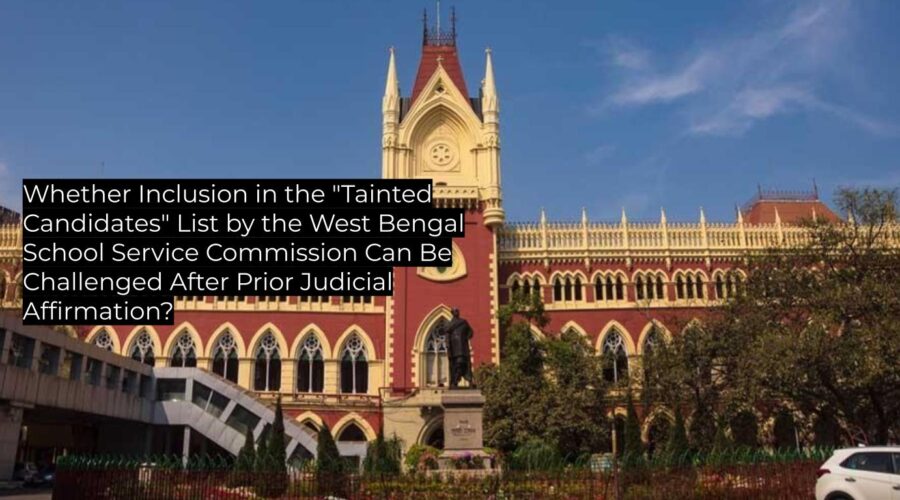
Whether Inclusion in the “Tainted Candidates” List by the West Bengal School Service Commission Can Be Challenged After Prior Judicial Affirmation?

Candidate challenge to inclusion in the “tainted candidates” list under the 1st State Level Selection Test, 2016, is not maintainable where the issue has been conclusively decided by a prior judgment, affirmed by the Division Bench and Supreme Court. This judgment upholds prior precedent, providing binding authority for all similar cases in West Bengal education […]

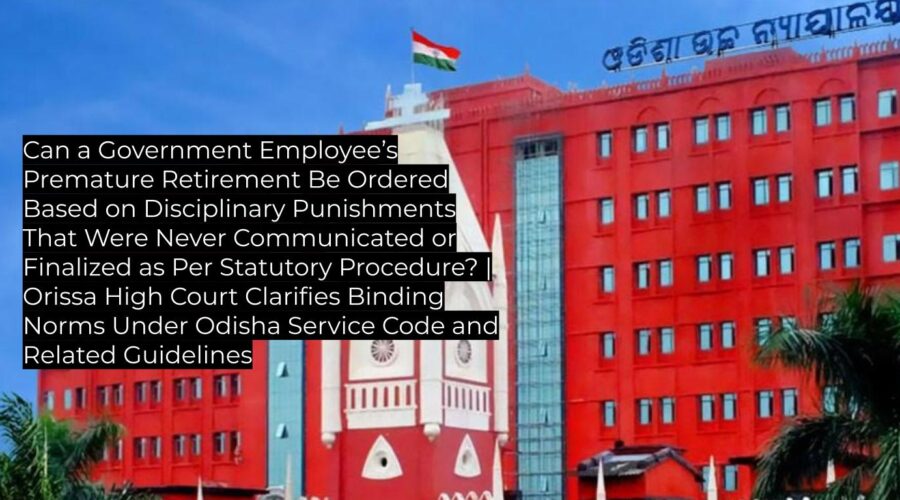
Can a Government Employee’s Premature Retirement Be Ordered Based on Disciplinary Punishments That Were Never Communicated or Finalized as Per Statutory Procedure? | Orissa High Court Clarifies Binding Norms Under Odisha Service Code and Related Guidelines

The Orissa High Court has held that premature retirement cannot be based on disciplinary punishments not duly communicated and finalized, nor can a Review Committee consider such matters after the stipulated review period has lapsed. The judgment reinforces that statutory guidelines and procedural safeguards must be strictly followed, reaffirming established precedent as binding authority for […]

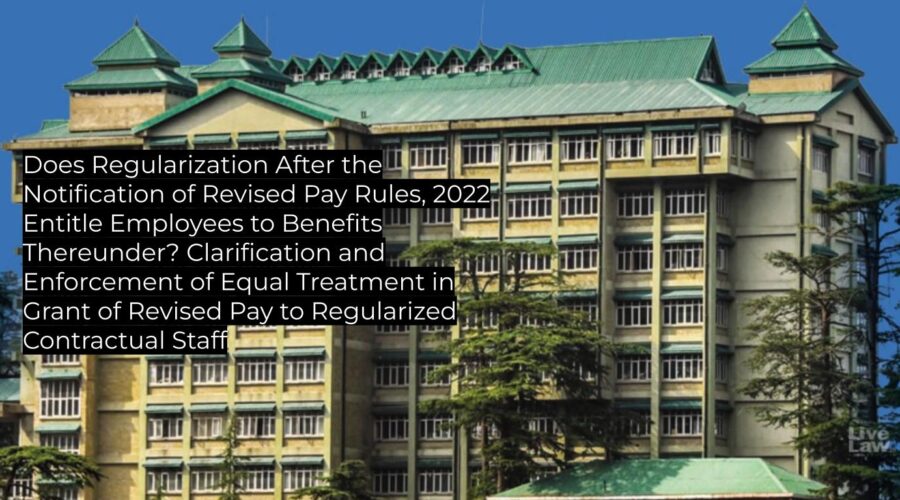
Does Regularization After the Notification of Revised Pay Rules, 2022 Entitle Employees to Benefits Thereunder? Clarification and Enforcement of Equal Treatment in Grant of Revised Pay to Regularized Contractual Staff

The Himachal Pradesh High Court reaffirms that employees who are regularized after the promulgation of the Revised Pay Scale Rules, 2022 (including the insertion of Rule 7(A)), are entitled to higher/revised pay from the date of their regularization, provided they fulfill eligibility criteria. This clarifies and enforces non-discrimination among regular employees regardless of their initial […]

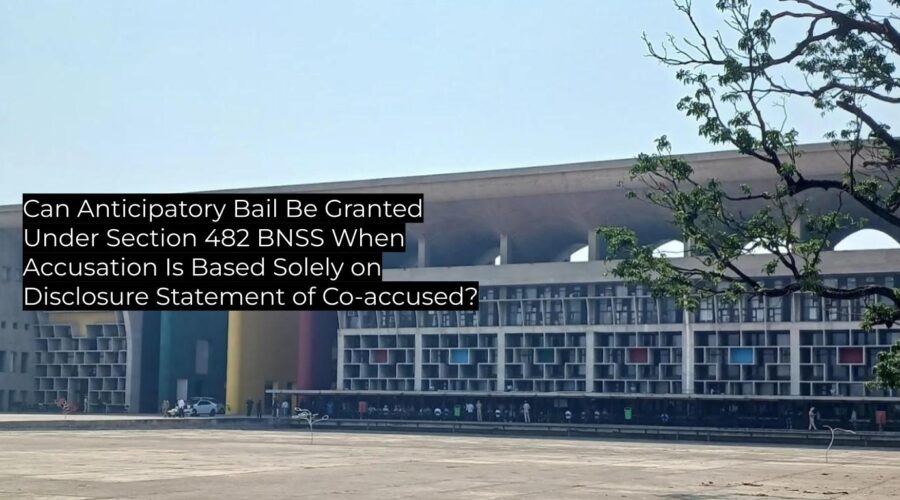
Can Anticipatory Bail Be Granted Under Section 482 BNSS When Accusation Is Based Solely on Disclosure Statement of Co-accused?

Court affirms the grant of anticipatory bail under Section 482 of the Bharatiya Nagarik Suraksha Sanhita, 2023, where the only linkage of the accused to the offence is a co-accused’s disclosure statement and the accused has cooperated with the investigation. The Court follows existing Supreme Court and High Court precedents, confirming their continued applicability to […]

Can Pre-Arrest (Anticipatory) Bail Be Made Absolute Under Section 482(2) of BNSS After the Petitioner Joins Investigation?

The High Court affirmed that pre-arrest/anticipatory bail granted under Section 482(2) of BNSS may be made absolute once the petitioner has joined investigation and is not required for further custodial interrogation. This decision affirms existing anticipatory bail standards, clarifies application under BNSS 2023, and will serve as binding precedent for future bail matters under similar […]

Does Joining Investigation and the Absence of Custodial Interrogation Requirement Mandate Grant of Anticipatory Bail under Section 482 BNSS, 2023? — Confirmation of Interim Bail Subject to Statutory Conditions

The High Court of Punjab and Haryana holds that interim anticipatory bail, once granted on the petitioner’s joining of investigation and a statement of the State that custodial interrogation is not required, can be made absolute subject to compliance with Section 482(2) of BNSS, 2023. The judgment applies existing principles to a new statutory context […]

Can Parity with a Co-Accused Already Granted Bail Be the Sole Ground for Granting Regular Bail in Non-Bailable Offences Involving Serious Charges?

The Punjab & Haryana High Court confirms that when a co-accused with a similar role has already been granted bail and there is no distinguishing factor, parity may be a sufficient ground for granting bail to similarly placed accused—even in serious offences under the IPC. This reaffirms settled law and serves as binding precedent for […]

Can a Second Appeal Be Dismissed Solely for Non-Prosecution?

The High Court reiterates that an appeal may be dismissed where the appellant fails to pursue it, including instances of repeated absence and dilatory tactics. This order follows settled procedure and maintains well-established principles regarding non-prosecution. The judgment carries binding value for subordinate courts deciding similar issues.   Summary Category Data Case Name RSA/1441/1998 of […]

Is Withholding of Gratuity from a Nominee Permissible Pending Verification of Legal Heir Status? Legal Clarification by the Calcutta High Court

The Calcutta High Court clarifies that an employer’s obligation to release gratuity to a nominee is statutory and cannot be withheld merely due to doubts regarding marital status or legal heirship; family pension, however, may require further verification. This judgment affirms existing statutory mandates under the Payment of Gratuity Act, 1972, and serves as binding […]