Can a Writ of Mandamus Be Issued to Enforce Appointment on a Discontinued Government Scheme? (Clarifying the Non-Grant of Relief after Cessation of Scheme)

Where an appointment scheme is discontinued, no writ can be issued for appointment under it—even if the petitioner’s claim was earlier recommended or decided in their favour. This judgment affirms existing precedent and is binding authority for all subordinate courts in Punjab and Haryana on writ relief for ceased contractual or scheme-based posts in the […]
Does Completion of Formalities by a Consumer Mandate Timely Electricity Connection, Absent Contravention or Legal Hurdles?

The Calcutta High Court reaffirms that, where a consumer has undisputedly completed all required formalities, the distribution licensee must provide the electricity connection within a specified time, barring statutory or way-leave issues. This is binding on subordinate courts and serves as a precedent for summary writ disposal in service connection disputes under electricity law.   […]

When Will an Appeal Be Dismissed for Non-Prosecution in Civil Litigation?

Clarifies that the High Court may dismiss a regular second appeal for non-prosecution when an appellant repeatedly fails to prosecute the case, adopts a casual attitude, or does not demonstrate genuine interest in the litigation. Judgment upholds established precedent and reinforces existing procedures; binding on subordinate courts within Punjab & Haryana.   Summary Category Data […]

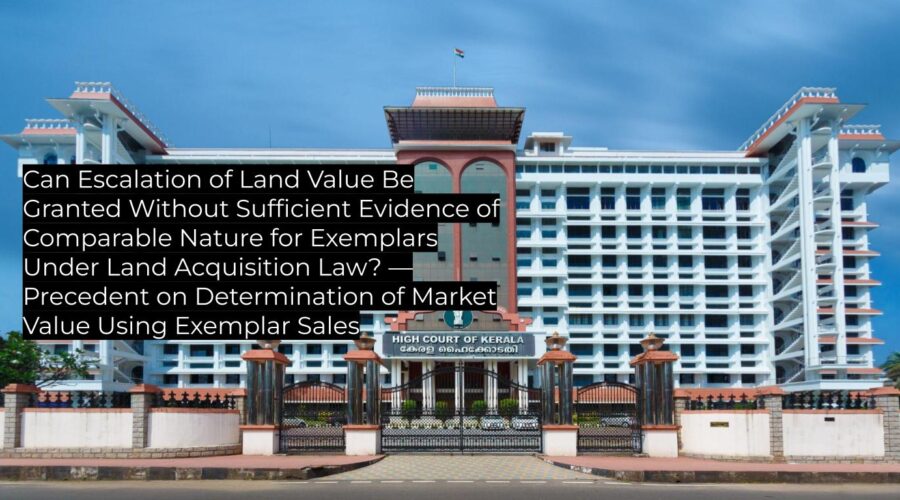
Can Escalation of Land Value Be Granted Without Sufficient Evidence of Comparable Nature for Exemplars Under Land Acquisition Law? — Precedent on Determination of Market Value Using Exemplar Sales

Kerala High Court clarifies that escalation of land value based on exemplar sale deeds cannot be permitted where there is no evidence to establish the similarity of the acquired land and the exemplar property, even within a proximate radius. This judgment affirms and refines the approach to market value determination for land acquisition cases, reiterating […]

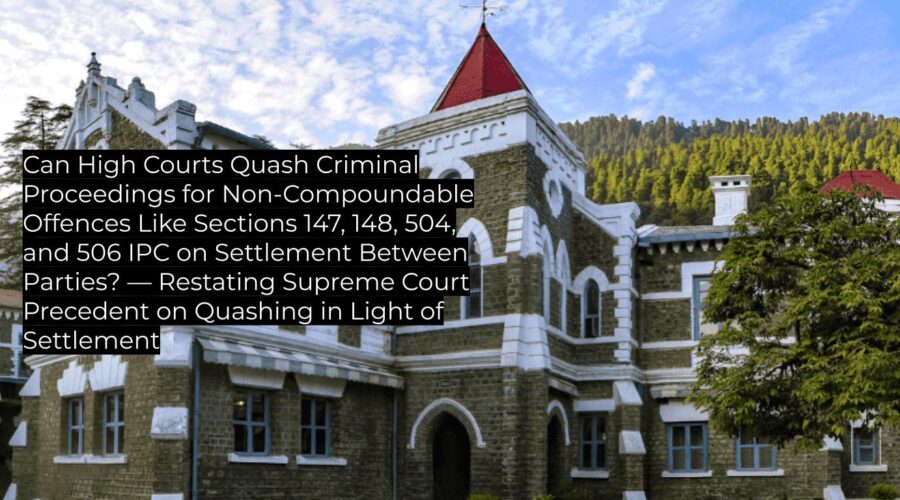
Can High Courts Quash Criminal Proceedings for Non-Compoundable Offences Like Sections 147, 148, 504, and 506 IPC on Settlement Between Parties? — Restating Supreme Court Precedent on Quashing in Light of Settlement

The Uttarakhand High Court affirms that even where some alleged offences are non-compoundable, it has the inherent power to quash such FIRs and proceedings in light of settlement if the facts justify it; this judgment follows and applies the Supreme Court’s principles from Gian Singh v. State of Punjab and Dimpey Gujral v. UT of […]

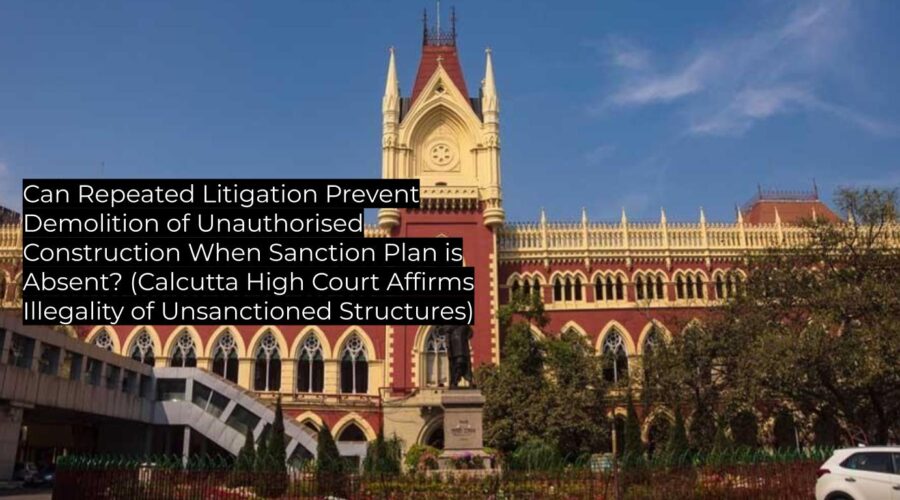
Can Repeated Litigation Prevent Demolition of Unauthorised Construction When Sanction Plan is Absent? (Calcutta High Court Affirms Illegality of Unsanctioned Structures)

The Calcutta High Court upheld that constructions made without a sanctioned plan, especially when recognized as such by the concerned authority, must be demolished irrespective of repeated litigation; the precedent affirms and reinforces established municipal law principles and serves as binding authority within West Bengal.   Summary Category Data Case Name FMA/1037/2025 of SRIMANTA BODHAK […]

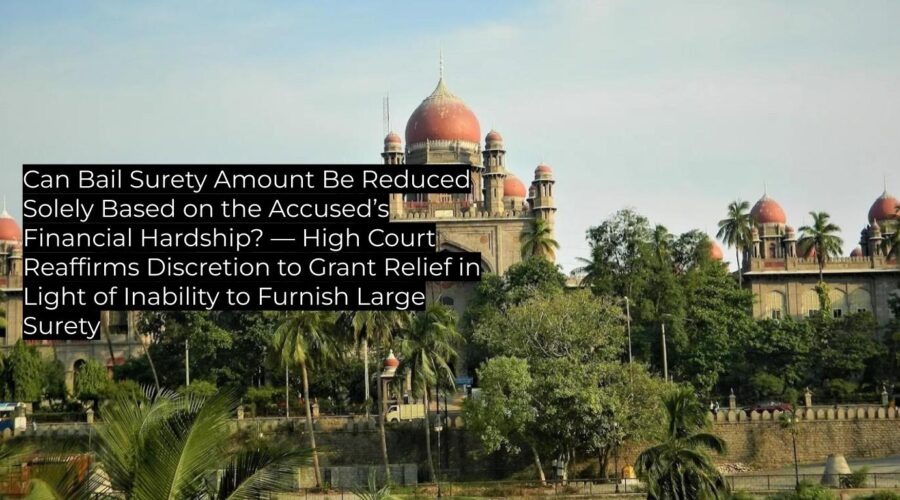
Can Bail Surety Amount Be Reduced Solely Based on the Accused’s Financial Hardship? — High Court Reaffirms Discretion to Grant Relief in Light of Inability to Furnish Large Surety

The High Court upheld the power to reduce bail surety amounts where the accused demonstrate financial incapacity, reiterating the principle that bail conditions should not be unreasonably onerous. This judgment maintains existing precedent and has binding authority for subordinate courts in Telangana, with persuasive value elsewhere, especially in cases concerning economically disadvantaged accused.   Summary […]

Can the Grant of Bail be Justified in Serious Offences Involving Murder Allegations Merely Due to Prolonged Incarceration and Delay in Trial? — Orissa High Court Reaffirms Limits and Upholds Supreme Court Precedent

Bail was denied in a murder case despite the petitioner’s prolonged custody, with the court clarifying that seriousness of the charge, evidentiary material, and the accused’s criminal antecedents outweigh delays or interim directions for speedy trial. The judgment strictly follows and applies Supreme Court precedent, reaffirming that no fixed time frame can be judicially prescribed […]

Can Alleged False Affidavits or Misstatements Regarding Marital Status in Compassionate Appointment Cases Be Quashed at the FIR Stage?

The High Court has clarified that, where there are prima facie allegations of false representation or affidavit in the context of compassionate appointments, an FIR under Sections 177, 181 & 420 IPC cannot be quashed at the threshold. This judgment reaffirms Bhajan Lal principles applied by Supreme Court and is binding precedent for subordinate courts […]

Can Alleged False Affidavits or Misstatements Regarding Marital Status in Compassionate Appointment Cases Be Quashed at the FIR Stage?

The High Court has clarified that, where there are prima facie allegations of false representation or affidavit in the context of compassionate appointments, an FIR under Sections 177, 181 & 420 IPC cannot be quashed at the threshold. This judgment reaffirms Bhajan Lal principles applied by Supreme Court and is binding precedent for subordinate courts […]

Can Escalation in Land Value Be Granted Without Evidence of Similarity Between Exemplar Sale and Acquired Land? — High Court of Kerala Reaffirms Evidentiary Standards in Land Acquisition Valuation

The Kerala High Court clarifies that escalation in land value cannot be granted based solely on an exemplar sale unless claimants adduce evidence that both the exemplar and the acquired land are similar in nature. Even if lands are within the same radius, failure to prove similarity precludes price escalation. This decision upholds prior precedent, […]

Can Criminal Proceedings Under Section 307 IPC Be Quashed on the Basis of Settlement Between Parties? — Upholding Discretionary Quashing Even for Non-Compoundable Offences

The Uttarakhand High Court clarifies that courts retain the discretion to quash criminal proceedings under Section 307 IPC based on private settlement between parties, despite the non-compoundable nature of the offence. This judgment affirms existing precedent, confirming the court’s inherent powers for facilitating justice where warranted, and serves as binding authority within Uttarakhand for similar […]