Is the Trial Court Required to Frame Separate Issues for Each Distinct Objection Raised by the Parties, Rather Than Subsume Them Under a General Issue of ‘Maintainability’? – Binding Clarification of Civil Procedure in Framing of Issues

Punjab & Haryana High Court reaffirms and clarifies that specific objections—such as partial partition, ouster, valuation, court fee, and Order 7 Rule 11 CPC—must each be addressed by framing separate issues if distinctly raised in pleadings. The judgment sets a binding procedural precedent for all subordinate courts within its jurisdiction by overruling a trial court’s […]
Can an Erroneous Record of “Withdrawal as Settled” in DV Act Proceedings Bar Enforcement of a Settlement? – High Court Clarifies Magistrate’s Power to Correct Clerical Mistakes Under Section 362 CrPC

The High Court affirms that clerical or typographical errors in judicial orders, especially relating to terms such as “withdrawn as settled” instead of “disposed of as settled” in Protection of Women from Domestic Violence Act cases, may be corrected by the trial Magistrate under Section 362 CrPC; settlement thus remains enforceable once the correction is […]

Can a Civil Court’s Decision on Maintainability of Suit for Injunction Be Challenged at the Threshold under Article 227 When Issues of Possession Are Mixed Questions of Law and Fact? – Precedent on Supervisory Jurisdiction of the High Court

The High Court has reaffirmed that the maintainability of a civil suit for injunction—especially where questions of possession are intertwined with facts—should be determined during trial and not at the preliminary stage under Article 227. This judgment upholds existing precedent, reinforcing the limited and sparing use of the High Court’s supervisory powers, and is binding […]

Can Criminal Proceedings Under Section 307 IPC Be Quashed on Settlement Between Parties? Clarifying Discretionary Quashing in Light of Non-Compoundable Offences Under Bharatiya Nagarik Suraksha Sanhita, 2023

Uttarakhand High Court reaffirms that even for non-compoundable offences like Section 307 IPC, criminal proceedings may be quashed when the dispute is private and parties have settled, emphasizing the ends of justice; affirms existing legal principles, serving as binding authority within Uttarakhand.   Summary Category Data Case Name C528/1727/2025 of IMRAN Vs STATE OF UTTARAKHAND […]

Can Borrowers Authorized by Vehicle Owners Claim Personal Accident Cover for Owner-Driver Under Motor Insurance Policies? — Reaffirmation of Supreme Court Precedent and Its Binding Value

The Sikkim High Court has reaffirmed that an authorized borrower who steps into the shoes of the vehicle owner is entitled to compensation under the owner-driver personal accident cover in an insurance policy, even if a statutory claim under Sections 163A or 164 of the Motor Vehicles Act is not maintainable. This judgment follows and […]

Does an Interference with Suspension Orders of Government Servants Amount to Judicial Overreach Where Pending Disciplinary Enquiry Exists? — Reaffirmation of the Principle That Suspension Is Not Punitive

The High Court reiterates that suspension is not a punishment in itself and that courts should not interfere with suspension orders when an inquiry is ongoing; affirms settled legal position and underscores judicial restraint, binding on subordinate courts in Uttarakhand.   Summary Category Data Case Name WPSS/1769/2025 of SHANKAR DEEP Vs STATE OF UTTARAKHAND CNR […]

Can Suspension of a Government Servant Pending Disciplinary Enquiry Be Interfered With by Courts? — High Court Affirms Existing Principle That Suspension Is Not a Punishment

The High Court of Uttarakhand has reaffirmed that suspension of a government employee pending a disciplinary enquiry is not a punishment and ordinarily does not warrant judicial interference. The judgment upholds settled precedent and clarifies that courts should not intervene unless the suspension is shown to be without application of mind or mala fide. This […]

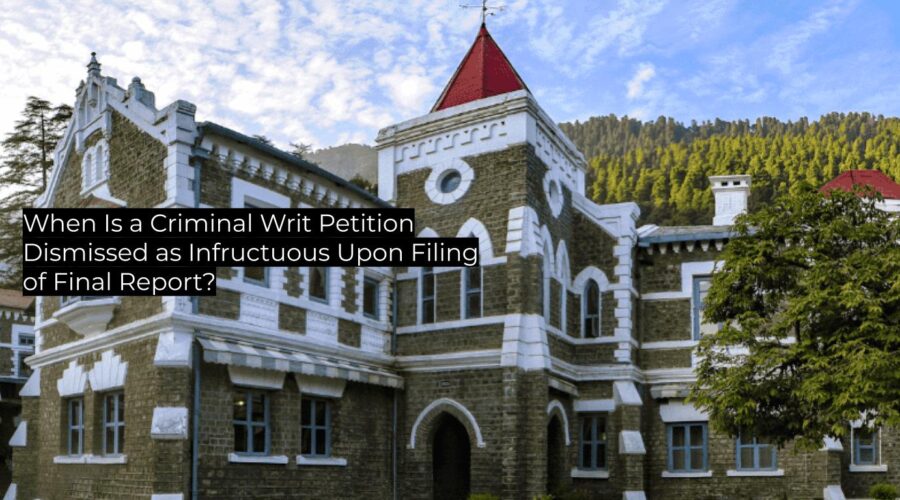
When Is a Criminal Writ Petition Dismissed as Infructuous Upon Filing of Final Report?

The court reaffirmed that when the investigation culminates in a final report being filed before the competent court, any pending writ against the investigation becomes infructuous. This judgment upholds established practice and is precedent for future similar procedural circumstances in criminal proceedings.   Summary Category Data Case Name WPCRL/2295/2022 of NITIN KUMAR Vs STATE OF […]

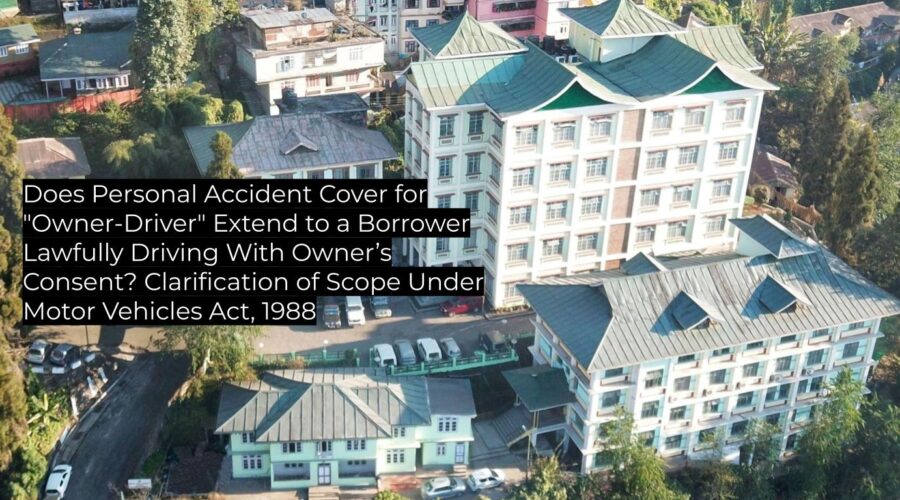
Does Personal Accident Cover for “Owner-Driver” Extend to a Borrower Lawfully Driving With Owner’s Consent? Clarification of Scope Under Motor Vehicles Act, 1988

The Sikkim High Court affirms that a deceased borrower, lawfully authorised and driving with the owner’s written consent, is entitled to claim under the personal accident cover meant for “owner-driver” as per the insurance contract. The judgment upholds Supreme Court precedent (Ramkhiladi, Ningamma), clarifies the non-maintainability under Section 164 MV Act, and is binding in […]

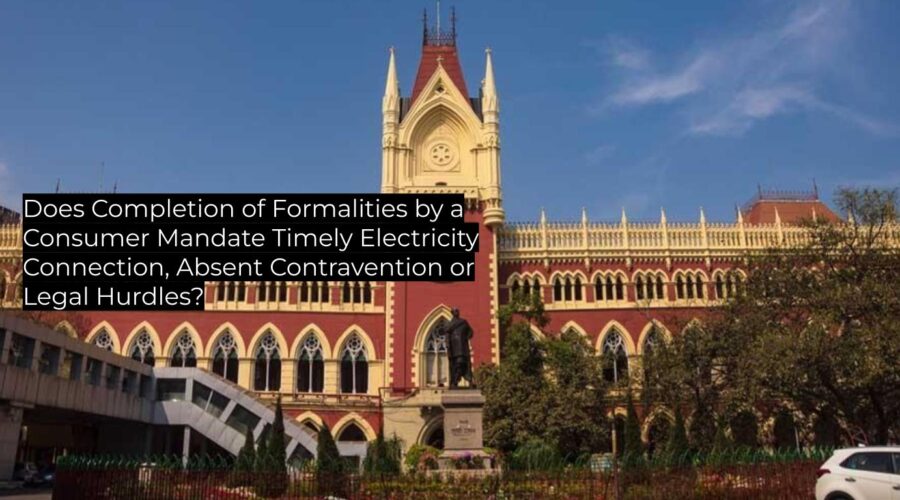
Does Completion of Prescribed Formalities Mandate Electricity Connection by WBSEDCL? – Clarification and Directions on Statutory Duty of Distribution Authorities

Calcutta High Court clarifies that upon a petitioner’s compliance with all procedural and statutory requirements for an electricity connection, including site preparation, the distribution authority must provide a connection within a fixed timeframe, subject to inspection and resolution of way-leave issues. The ruling affirms and operationalises existing procedural standards for electricity supply; it is a […]

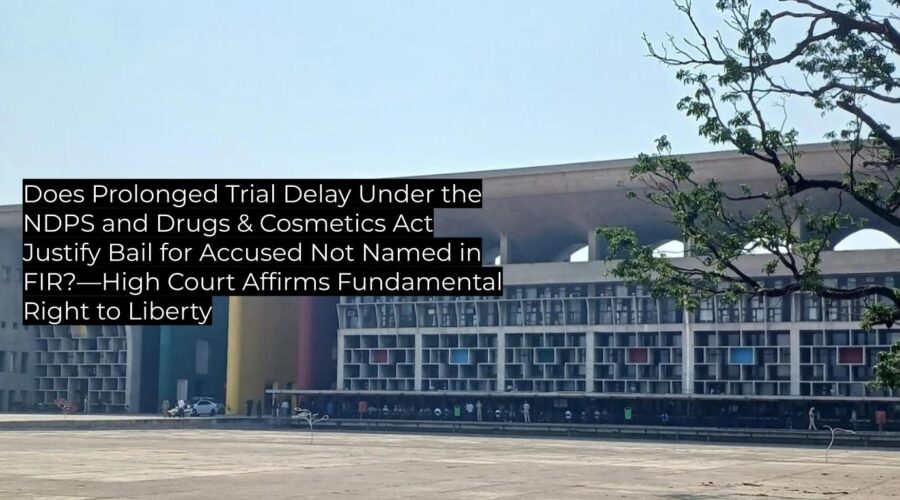
Does Prolonged Trial Delay Under the NDPS and Drugs & Cosmetics Act Justify Bail for Accused Not Named in FIR?—High Court Affirms Fundamental Right to Liberty

Bail granted where accused was in custody for an extended period with no prosecution witnesses examined and no likelihood of early trial conclusion; upholds established precedent on the right to bail in cases of undue delay. Applicable as binding authority for subordinate courts in the jurisdiction on prolonged incarceration under NDPS and related offences.   […]

Does Cessation of a Government Scheme Bar Judicial Direction for Appointment to Non-Existent Posts?

A High Court judgment reaffirms that when a government scheme creating temporary posts is discontinued, courts cannot direct appointments under that scheme—even where past inquiry reports or previous litigation favour the claimant. The order confirms that such claims are not maintainable once the scheme is closed, upholding established legal principle and acting as binding authority […]