When a Bail Application Is Dismissed as “Not Pressed” in NDPS Cases: Does It Create Binding Precedent or Legal Clarification?

A bail application filed under Section 483 of the Bharatiya Nagarik Suraksha Sanhita, 2023 in relation to an NDPS offence was dismissed as “not pressed” by the Calcutta High Court. The Court did not rule on the merits, thus the order does not lay down binding legal precedent but is an instance of procedural disposal […]
Can School Certificates Alone Prove Adoption in Inheritance Disputes? High Court Reaffirms Evidentiary Standards for Adoption Claims

The court held that, in the absence of cogent evidence of an adoption ceremony or adoption deed, a mere entry in a school certificate showing a person as a child of someone does not suffice to establish adoption. This judgment upholds existing precedent on evidentiary standards in inheritance and succession disputes, and serves as binding […]

Can Preventive Detention Orders Be Sustained When Based Solely on Stale FIRs Without Proximate or Live Link to Current Threats? — Position Clarified and Existing Precedent Affirmed by High Court

The High Court reaffirms that preventive detention under the PSA cannot be justified if based solely on stale allegations or FIRs where the ordinary criminal law suffices, and when no proximate or live link between the alleged past conduct and current threat to public order is established. The decision follows Supreme Court precedent and is […]

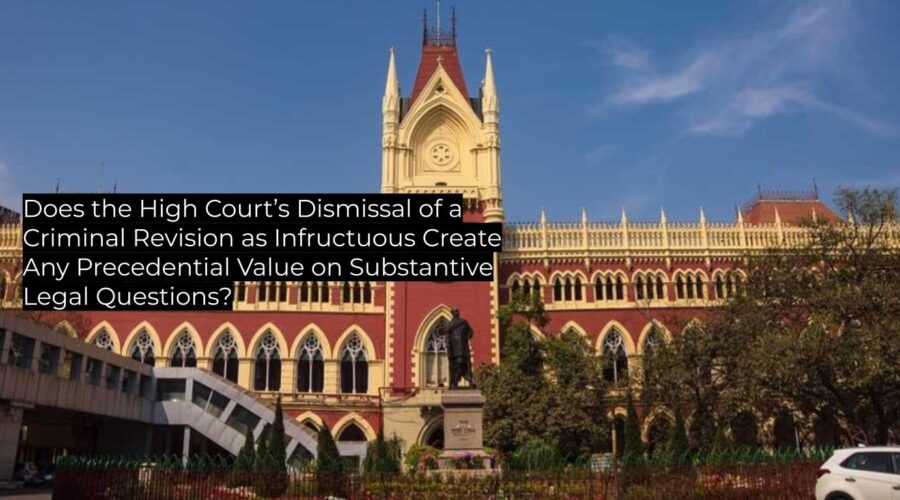
Does the High Court’s Dismissal of a Criminal Revision as Infructuous Create Any Precedential Value on Substantive Legal Questions?

Where a criminal revision is dismissed as infructuous following withdrawal of the underlying proceedings, the judgment does not decide any substantive question of law and does not add to or change existing precedent. Such decisions are of no binding or persuasive authority on legal questions for future cases.   Summary Category Data Case Name CRR/686/2024 […]

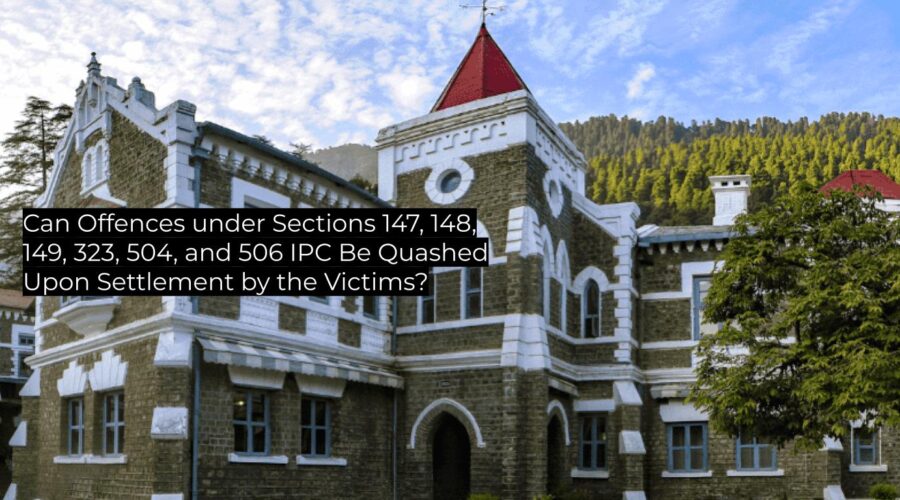
Can Offences under Sections 147, 148, 149, 323, 504, and 506 IPC Be Quashed Upon Settlement by the Victims?

The Uttarakhand High Court affirms that criminal proceedings under Sections 147, 148, 149, 323, 504, and 506 IPC can be quashed where victims and accused have compounded the offences voluntarily and without coercion. This judgment, applying Section 528 of the Bharatiya Nagarik Suraksha Sanhita, 2023, upholds existing precedent on settlement-based quashing and serves as binding […]

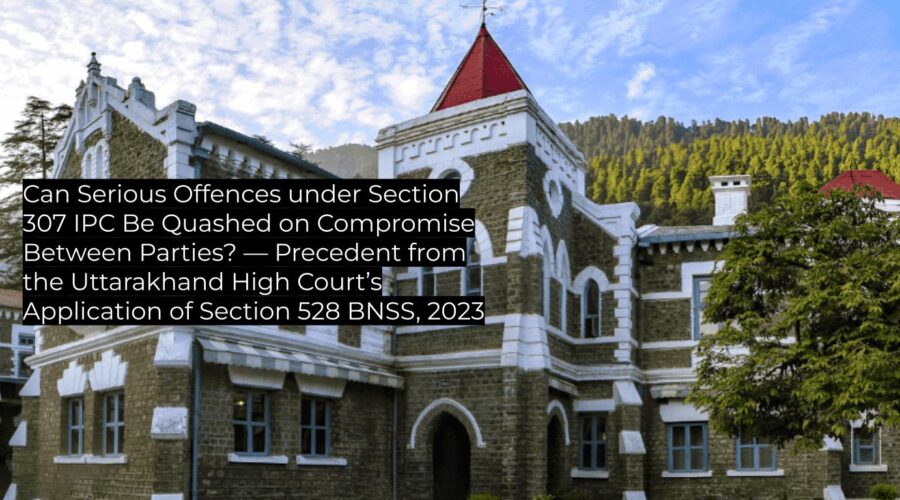
Can Serious Offences under Section 307 IPC Be Quashed on Compromise Between Parties? — Precedent from the Uttarakhand High Court’s Application of Section 528 BNSS, 2023

Uttarakhand High Court allows quashing of proceedings under Section 307 IPC on the basis of compromise among parties despite prosecution opposition, reaffirming the court’s discretion under Section 528 BNSS, 2023; reasserts the principle that settlement of private disputes, even relating to non-compoundable offences, may warrant quashing in the ends of justice. This decision may serve […]

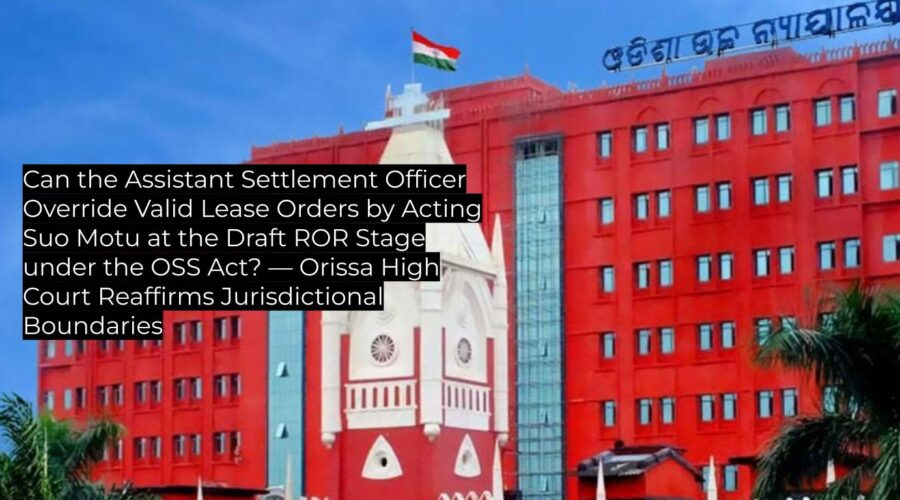
Can the Assistant Settlement Officer Override Valid Lease Orders by Acting Suo Motu at the Draft ROR Stage under the OSS Act? — Orissa High Court Reaffirms Jurisdictional Boundaries

The Orissa High Court has clarified that Assistant Settlement Officers (ASOs) under the Orissa Survey and Settlement Act, 1958 (OSS Act) cannot exercise suo motu powers to override or question lease orders made by competent authorities under the Orissa Government Land Settlement Act, 1962 (OGLS Act). The decision upholds existing precedent and conclusively settles the […]

When Does Efflux of Time Render Writ Petitions Infructuous in Academic Admission Matters?

The court affirmed that when the academic session in question has concluded, challenges to admission processes for that session become infructuous, and such writ appeals are liable to be closed. The court clarified that affected parties retain liberty to pursue alternative remedies if fresh grievances persist. This ruling upholds longstanding precedent and continues to guide […]

Can Long-Term Contractual Service Lead to Regularization in Non-Sanctioned Posts? Reaffirming the Scope of Umadevi in Public Employment Regularization Jurisprudence

The Madras High Court has ruled that continuous service on a contractual basis, even if exceeding ten years, does not entitle an employee to regularization where the post itself is not sanctioned and is not shown to be integral to the employer’s core operations. The judgment faithfully applies and upholds the Supreme Court’s ratio in […]

Can Bail Be Granted in Allegations of Rape Under Sections 64/64(2)(i)/64(2)(k) of the BNS, 2023? Judgment Upholds Existing Judicial Practice and Reinforces Stringent Approach to Bail in Serious Sexual Offences — Binding Precedent in Jharkhand

The court refused bail to an accused charged under Sections 64/64(2)(i)/64(2)(k) of the Bharatiya Nyaya Sanhita, 2023, involving allegations of rape against a disabled victim. The judgment affirms the prevailing approach regarding the denial of bail in grave sexual offences and will serve as binding authority for subordinate courts within Jharkhand.   Summary Category Data […]

When Does a High Court Make Interim Anticipatory Bail “Absolute” After the Accused Joins Investigation? (Upholding Existing Practice, Binding Authority)

The High Court reiterated that once the petitioner joins investigation pursuant to the court’s order and the State confirms no further custodial interrogation is needed, interim anticipatory bail can be made absolute, subject to conditions under Section 482(2) BNSS, 2023; this upholds established precedent and remains binding for subordinate courts handling similar anticipatory bail pleas […]

Can an Interim Arrangement for Supply of Electricity Be Ordered by the High Court Pending Adjudication Before the State Electricity Regulatory Commission in the Absence of a Member (Legal) on the Commission? (Existing Law Affirmed; Binding Authority)

The Punjab & Haryana High Court affirmed that, where proceedings before the State Electricity Regulatory Commission are stalled due to a vacancy (Member Legal), the Court may order that an interim arrangement for supply of electricity—by consent of the contesting parties—should continue until the interim application is decided by the Commission. This order upholds established […]