Can Pleas Raised in a Withdrawn Petition Under Section 482 CrPC Be Reserved for Argument Before the Trial Court? (No Substantive Legal Determination—Petition Dismissed as Withdrawn)

A petition under Section 482 CrPC was dismissed as withdrawn at the petitioner’s request, with liberty granted to raise all grounds before the trial court; the decision does not rule on the merits and is of limited precedential value, serving only as a procedural precedent regarding withdrawal and reserving pleas.   Summary Category Data Case […]
Does a High Court Have the Jurisdiction to Direct the State to Consider Interest on Delayed Honorarium Payments to Anganwadi Workers in a Suo Motu PIL?

Court affirms that, after ensuring clearance of withheld honorarium payments, it can direct the State to consider payment of interest for the delay and require an administrative decision within a stipulated period. The judgment neither overrules nor narrows prior precedent, but clarifies that advisory judicial directions toward welfare of affected groups (such as anganwadi workers) […]

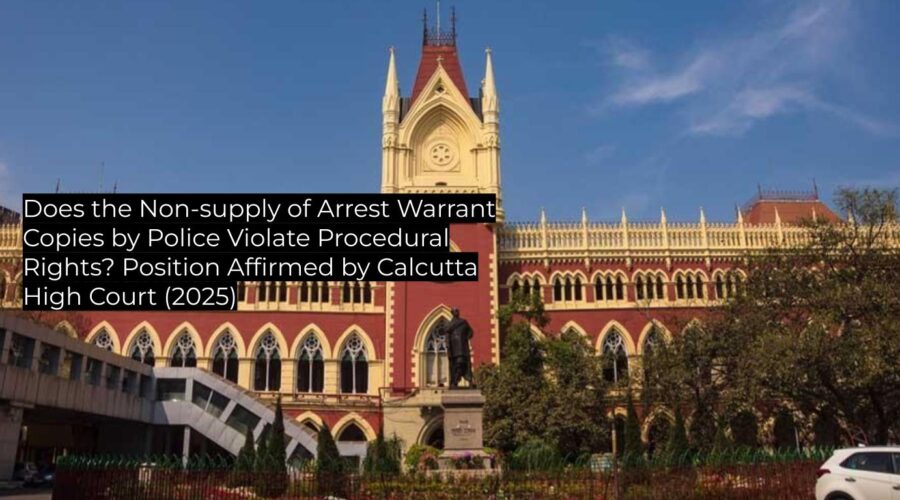
Does the Non-supply of Arrest Warrant Copies by Police Violate Procedural Rights? Position Affirmed by Calcutta High Court (2025)

The Calcutta High Court clarified that once a copy of the arrest warrant is furnished to the accused in court and the accused is given a reasonable opportunity to surrender before the relevant court, procedural fairness is achieved; prior failure to supply the copy does not vitiate proceedings. This order disposes of a writ petition […]

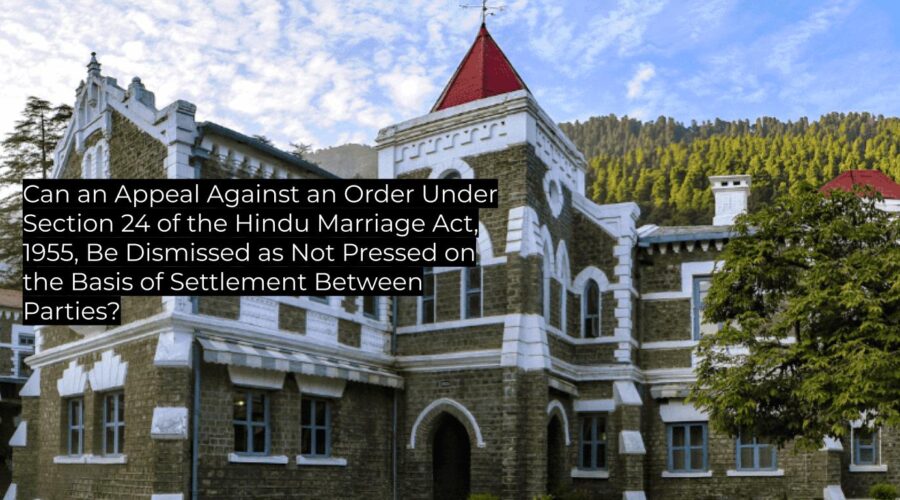
Can an Appeal Under Section 24 of the Hindu Marriage Act Be Withdrawn on the Ground of Settlement Between the Parties Without Detailed Adjudication?

Upholds Existing Precedent — Appeal Dismissed as Not Pressed Upon Parties’ Settlement; Serves as Binding Authority for Voluntary Withdrawal in Matrimonial Maintenance Matters   Summary Category Data Case Name FA/19/2020 of ANIL DUTT Vs RANI CNR UKHC010014602020 Date of Registration 23-01-2020 Decision Date 29-10-2025 Disposal Nature DISMISSED Judgment Author Hon’ble Mr. Justice Ravindra Maithani, Hon’ble […]

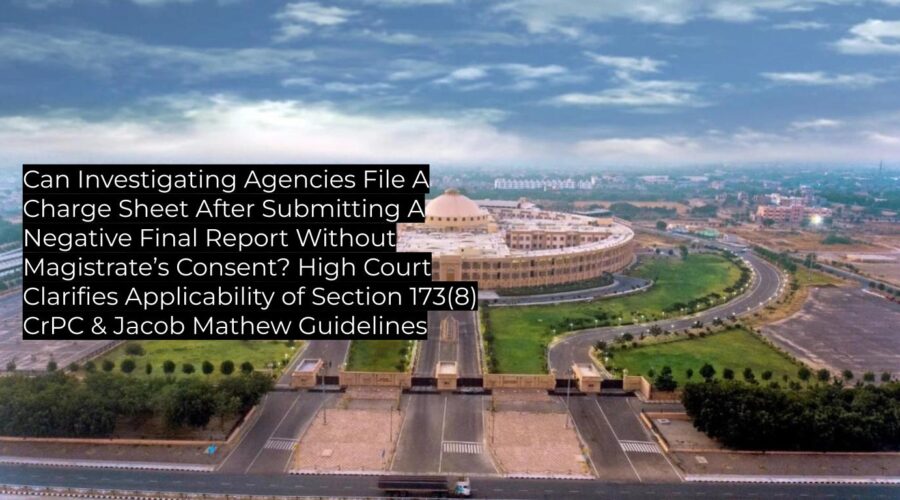
Can Investigating Agencies File A Charge Sheet After Submitting A Negative Final Report Without Magistrate’s Consent? High Court Clarifies Applicability of Section 173(8) CrPC & Jacob Mathew Guidelines

The Rajasthan High Court reaffirms that police can conduct further investigation and file a supplementary charge sheet post negative final report without express Magistrate permission—so long as new evidence emerges. The judgment upholds existing precedent, clarifies the process under Section 173(8) CrPC, and carries binding value for subordinate Rajasthan courts, particularly in cases involving alleged […]

Can an Appeal Against an Order Under Section 24 of the Hindu Marriage Act, 1955, Be Dismissed as Not Pressed on the Basis of Settlement Between Parties?

The court affirmed that when parties arrive at a settlement and the appellant indicates disinterest in prosecuting the appeal, an appeal against an interlocutory matrimonial order under Section 24 of the Hindu Marriage Act, 1955, may be dismissed as not pressed. This judgment upholds existing procedural practice and has binding effect for all subordinate courts […]

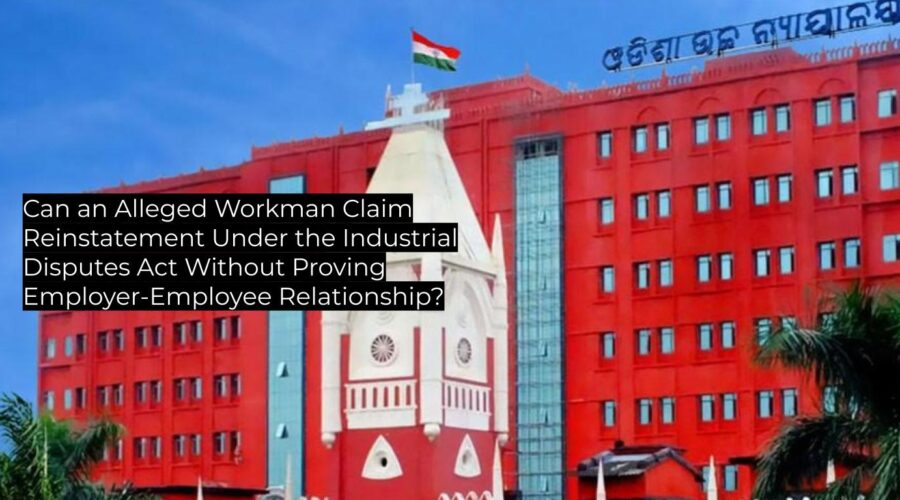
Can an Alleged Workman Claim Reinstatement Under the Industrial Disputes Act Without Proving Employer-Employee Relationship?

The Orissa High Court in 2025 clarified that a workman’s entitlement to reinstatement and back wages under the Industrial Disputes Act, 1947, is contingent on clearly proving an employer-employee relationship and the direct payment of wages by the management. The Court set aside a Tribunal award for failure to consider admitted documentary evidence and reaffirmed […]

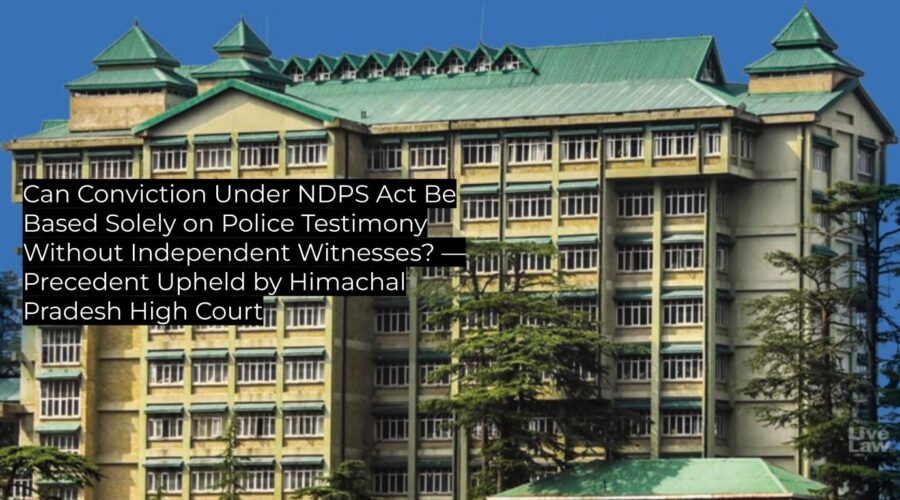
Can Conviction Under NDPS Act Be Based Solely on Police Testimony Without Independent Witnesses? — Precedent Upheld by Himachal Pradesh High Court

Himachal Pradesh High Court reaffirms that reliable and trustworthy police testimony can suffice for conviction under the NDPS Act even without independent witnesses. This judgment follows and applies Supreme Court authority, affirming established legal standards and serving as binding precedent for subordinate courts in Himachal Pradesh.   Summary Category Data Case Name CR.A/596/2024 of SHIV […]

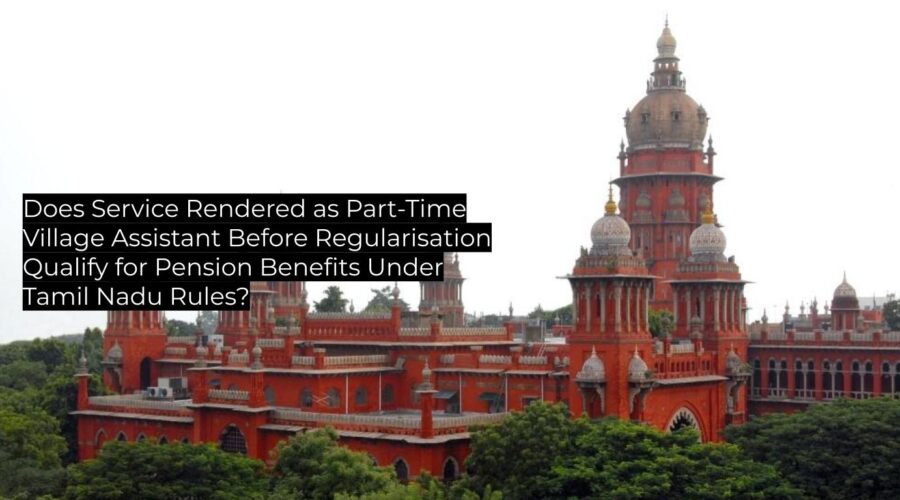
Does Service Rendered as Part-Time Village Assistant Before Regularisation Qualify for Pension Benefits Under Tamil Nadu Rules?

The Madras High Court reiterates that service rendered as a part-time Village Assistant prior to regularisation (before June 1, 1995) is not “qualifying service” for pensionary purposes. The judgment affirms previous Division Bench authority (E.Balachandran) and clarifies that the special rules governing Village Assistants override general pension rules and Government Orders. Binding on all subordinate […]

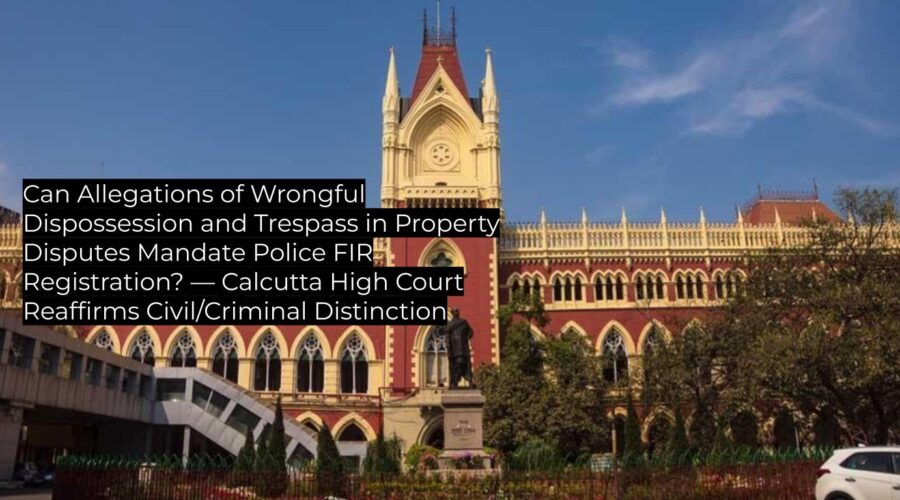
When Does a Dispute Over Property Constitute a Purely Civil Matter Excluding Criminal Remedies? Calcutta High Court Upholds Existing Precedent

The Calcutta High Court reaffirms that allegations of wrongful dispossession and trespass over immovable property between private parties, without clear criminal elements, constitute a civil dispute. The judgment clarifies police discretion in registering FIRs and upholds precedent, serving as binding authority for subordinate courts in West Bengal in classifying such matters.   Summary Category Data […]

Can a Plaintiff Amend the Property Description in a Partition Suit to Incorporate Subsequent Revenue Records During Trial? – Reaffirmation of Discretion under Order 6 Rule 17 CPC as Binding Authority

The Punjab and Haryana High Court reiterates that courts have wide discretion under Order 6 Rule 17 CPC to permit amendments in pleadings—even based on subsequently available revenue records—where necessary for effective adjudication, unless serious prejudice is caused to the opposite party; the ruling affirms existing legal precedent and is binding on subordinate courts dealing […]

Does an Executant Challenging Their Own Sale Deed Need to Pay Ad Valorem Court Fee? – Precedent Upheld by Punjab and Haryana High Court

Affirming settled law, the Punjab and Haryana High Court has reiterated that when an executant seeks cancellation of a sale deed executed by them—even if alleging fraud or non-payment of consideration—they must pay ad valorem court fee on the consideration mentioned in the sale deed. This judgment upholds the Supreme Court’s ruling in Suhrid Singh […]