Can Contractual Workers Engaged Through Service Providers Seek Regularization?

The High Court has addressed whether individuals employed through service providers (outsourcing agencies) possess the legal right to claim regularization against the principal employer. The ruling upholds established precedent that absence of direct employment precludes entitlement to regularization, reinforcing limitations on regularization claims by contractual workers. This decision is binding on lower courts within the […]
When Can Writ Petitions Be Withdrawn After Settlement or Satisfaction of Claim? Clarifying the Court’s Power and Procedure

The Punjab and Haryana High Court reaffirms that a writ petition may be withdrawn when the petitioner has received the relief sought—here, post-receipt of compensation—with the proceedings being dismissed as withdrawn; this sets a practical, binding precedent on withdrawal procedure in writ jurisdiction, providing clear authority to subordinate courts and petitioners.   Summary Category Data […]

Does a Partition Suit Require All Co-Sharers To Be Joined as Necessary Parties? High Court Reaffirms Mandatory Joinder, Dismissing Partial Partition Suits—Binding Authority for Subordinate Courts

The High Court strictly reaffirms that in partition suits, all co-sharers reflected in the revenue record must be impleaded as parties; otherwise, a partial partition decree is invalid. This holding upholds settled law, offering binding precedent to subordinate courts and clarifying the maintainability of partition proceedings affecting co-ownership property.   Summary Category Data Case Name […]

Can the High Court Exercise Its Inherent Powers Under Section 482 CrPC to Quash FIRs When The Allegations Disclose a Prima Facie Case of Cheating, Forgery, and Criminal Breach of Trust? – Reaffirmation of Bhajan Lal Guidelines

The High Court has reaffirmed that it will not quash FIRs under Section 482 CrPC when specific allegations, taken at face value, disclose a prima facie offence and do not fall within the exception categories set out in Bhajan Lal. The judgment follows and clarifies prior Supreme Court precedent, underscoring that such power must be […]

Whether a Contempt Petition Must Proceed When the Petitioner No Longer Presses the Matter Following a Speaking Order by the Authority: Does Withdrawal Preclude Further Judicial Consideration?

The High Court of Punjab & Haryana disposes of a contempt petition as ‘not pressed’ after the respondent-authority’s speaking order, clarifying that litigants may withdraw contempt proceedings and pursue alternative remedies. The ruling follows standard practice, providing practical guidance for handling contempt petitions post-compliance, and serves as binding authority within the jurisdiction.   Summary Category […]

Does Nomination in an LIC Policy Confer Succession Rights Over Class I Legal Heirs Under the Hindu Succession Act?

The Jharkhand High Court has held that nomination in a Life Insurance Corporation (LIC) policy does not override succession rights of Class I heirs under the Hindu Succession Act, 1956, particularly when the nominee is deceased. The decision upholds the established principle that succession certificates in respect of such policies must issue to Class I […]

Is Averaging Past Income Returns Permissible When Calculating Compensation in Motor Accident Claims, or Must the Highest Proven Income Be Taken?

The Uttarakhand High Court clarified that for assessing the income of a deceased in motor accident claims, the highest and latest proven Income Tax Return, not an average of past years, must be adopted to reflect actual earning capacity. The judgment also mandates payment of consortium at ₹40,000 per dependent, and defines the correct heads […]

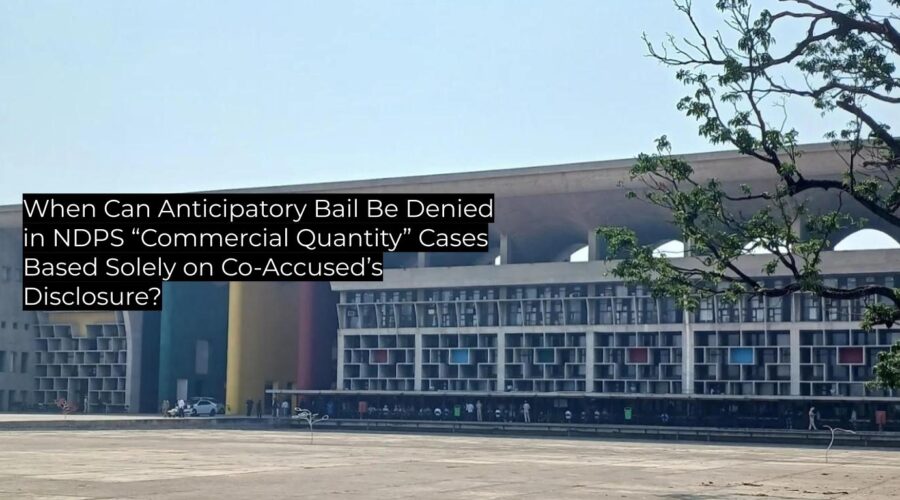
When Can Anticipatory Bail Be Denied in NDPS “Commercial Quantity” Cases Based Solely on Co-Accused’s Disclosure?

The High Court reaffirmed that anticipatory bail under Section 482 BNSS in cases involving commercial quantity under NDPS Act can be declined where allegations are grave, recovery is substantial, and custodial interrogation is required—even if the accused is implicated only through a co-accused’s disclosure. The Court followed the Supreme Court’s clarification that the ratio of […]

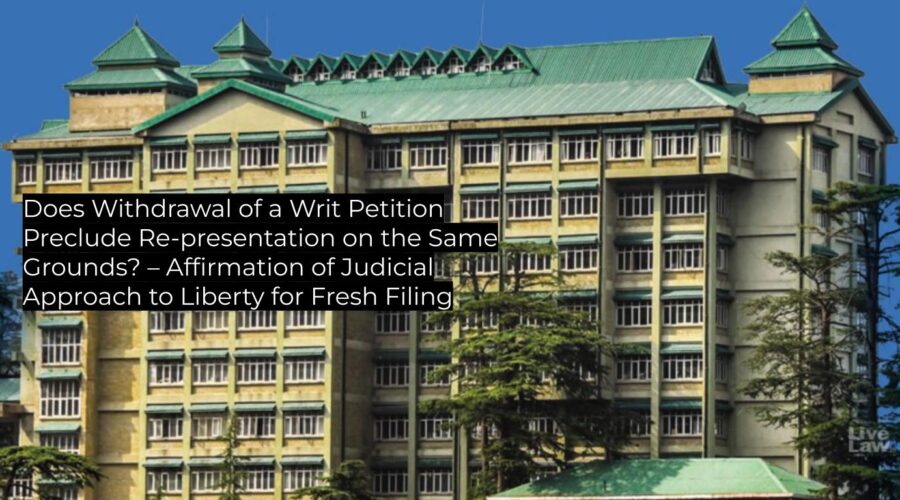
Does Withdrawal of a Writ Petition Preclude Re-presentation on the Same Grounds? – Affirmation of Judicial Approach to Liberty for Fresh Filing

The Himachal Pradesh High Court upholds the practice of permitting withdrawal of writ petitions with liberty to file afresh, maintaining consistency with prior directions issued in similar cases regarding recovery of monetary benefits from government employees. The judgment does not overrule or narrow previous precedents, and affirms existing judicial procedures, with persuasive value for similar […]

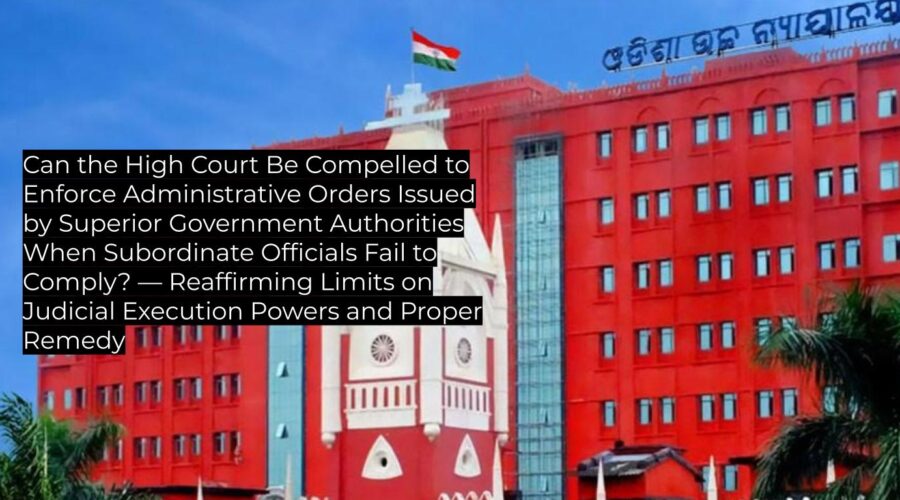
Can the High Court Be Compelled to Enforce Administrative Orders Issued by Superior Government Authorities When Subordinate Officials Fail to Comply? — Reaffirming Limits on Judicial Execution Powers and Proper Remedy

Reaffirmed: The High Court cannot be used as an executing forum for enforcing Government or superior authority orders against subordinate officers. It is the duty of the issuing superior authority to implement such orders. The Orissa High Court follows settled Supreme Court precedent on writ jurisdiction scope, guiding parties to seek remedies through the concerned […]

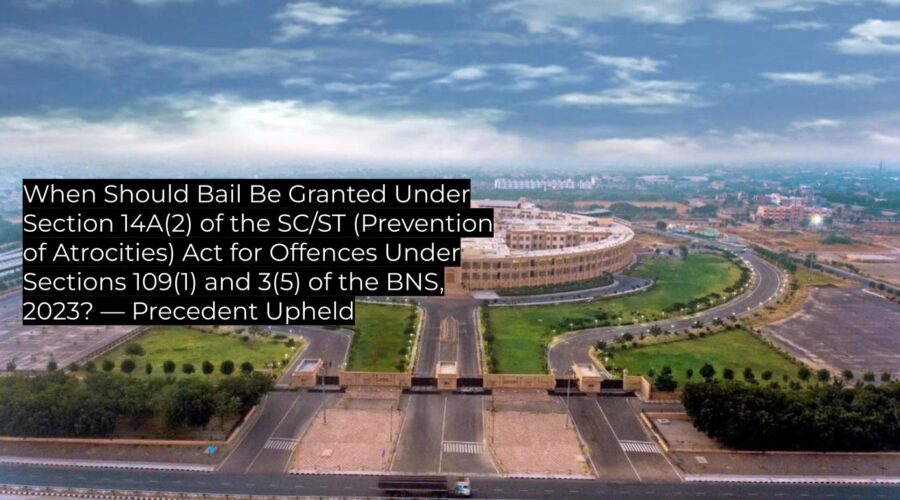
When Should Bail Be Granted Under Section 14A(2) of the SC/ST (Prevention of Atrocities) Act for Offences Under Sections 109(1) and 3(5) of the BNS, 2023? — Precedent Upheld

The High Court establishes that bail can be granted to accused under the SC/ST Act, even where firearms are allegedly used and injuries are sustained, if the medical report classifies such injuries as simple and the charge sheet is already filed. This judgment affirms the discretionary approach of the courts at the bail stage under […]

Does Grant of Anticipory Bail under Section 482 BNSS Depend on Parity with Co-Accused and Delay in FIR? — Precedential Guidance from Punjab & Haryana High Court

Anticipatory bail under Section 482 of the BNSS can be granted when co-accused have received similar relief and there is unexplained delay in FIR registration; the High Court reaffirms judicial discretion, articulates its boundaries, and clarifies conditions limiting the bail order’s scope. This judgment upholds and clarifies existing precedent, providing binding authority in Punjab, Haryana, […]