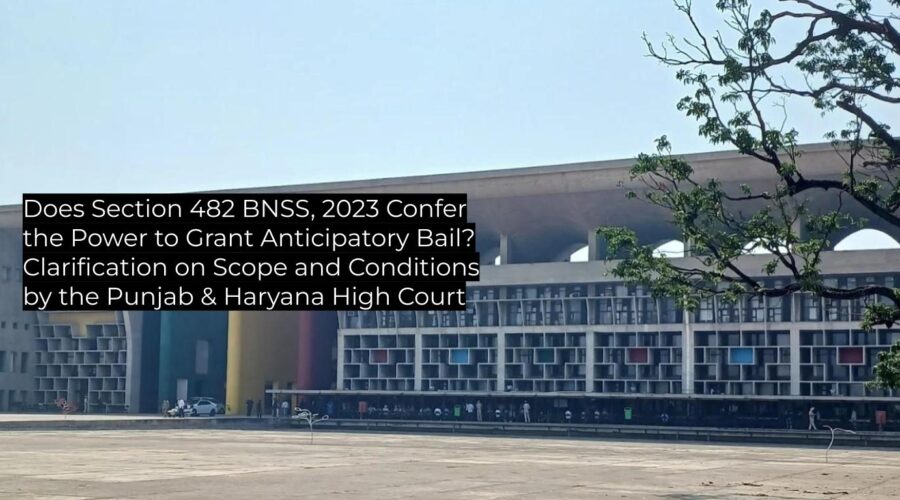
Does Section 482 BNSS, 2023 Confer the Power to Grant Anticipatory Bail? Clarification on Scope and Conditions by the Punjab & Haryana High Court

Court affirms the applicability of Section 482 of the Bharatiya Nagarik Suraksha Sanhita, 2023 for pre-arrest bail, outlining specific procedural safeguards; makes absolute interim anticipatory bail when custodial interrogation is not required, subject to statutory conditions. Precedent has binding value for subordinate courts in Punjab and Haryana.   Summary Category Data Case Name CRM-M/56343/2025 of […]
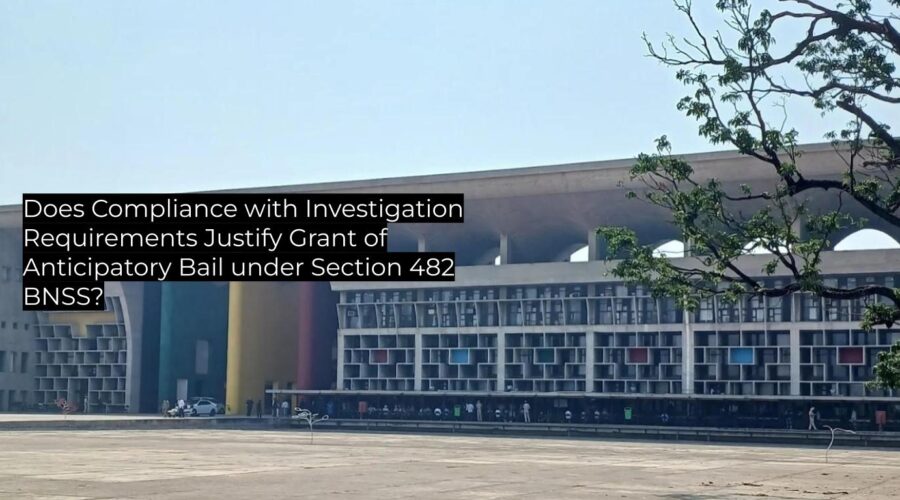
Does Compliance with Investigation Requirements Justify Grant of Anticipatory Bail under Section 482 BNSS?

The High Court emphasized that anticipatory bail under Section 482 of the BNSS may be confirmed when the accused has joined and cooperated with the investigation and there is no further requirement for custody, provided standard conditions are fulfilled. The judgment reaffirms established judicial principles, clarifies the limited and case-specific nature of such protection, and […]

Can Criminal Proceedings under BNSS Be Quashed on Compromise Even in Non-Compoundable Offences?

The High Court holds that under Section 528 of the Bharatiya Nagarik Suraksha Sanhita, 2023, criminal proceedings—including in non-compoundable offences—may be quashed on the basis of genuine compromise between the parties, provided the crime’s nature is private and not serious or impacting society at large. This judgment follows and applies precedent set by the Supreme […]

Does the Proviso to Section 480(2) BNSS (pari materia to Sec. 437 CrPC) Mandate Sensitive Bail Consideration for Women Accused, Regardless of Seriousness of Offence?

Clarifies that the proviso to Section 480(2) of the BNSS, 2023 (similar to Section 437 CrPC), requires courts to show special sensitivity while considering bail for women accused, even in serious offences. High Court reaffirms and applies existing Supreme Court precedent; decision is binding on subordinate courts and has persuasive value for other jurisdictions.   […]

Can High Courts Compound Offences under Section 138 NI Act at All Stages—Including After Conviction and Dismissal of Appeal—and Exercise Discretion on Costs? (Affirms and Updates Supreme Court Guidelines; Binding Precedent)

The High Court of Punjab and Haryana clarifies that offences under Section 138 of the Negotiable Instruments Act, 1881, may be compounded at any stage, even after conviction and dismissal of appeal, pursuant to Supreme Court directives (Damodar S. Prabhu, M/s New Win Export, Sanjabij Tari). The judgment reaffirms judicial discretion on waiving compounding costs […]

When Should Courts Uphold the Convenience and Financial Constraints of a Wife in Matrimonial Transfer Petitions under Section 24 CPC?

The Jharkhand High Court has affirmed that courts must consider the convenience and lack of independent income of a wife when deciding transfer petitions under Section 24 of the Code of Civil Procedure, especially where significant distance and financial hardship impede access to legal proceedings. This judgment reaffirms existing principles and offers binding guidance for […]

Can Proceedings Under Dowry, Domestic Violence, and Marriage Protection Laws Be Quashed on Mutual Settlement Under Section 528 BNSS? — Precedential Clarification by the Uttarakhand High Court

The Uttarakhand High Court reaffirmed that criminal proceedings arising from matrimonial disputes, including those under the Dowry Prohibition Act and Muslim Women (Protection of Rights on Marriage) Act, may be quashed under Section 528 of the Bharatiya Nagarik Suraksha Sanhita, 2023, upon mutual settlement of parties and in absence of State opposition. This serves as […]

Can Statutory Presumptions Under Sections 118 and 139 of the Negotiable Instruments Act Be Rebutted Solely by an Accused’s Oral Defence Without Corroborative Evidence? — Precedent Affirmed by Uttarakhand High Court

The Uttarakhand High Court reaffirms that mere denial or unsupported assertions by the accused are insufficient to rebut the statutory presumptions under the Negotiable Instruments Act, 1881. Proceedings under Section 138 can be maintained against a trustee/president who signs the cheque, even if the trust itself is not made a party. This decision operates as […]

Can a State Instrumentality Withhold Dues from a Contractor Under a Completed Public Contract on Grounds of Alleged Breaches in Other, Unrelated Contracts? — High Court Clarifies Scope for Writ Jurisdiction and Contractual Set-off

The High Court of Tripura upholds the maintainability of writ petitions for recovery of contractually undisputed dues from State entities when no independent dispute redressal or arbitration clause exists, and clarifies that set-off across unrelated contracts is impermissible under standard contract terms. This decision affirms and applies settled Supreme Court precedent, and is binding authority […]

Can Pension Commutation Be Denied for Failure to Complete Formalities During Covid-19 Lockdown?

The High Court affirms that non-performance of procedural formalities, such as submission of a medical certificate for commutation of pension, cannot be grounds for denial when impossibility is caused by unprecedented events like a nationwide Covid-19 lockdown. This judgment clarifies the application of the Civil Pension (Commutation) Rules, 1960 in the context of force majeure, […]

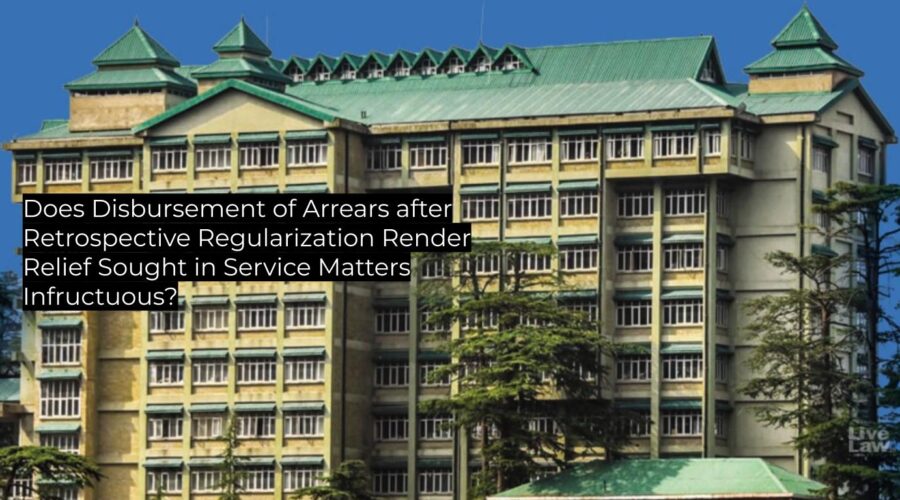
Does Disbursement of Arrears after Retrospective Regularization Render Relief Sought in Service Matters Infructuous?

The High Court reaffirmed that where authorities have retrospectively regularized service and released all monetary arrears, the writ petition seeking such relief becomes infructuous and is liable to be disposed of accordingly. This judgment restates and follows established jurisprudence in the context of public service regularization and arrear payment disputes, and serves as binding authority […]

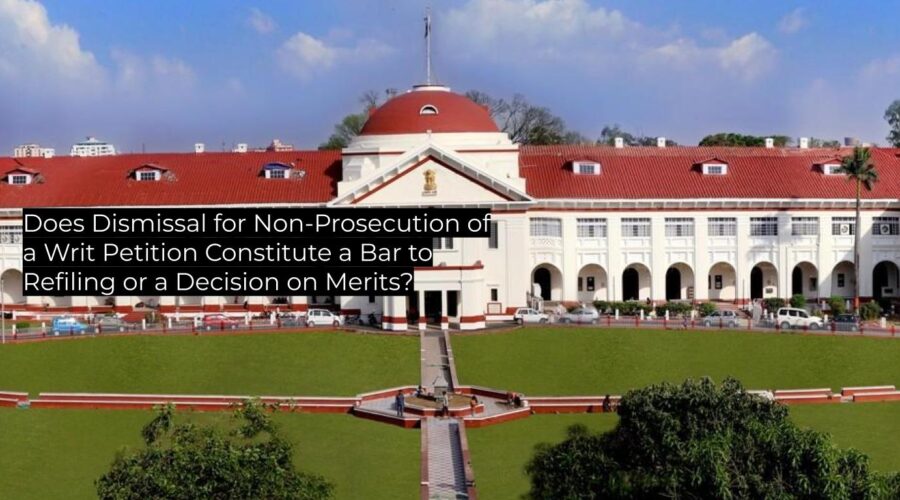
Does Dismissal for Non-Prosecution of a Writ Petition Constitute a Bar to Refiling or a Decision on Merits?

The Patna High Court has reiterated that dismissal of a writ petition for non-prosecution is not a decision on merits and does not bar re-presentation of the petition, provided it is otherwise maintainable. This order affirms existing precedent, serving as binding authority for subordinate courts within Bihar on the procedural consequence of default by petitioners […]