Does Disclosure and Acquittal in FIR Cases Mandate Eligibility for Police Recruitment? Punjab & Haryana High Court Reaffirms Rights Under Police Rules

Full and truthful disclosure of prior criminal proceedings, coupled with acquittal, entitles candidates to police appointment under Rule 12.18 of the Punjab Police Rules. The High Court upholds this position, clarifying that denial of candidature solely on the basis of past implication, where acquittal exists and disclosure is made, is impermissible. This reaffirmation is binding […]
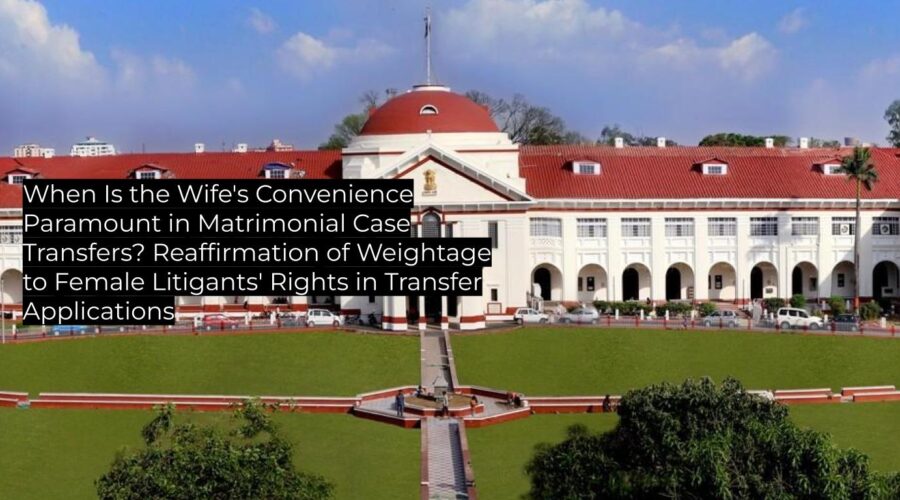
Does the Convenience of the Wife Prevail in Transfer of Matrimonial Cases? Precedent Reaffirmed as Binding Law by the Patna High Court

Patna High Court upholds the settled legal principle that, in matrimonial cases, the convenience of the wife/female litigant merits greater consideration for transfer petitions. The Court, drawing directly on Supreme Court precedents, affirms and applies the established approach; its holding is binding on subordinate courts and persuasive in similar future transfer matters in matrimonial disputes. […]

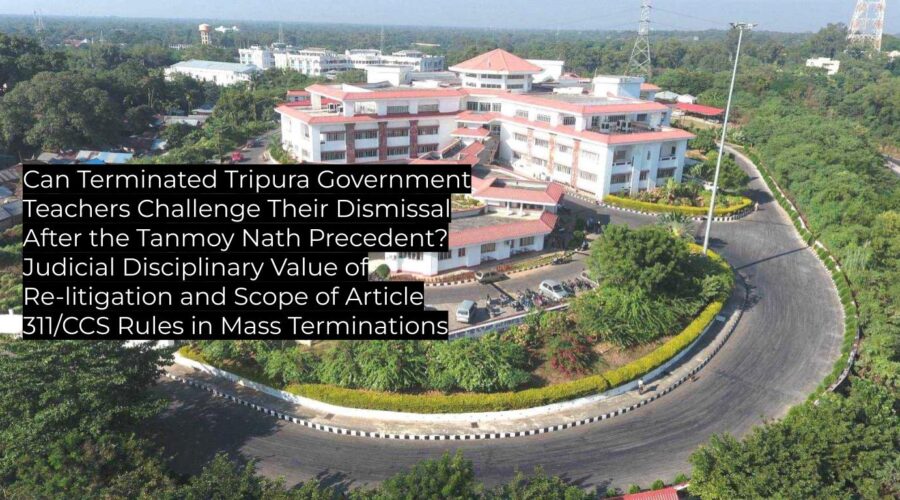
Can Terminated Tripura Government Teachers Challenge Their Dismissal After the Tanmoy Nath Precedent? Judicial Disciplinary Value of Re-litigation and Scope of Article 311/CCS Rules in Mass Terminations

The High Court of Tripura reaffirms and follows existing Division Bench and Full Bench precedents, holding that mass terminations following the judicial setting aside of a state employment policy—already upheld by the Supreme Court—cannot be reopened by similarly situated teachers, even if they were not parties to the original litigation. The ruling confirms that Article […]

Does Dismissal of an Appeal for Non-Prosecution Under Section 96 CPC Create Any Binding Legal Precedent on Substantive Relief or Legal Questions? — Reaffirmation of the Principle That Procedural Dismissal Does Not Decide Merits

The court dismissed the Regular First Appeal under Section 96 of the CPC solely for non-prosecution, without adjudicating the substantive questions of law or facts raised. This order follows established precedent that dismissals for non-prosecution carry no precedential or binding value on legal issues, and have no persuasive authority on merits for future cases.   […]

Can Criminal Courts Take Cognizance of Alleged Offences by Notaries Without a Complaint from an Authorized Government Officer? — Himachal Pradesh High Court Affirms Statutory Bar Under Section 13 of the Notaries Act

The Himachal Pradesh High Court interprets Section 13 of the Notaries Act, 1952 to reaffirm that no court can take cognizance of alleged offences by a Notary acting in official capacity unless a written complaint is made by an authorized government officer. This judgment upholds the legislative bar, preserving Notaries’ statutory protection, and serves as […]

Is the High Court Bound to Direct Police Protection for Consenting Major Couples Facing Threats Due to Inter-Community Marriage? – Precedential Status of Lata Singh v. State of U.P. Affirmed

The Uttarakhand High Court upholds the Supreme Court’s precedent in Lata Singh v. State of U.P., reaffirming that police protection must be provided to consenting major couples facing threats for marrying against familial or societal opposition. This judgment confirms existing law, providing binding authority for subordinate courts and law enforcement agencies on the issue of […]

Does the Calcutta High Court’s Summary Disposal Upon Settlement Clarify the Treatment of Payment-Related Writ Petitions?

The judgment reaffirms that where the underlying claim in a writ petition is resolved during proceedings—here, through payment made to the petitioner—the court will dispose of the petition without further adjudication. This maintains established practice for prompt closure of writ matters post-settlement in the public employment or government dues context. Applicable as binding authority for […]

When Is the Wife’s Convenience Paramount in Matrimonial Case Transfers? Reaffirmation of Weightage to Female Litigants’ Rights in Transfer Applications

The Patna High Court reiterates that in matrimonial proceedings, the wife’s convenience carries significant weight in deciding transfer petitions, following Supreme Court precedents. This judgment upholds existing law, confirming binding guidance for all subordinate courts in matrimonial cases involving female petitioners facing hardship.   Summary Category Data Case Name MJC/2125/2023 of Swarnima Gupta @ Anita […]

Can a High Court Modify Its Judgment and Decree Based on a Compromise Entered Between Parties During Writ Proceedings? (Affirmation of Settlement-Driven Disposals as Binding Precedent)

The Court reaffirmed its authority to dispose of writ proceedings in terms of a compromise mutually reached by the parties, including modification of prior judgments and decrees accordingly. This ruling upholds the established precedent on disposal of civil matters by recorded settlement, with binding value upon subordinate courts and clear procedural guidance for similar disputes. […]

Can a Pending Appeal Be Withdrawn at Any Stage Without Judicial Pronouncement on Merits?

The court reaffirmed that appellants may seek withdrawal of their appeals at any stage prior to adjudication on merits, leaving such matters to the court’s discretion. This judgment upholds existing precedent and does not overrule or create new law; it clarifies the procedural course for appeal withdrawals and confirms its value as binding authority for […]

Does Each Claimant Have an Independent Right to Consortium Compensation, and Is Interest Payable on the Entire Award (Including Future Prospects) Under the Motor Vehicles Act?

The Uttarakhand High Court affirms the established Supreme Court principles that each eligible claimant in a motor accident claim is entitled to consortium compensation, and that interest is payable on the entire compensation award—including future prospects. This judgment upholds settled jurisprudence and will serve as binding authority for compensation computation under the Motor Vehicles Act. […]

When Can a Second Appeal Be Dismissed for Default for Non-Appearance?

The Calcutta High Court reiterates that persistent non-appearance by appellants justifies dismissal of a second appeal for default; no adjudication on merits occurs in such cases. This order affirms the established procedural principle and acts as a procedural, not substantive, precedent.   Summary Category Data Case Name SA/1381/1965 of SM. BAHARJAN BIBI AND ORS Vs […]