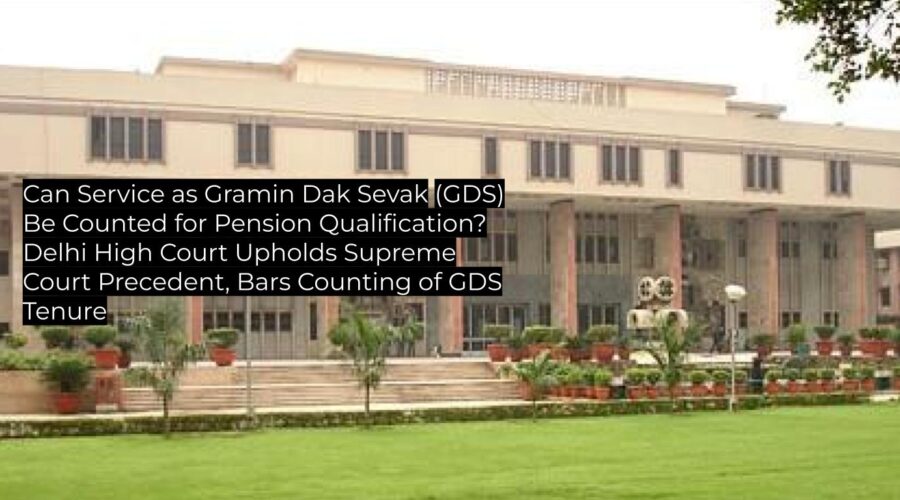
Can Service as Gramin Dak Sevak (GDS) Be Counted for Pension Qualification? Delhi High Court Upholds Supreme Court Precedent, Bars Counting of GDS Tenure

The Delhi High Court, reaffirming binding Supreme Court judgments, holds that service rendered as Gramin Dak Sevak under the GDS Rules cannot be counted for qualifying service towards pension under CCS (Pension) Rules; Tribunal orders to the contrary are set aside. This decision strengthens the prevailing legal position and is binding on all subordinate courts. […]
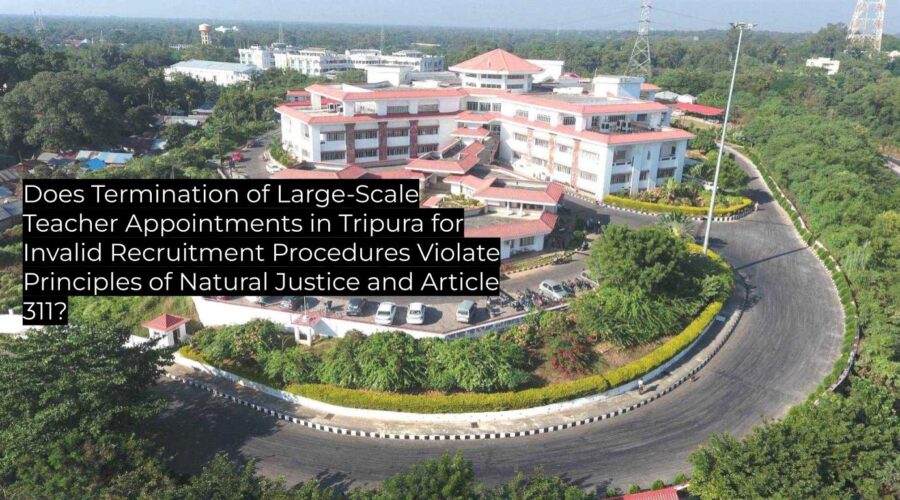
Does Termination of Large-Scale Teacher Appointments in Tripura for Invalid Recruitment Procedures Violate Principles of Natural Justice and Article 311?

The High Court of Tripura reaffirmed and applied previous Division Bench and Full Bench precedents to hold that the mass termination of under graduate, graduate, and post graduate teachers pursuant to invalid recruitment processes did not violate principles of natural justice or Article 311, since the entire appointment process was previously adjudged illegal and set […]

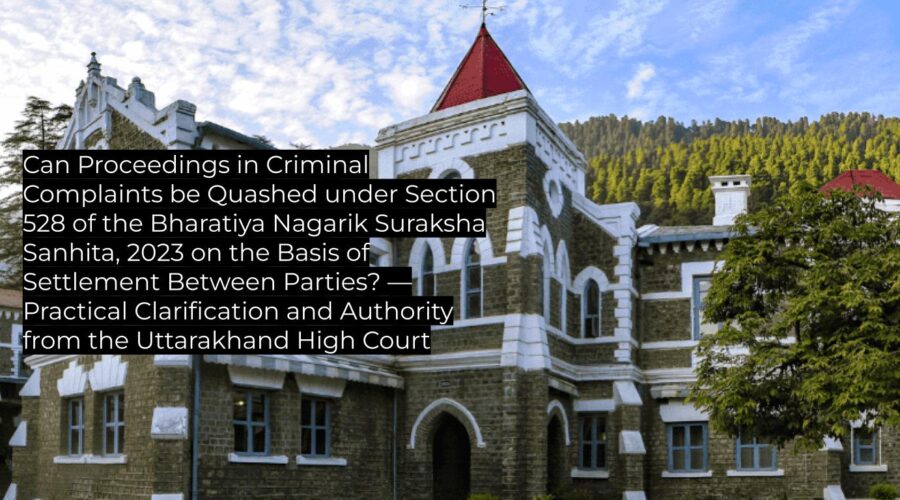
Can Proceedings in Criminal Complaints be Quashed under Section 528 of the Bharatiya Nagarik Suraksha Sanhita, 2023 on the Basis of Settlement Between Parties? — Practical Clarification and Authority from the Uttarakhand High Court

The Uttarakhand High Court has clarified that criminal proceedings in complaint cases may be quashed under Section 528 of the BNSS, 2023, when parties demonstrate an amicable settlement and the dispute is private in nature. The judgment affirms existing discretionary powers for quashing and serves as binding authority within the State, providing practical precedent for […]

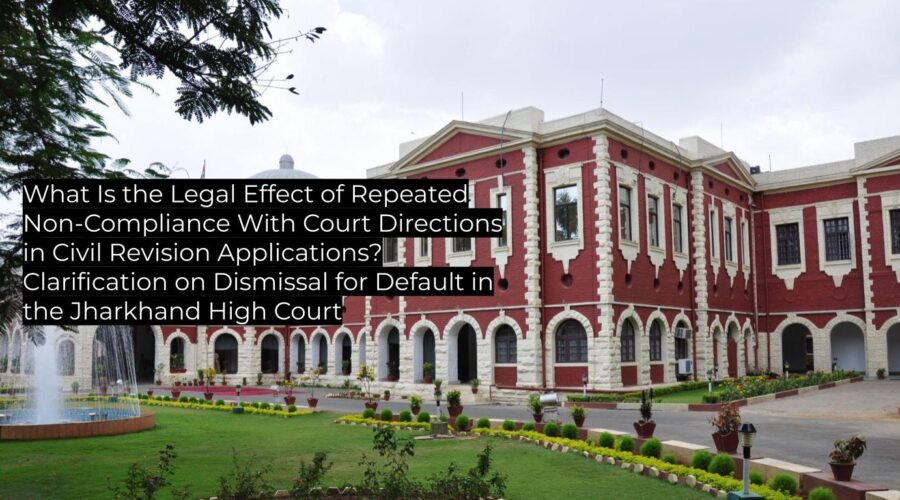
What Is the Legal Effect of Repeated Non-Compliance With Court Directions in Civil Revision Applications? Clarification on Dismissal for Default in the Jharkhand High Court

The Jharkhand High Court reaffirms the established principle that persistent failure to comply with court orders or take procedural steps constitutes valid grounds for dismissal of a civil revision for non-prosecution. The judgment upholds existing precedent, confirming binding procedural standards for litigants in similar applications.   Summary Category Data Case Name C.R./8/2022 of SURJEET GHOSH […]

Does the Court Have Inherent Discretion to Allow Late Filing of Certified Revenue Records (Jamabandi) at Final Stages of Partition Suits Under Order 7 Rule 14(3) CPC?

The High Court reaffirmed that certified copies of revenue records—being public and per se admissible documents—can be placed on record at any stage of partition proceedings under Order 7 Rule 14(3) CPC, particularly to achieve substantial justice. The judgment upholds established procedural discretion, clarifying it as binding authority for trial courts dealing with delayed submission […]

Does the Mere Absence of Stock Accounting by a Licensed Manufacturer of Psychotropic Substances Constitute an Offence under Section 22 of the NDPS Act? Himachal Pradesh High Court Clarifies the Scope of Criminal Liability for Licensed Pharmaceutical Entities under the NDPS Act; Upholds Precedent; Serves as Persuasive Authority

Court holds that failure to maintain stock records or account for missing psychotropic substances, without evidence of unauthorised manufacture, sale, transport, or use, is not sufficient to frame charges under Sections 22, 27A, or 29 of the NDPS Act. Affirms existing Supreme Court precedent on standards for discharge and clarifies application of NDPS Act provisions […]

When Can a High Court Interfere With an Acquittal? Scope of Appellate Powers Reaffirmed in Criminal Appeals Against Acquittal

High Court upholds the principle that interference with acquittal is permissible only when the trial court judgment is perverse, based on misreading or omission of material evidence, or when no two reasonable views are possible. The judgment follows and reiterates Supreme Court precedent, clarifying the high threshold for appellate intervention in criminal acquittals. Applicable as […]

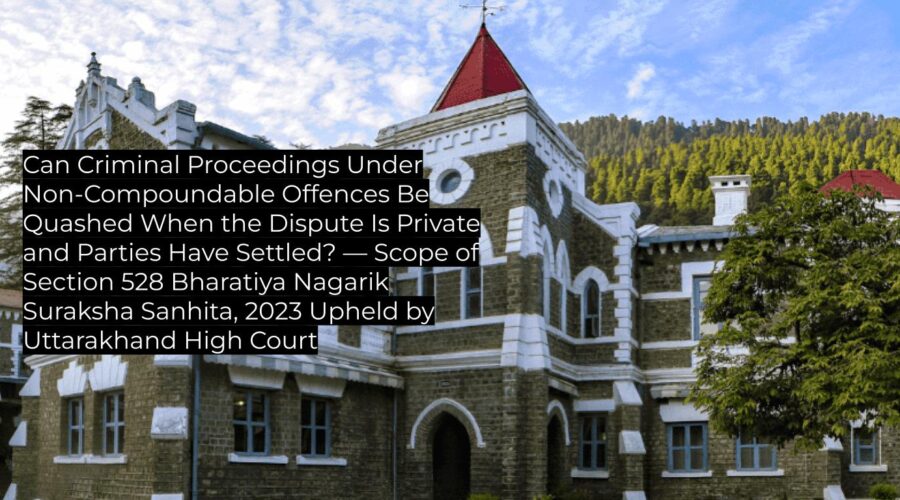
Can Criminal Proceedings Under Non-Compoundable Offences Be Quashed When the Dispute Is Private and Parties Have Settled? — Scope of Section 528 Bharatiya Nagarik Suraksha Sanhita, 2023 Upheld by Uttarakhand High Court

The Uttarakhand High Court reaffirmed that even for non-compoundable offences, criminal proceedings can be quashed if the underlying dispute is private and both complainant and accused agree to settlement. The Court upheld the prevailing precedent, confirming the discretionary power under Section 528 of BNSS, 2023. This decision serves as binding authority within Uttarakhand, particularly pertinent […]

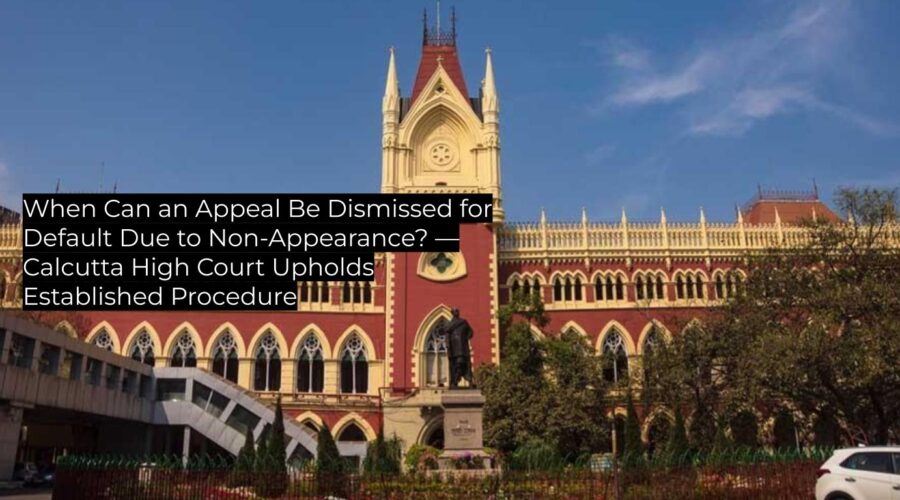
When Can an Appeal Be Dismissed for Default Due to Non-Appearance? — Calcutta High Court Upholds Established Procedure

Calcutta High Court affirms that repeated non-appearance by parties can result in dismissal of appeals for default, reiterating the settled judicial standard; the principle retains full precedential value for procedural dismissals across all civil courts.   Summary Category Data Case Name SA/916/1965 of BUDGE BUDGE AMALGAMATED MILLS LIMITED Vs RAMNARAIN MISRA CNR WBCHCA0002721965 Date of […]

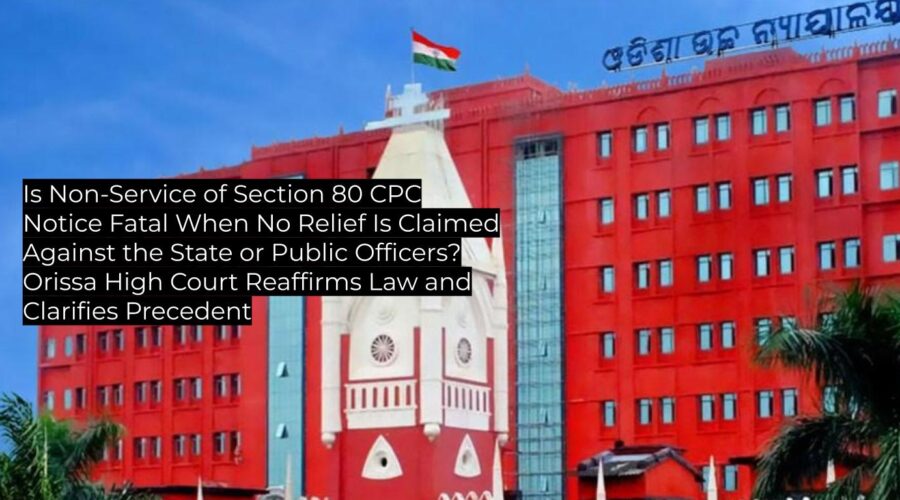
Is Non-Service of Section 80 CPC Notice Fatal When No Relief Is Claimed Against the State or Public Officers? Orissa High Court Reaffirms Law and Clarifies Precedent

Orissa High Court holds that Section 80 CPC notice is not mandatory where no independent relief is claimed against the State or public officers, even if they are impleaded as parties. The Court affirms established precedent and highlights that the main relief of declaration of title determines the procedural requirement. This ruling serves as binding […]

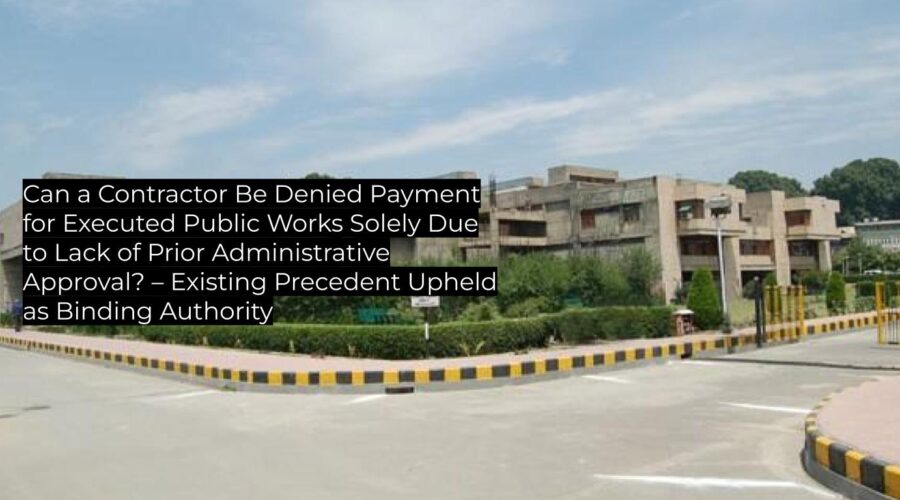
Can a Contractor Be Denied Payment for Executed Public Works Solely Due to Lack of Prior Administrative Approval? – Existing Precedent Upheld as Binding Authority

The court reaffirmed that government authorities cannot withhold payment for undisputed work executed by a contractor merely on the ground of absence of prior administrative approval, when liability and completion are admitted. This decision upholds settled legal principles, reinforcing that administrative lapses of officials cannot prejudice legitimate contractors’ dues. Binding on all subordinate courts handling […]

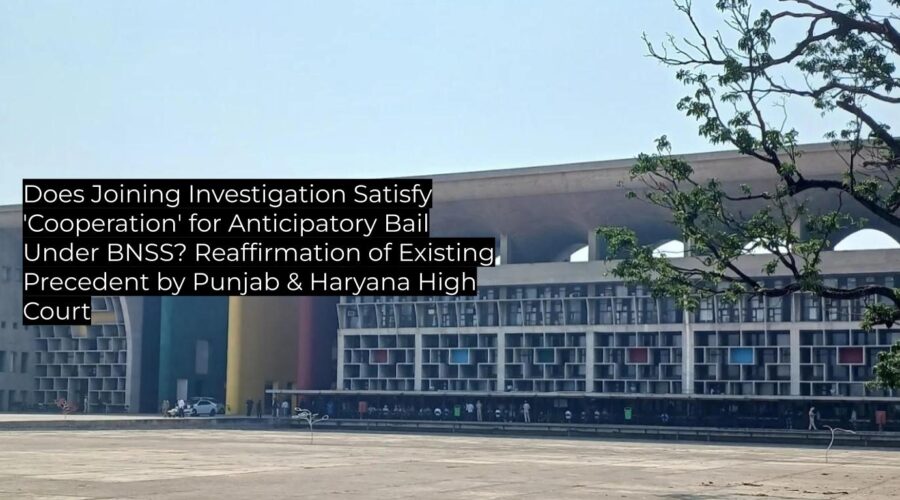
Does Joining Investigation Satisfy ‘Cooperation’ for Anticipatory Bail Under BNSS? Reaffirmation of Existing Precedent by Punjab & Haryana High Court

The High Court reaffirmed that, once an accused joins investigation and responds to lawful queries, their cooperation cannot be doubted merely because no incriminating recovery was made. Reliance placed on Santosh v. State of Maharashtra and recent Supreme Court authority. This binding judgement clarifies anticipatory bail standards under the Bharatiya Nagarik Suraksha Sanhita, 2023, and […]