Does the Failure to Apply Statutory Minimum Wages in Computing Motor Accident Compensation Require Appellate Intervention?

The High Court holds that compensation assessed on notional income, when contrary to statutory minimum wages for skilled workers, is subject to correction at the appellate stage. The judgment applies and clarifies binding principles from the Supreme Court on assessment of income and is binding authority for trial courts and claims tribunals in Chhattisgarh.   […]
Does Confirmation of Conviction for Murder Under Sections 302/34 IPC Require Direct Eyewitness Testimony, or Can Conviction Rest Solely on Circumstantial Evidence and Corroborative Recoveries?

The Chhattisgarh High Court affirms that a conviction for murder can be sustained based on a complete chain of circumstantial evidence, corroborative medical findings, and recoveries pursuant to Section 27 of the Evidence Act, even in the absence of direct eyewitness testimony. This judgment upholds established precedent and serves as binding authority for subordinate courts […]

Does Failure to Serve Notice under Rule 142(1)(A) of CGST Rules, 2017 Render GST Assessment Orders Void?

The Andhra Pradesh High Court reiterates and applies its prior holding that omission of notice under Rule 142(1)(A) vitiates assessment under GST laws. The decision firmly upholds earlier precedent and operates as binding authority within its jurisdiction, with direct impact on GST assessment proceedings.   Summary Category Data Case Name WP/21950/2025 of SHRI VAARI ELECTRICALS […]

When Will High Courts Decline Article 226 Writ Jurisdiction Due to Alternate Remedies in Bank Loan Cases? — Precedent Affirmed by Reliance on Supreme Court Judgments

High Courts will generally refuse to exercise Article 226 writ jurisdiction in banking matters where an alternative efficacious remedy (such as a Debts Recovery Tribunal) exists; this position is reaffirmed by express reliance on Supreme Court judgments in Radha Krishan Industries (2021) and United Bank of India v. Satyawati Tondon (2010); the case serves as […]

Can a High Court Mandamused to Direct Police Action on Complaints Be Withdrawn Without Substantive Adjudication? *No Precedential Change Made When Writ Petitions Under Article 226 Are Withdrawn Before Merits Are Examined*

The Andhra Pradesh High Court permitted withdrawal of a writ seeking mandamus for police action, without examining the underlying legal issues; this decision leaves existing precedent undisturbed and holds no binding or persuasive authority for future cases involving police inaction or writ remedies.   Summary Category Data Case Name WP/21969/2020 of Perumalla Immanuel, Vs The […]

Does a Person Without Documentary Title to Land Have a Right to Mandamus for Pattadar Passbook and Title Deeds? — Clarification by Andhra Pradesh High Court on Documentary Proof and Possession Requirements

A writ of mandamus directing revenue authorities to issue pattadar passbooks and title deeds cannot be granted when the petitioner fails to produce documentary evidence of title or possession; the petitioner must make a fresh application with supporting documents for consideration. The Court reaffirms procedural requirements under revenue statutes and registers no deviation from established […]

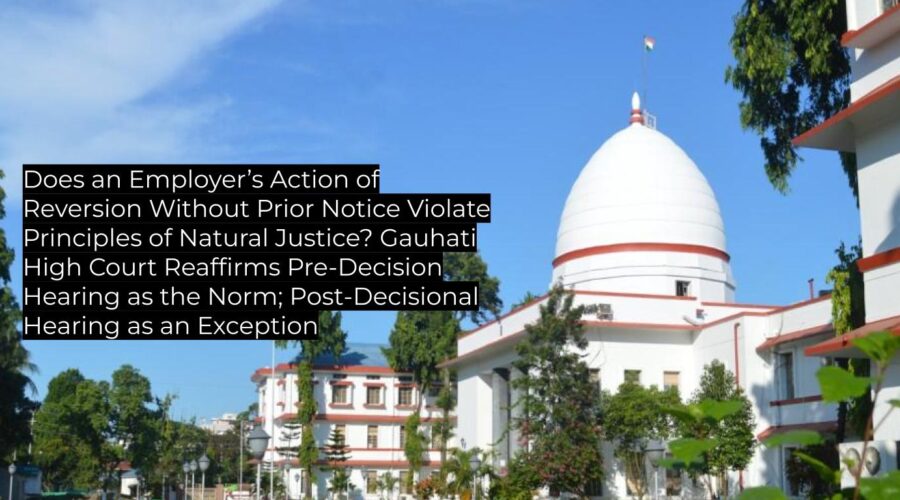
Does an Employer’s Action of Reversion Without Prior Notice Violate Principles of Natural Justice? Gauhati High Court Reaffirms Pre-Decision Hearing as the Norm; Post-Decisional Hearing as an Exception

The Gauhati High Court has clarified that reversion of an employee affecting civil rights cannot be effected without adherence to the principles of natural justice, and pre-decisional hearing is the norm. Post-decisional hearing may be permitted only with the consent of the parties. This decision upholds and affirms existing precedent, reinforcing the necessity of due […]

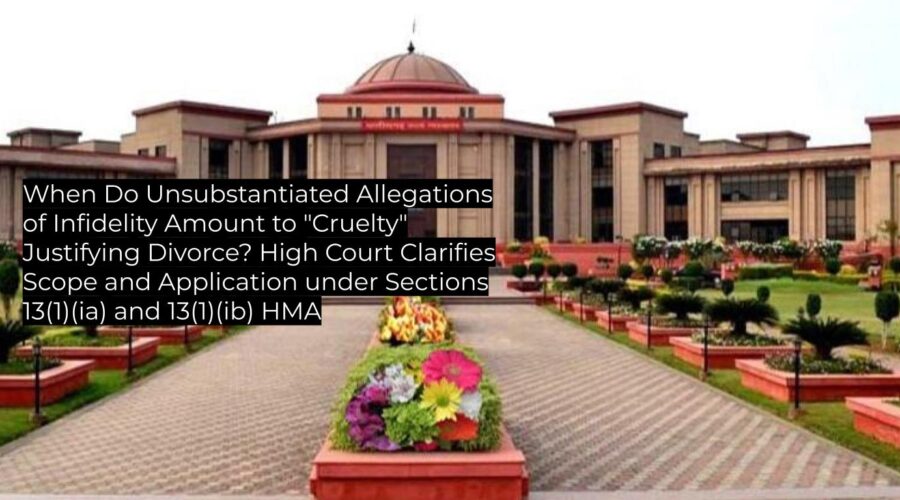
When Do Unsubstantiated Allegations of Infidelity Amount to “Cruelty” Justifying Divorce? High Court Clarifies Scope and Application under Sections 13(1)(ia) and 13(1)(ib) HMA

Chhattisgarh High Court applies Supreme Court precedent to hold that unproven and scandalous allegations of adultery levelled by one spouse against the other constitute mental cruelty warranting divorce, while also reaffirming the elements required for establishing desertion under matrimonial law; the judgment sets binding precedent for subordinate courts within the state.   Summary Category Data […]

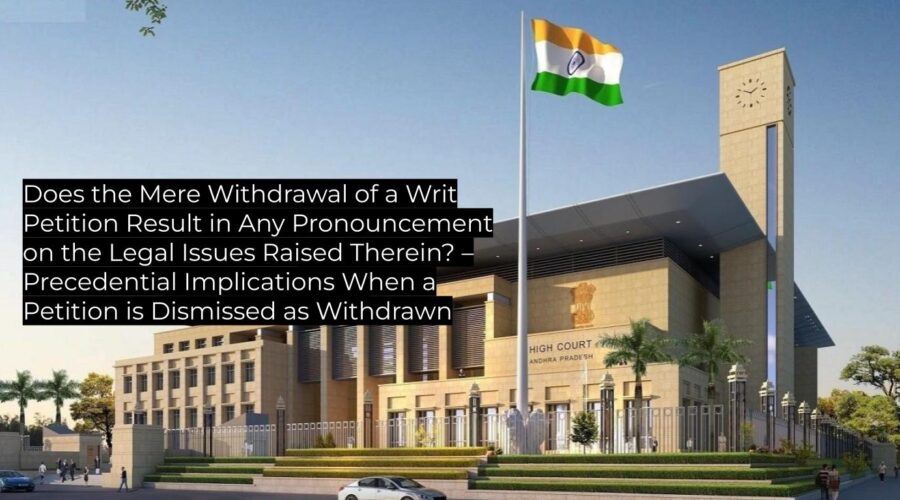
Does the Mere Withdrawal of a Writ Petition Result in Any Pronouncement on the Legal Issues Raised Therein? – Precedential Implications When a Petition is Dismissed as Withdrawn

The Court clarified that the dismissal of a writ petition as withdrawn results in no adjudication on the merits and does not lay down any law for future cases. This dispositional order does not alter, affirm, or overrule any existing precedent, and such orders carry no binding or persuasive precedential value.   Summary Category Data […]

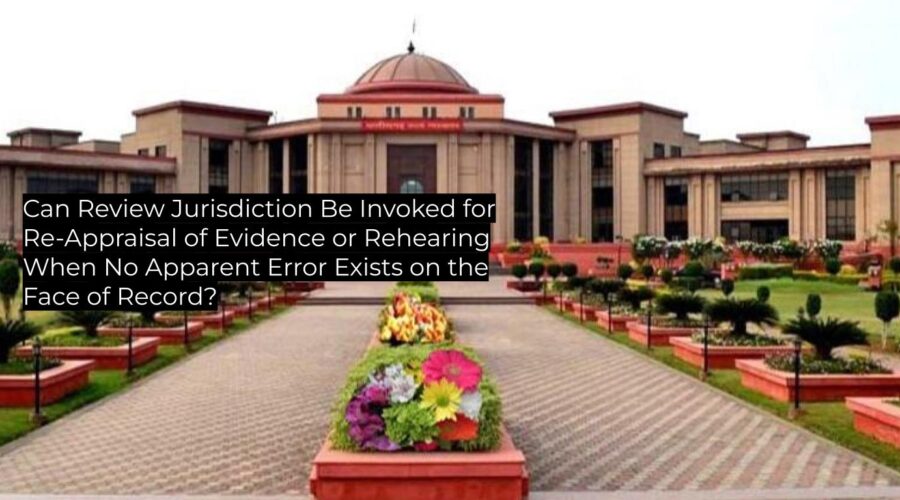
Can Review Jurisdiction Be Invoked for Re-Appraisal of Evidence or Rehearing When No Apparent Error Exists on the Face of Record?

The High Court reiterates that review jurisdiction is strictly limited to correcting errors apparent on the face of the record or overlooked legal provisions; it cannot be used for re-hearing or re-appreciation of evidence. This judgment upholds longstanding Supreme Court precedents and serves as binding authority on the limited scope of review petitions in civil […]

Does Insistence by a Spouse to Separate from the Joint Family Amount to “Cruelty” Under Section 13(1)(ia) Hindu Marriage Act? — Precedent Affirmed by Chhattisgarh High Court Division Bench

The Division Bench of the Chhattisgarh High Court holds that a wife’s insistence that her husband abandon his parents and live separately constitutes “mental cruelty” within the meaning of Section 13(1)(ia) of the Hindu Marriage Act, reaffirming existing legal principles. This decision confirms that persistent demands for separate residence, substantiated by evidence and admissions, justify […]

Can Maintenance Be Denied to a Legally Wedded Wife under Section 125 CrPC on the Ground of Suspected Adultery?

The High Court of Chhattisgarh reaffirmed that maintenance under Section 125 CrPC can be refused to a wife if the Family Court arrives at credible findings of her adulterous conduct, after full consideration of evidence. The judgment upholds the Family Court’s discretion and evidentiary assessment, reinforcing existing law and setting binding precedent for all subordinate […]