Can Offences of Predominantly Private Nature Under IPC be Quashed Based on Compromise Under Section 528 BNSS, 2023? – Punjab & Haryana High Court Reaffirms Principles and Applies Them to BNSS

The Punjab & Haryana High Court confirms that the established principles for quashing of criminal proceedings based on compromise—previously applied under Section 482 CrPC—are equally applicable under the identical provision, Section 528 of the BNSS, 2023. The Court clarifies the scope and limits for quashing FIRs involving non-compoundable, but predominantly private, offences, and sets binding […]

Does Prolonged Pre-Trial Detention Justify Grant of Bail in Heinous Offences When Trial Is Delayed and Investigation Is Complete?

The court clarified that prolonged incarceration, non-expeditious trial, and completion of investigation may warrant release on bail even in serious offences, reaffirming established principles and providing binding authority for subordinate courts in Punjab and Haryana.   Summary Category Data Case Name CRM-M/53830/2024 of NAVDEEP Vs STATE OF HARYANA CNR PHHC011469362024 Date of Registration 24-10-2024 Decision […]

Can High Courts Quash 498A/406 IPC Cases After Matrimonial Compromise? — Precedent Reaffirmed and Strengthened as Binding Authority

Delhi High Court confirms that criminal proceedings under Sections 498A/406/34 IPC can be quashed when matrimonial disputes have been amicably settled between the parties. This judgment reaffirms settled precedent, carries binding authority for subordinate courts in Delhi, and guides matrimonial practitioners across the jurisdiction.   Summary Category Data Case Name CRL.M.C./6188/2025 of AJAY & ORS. […]

Can Conviction under Section 307 IPC Be Altered to Section 308 IPC Owing to Lack of Proven Intention to Murder Despite “Dangerous” Injury? — Reaffirmation of Evidentiary Standards for Section 307 IPC by the Delhi High Court

Where evidence does not establish the intention to commit murder, conviction under Section 307 IPC may be altered to Section 308 IPC, even if the injury is “dangerous”. The Delhi High Court clarifies and narrows standards for intention under Section 307 IPC; the precedent reaffirms that non-recovery of weapon or blood-stained clothes, by itself, does […]

Does Delay or Subsequent Conduct Bar KVS Employees from Switching to the GPF-cum-Pension Scheme? Clarification and Reaffirmation of Deeming Clause, Beneficial Nature, and Judicial Precedent

The Delhi High Court has reaffirmed that KVS employees who did not explicitly opt for the CPF Scheme are deemed members of the GPF-cum-Pension Scheme, regardless of subsequent conduct or delayed claims, following the Supreme Court’s rulings in S.L. Verma and Shashi Kiran. This ruling upholds binding precedent, clarifies the law for all KVS employees, […]

Can a Second Appeal Be Decided on Merits When the Appellant Withdraws the Appeal? — Reaffirming the Discretion to Dismiss as Not Pressed

The Madras High Court confirms that an appellant may withdraw a second appeal under Section 100 CPC, resulting in dismissal as “not pressed”; this upholds existing procedural law, following established precedent, and serves as binding authority for subordinate courts in civil matters.   Summary Category Data Case Name SA/163/2014 of M.KUMAR Vs AMIRUNNISA BEGUM SAHIBA […]

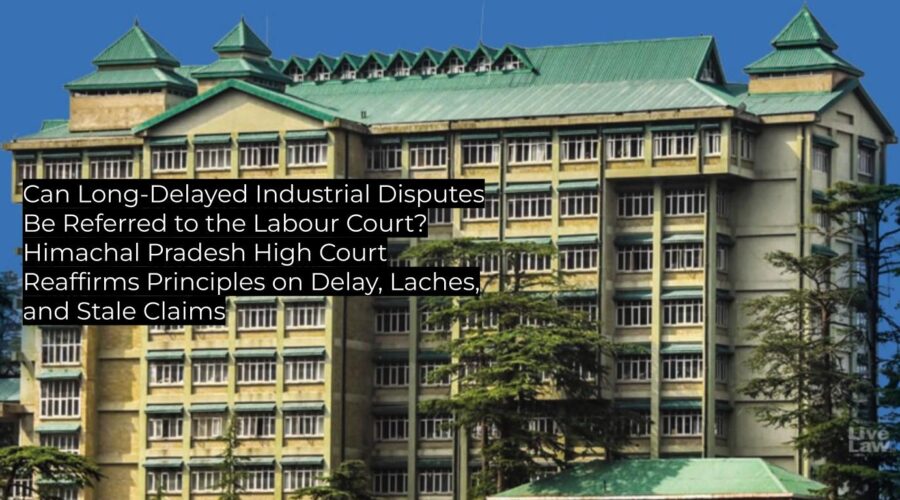
Does Enormous Delay in Raising Industrial Disputes Bar Reference by Government? Himachal Pradesh High Court Reaffirms Legal Position on Stale Claims Under Section 10(1) of the Industrial Disputes Act

The Himachal Pradesh High Court has upheld the State’s discretion to refuse reference of industrial disputes that are stale or raised after inordinate delay, affirming binding Full Bench and Supreme Court precedents. This judgment clarifies the law for all similar future disputes, reaffirming that unexplained delay and acquiescence by workmen can defeat their claim to […]

Can Long-Delayed Industrial Disputes Be Referred to the Labour Court? Himachal Pradesh High Court Reaffirms Principles on Delay, Laches, and Stale Claims

The Himachal Pradesh High Court, in a batch of Letters Patent Appeals, has upheld existing precedent that the Government may refuse to refer industrial disputes to the Labour Court when raised after prolonged delay, holding that stale or faded claims are not entitled to be reopened. Decision aligns with established Supreme Court and Full Bench […]

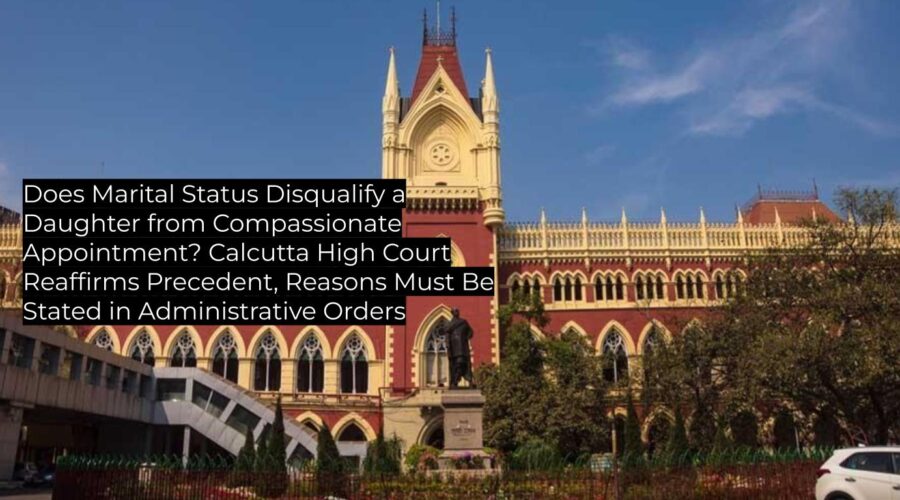
Does Marital Status Disqualify a Daughter from Compassionate Appointment? Calcutta High Court Reaffirms Precedent, Reasons Must Be Stated in Administrative Orders

The Calcutta High Court has clarified that marital status of a daughter does not disqualify her from seeking compassionate appointment, reaffirming binding precedent and emphasizing the requirement for administrative authorities to provide cogent, recorded reasons in their decisions. This serves as binding authority for subordinate courts and governmental/PSU employers within the State of West Bengal. […]

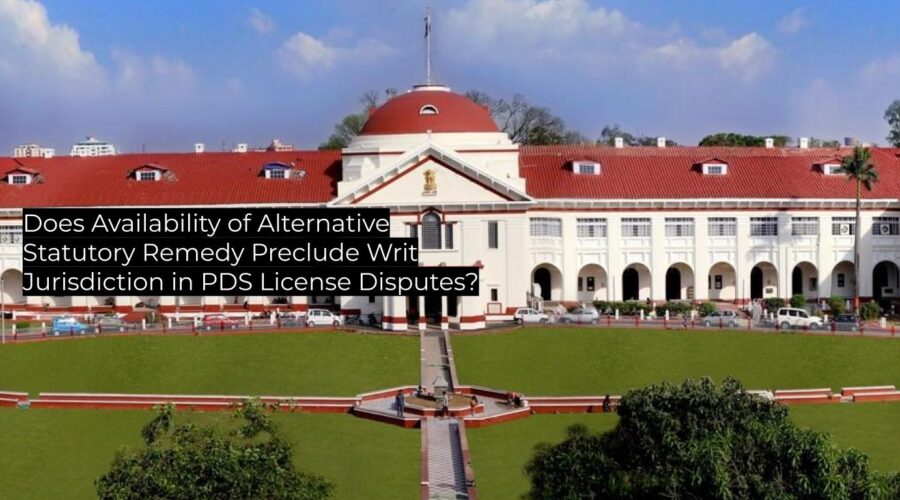
Does Availability of Alternative Statutory Remedy Preclude Writ Jurisdiction in PDS License Disputes?

The Patna High Court reaffirmed that writ jurisdiction should not be exercised when an effective statutory remedy exists under the Bihar Targeted Public Distribution System (Control) Order, 2016. The Court directed that aggrieved parties must approach statutory appellate/revisional authorities before invoking writ jurisdiction. This judgment consolidates existing precedent and guides similar administrative disputes across the […]

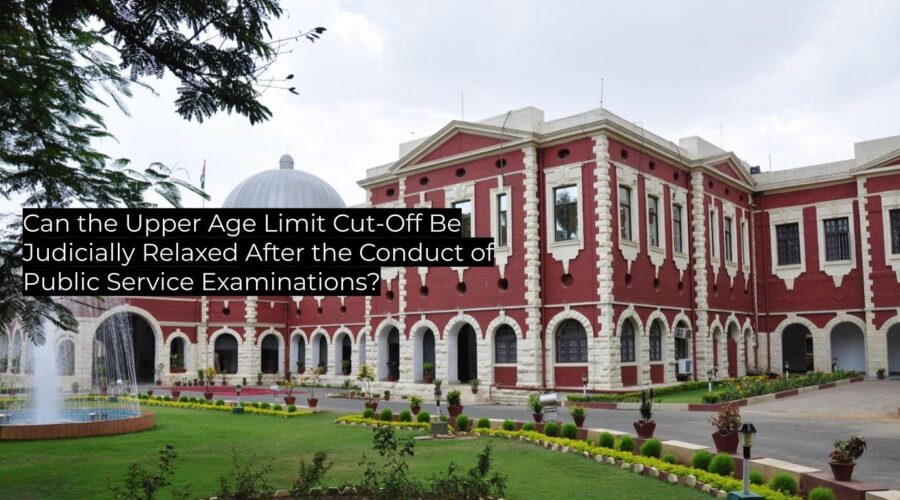
Can the Upper Age Limit Cut-Off Be Judicially Relaxed After the Conduct of Public Service Examinations?

The Court has unequivocally held that once the last date for application and the date of the examination have passed, courts cannot grant relaxation or alter the cut-off date for upper age limit eligibility. This judgment strictly affirms existing precedent, providing binding guidance to subordinate courts, public service commissions, and applicants in the context of […]

When Can a High Court Dismiss a Writ Petition as Withdrawn Without Considering the Merits? — No New Legal Principle Laid Down, No Change to Existing Law

Clarifies that a writ petition may be dismissed as withdrawn at the request of the petitioners once their grievance is redressed, with no objection from other parties; judgment upholds existing precedent and holds no precedential value for contentious questions of law.   Summary Category Data Case Name WPC/975/2025 of RAJESH YADAV Vs THE STATE OF […]