Can an Executing Court Impose Conditions Not Contained in the Decree—Such as Payment of Interest—by Invoking Inherent Powers? Reaffirmation of the Limitations on the Powers of Executing Courts

The High Court of Punjab and Haryana has unequivocally held that an Executing Court cannot travel beyond the terms of the decree to impose new conditions such as interest payments, even by invoking its inherent powers under Section 151 CPC. This ruling upholds the binding precedent of the Supreme Court and acts as binding authority […]
Can Regular Bail Be Granted in a POCSO Case When the Victim and Key Witness Turn Hostile After Examination-in-Chief?

The High Court has clarified that in prosecutions under serious offences like Section 376 IPC and Section 6 POCSO Act, regular bail may be granted to the accused if, after the presentation of challan, the prosecutrix and her mother (chief witnesses) do not support the prosecution case in their testimonies. This judgment affirms and applies […]

Can High Courts Quash FIRs Under BNS, 2023 on the Basis of Private Compromise? Precedent Reaffirmed on Inherent Powers Under Section 528 BNSS

The High Court of Punjab and Haryana, reaffirming past Supreme Court and Full Bench precedent, held that it may quash FIRs and criminal proceedings involving mainly private disputes—even for non-compoundable offences under BNS, 2023—if parties have settled and continuation would serve no purpose. The decision maintains consistency with established precedent and is binding on subordinate […]

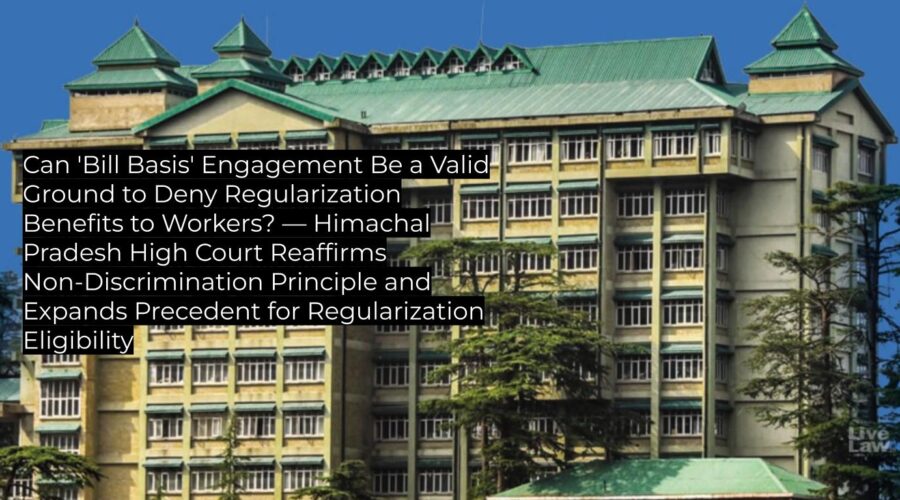
Can ‘Bill Basis’ Engagement Be a Valid Ground to Deny Regularization Benefits to Workers? — Himachal Pradesh High Court Reaffirms Non-Discrimination Principle and Expands Precedent for Regularization Eligibility

The Himachal Pradesh High Court has clarified that the nomenclature of a worker as “bill basis” instead of “daily wage” cannot be used to deny regularization under State policy, reaffirming and extending prior precedent to ensure equal treatment for all similarly situated workers. This judgment follows and strengthens existing judicial trends and is binding on […]

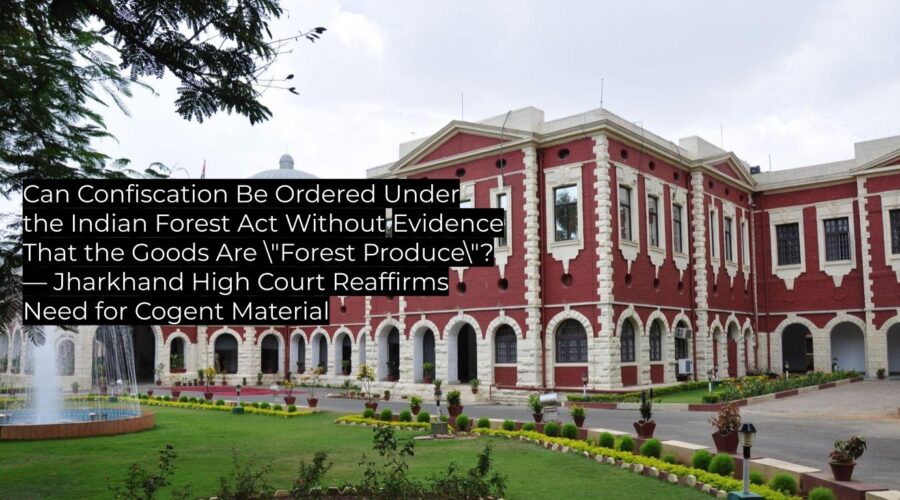
Can Confiscation Be Ordered Under the Indian Forest Act Without Evidence That the Goods Are \”Forest Produce\”? — Jharkhand High Court Reaffirms Need for Cogent Material

The Jharkhand High Court has clarified that confiscation proceedings under the Indian Forest Act, 1927 cannot be sustained where there is no evidence or cogent material showing that the seized items constitute \”forest produce\”. The judgment upholds established legal principles and serves as binding precedent for subordinate courts in similar cases involving alleged forest offences […]

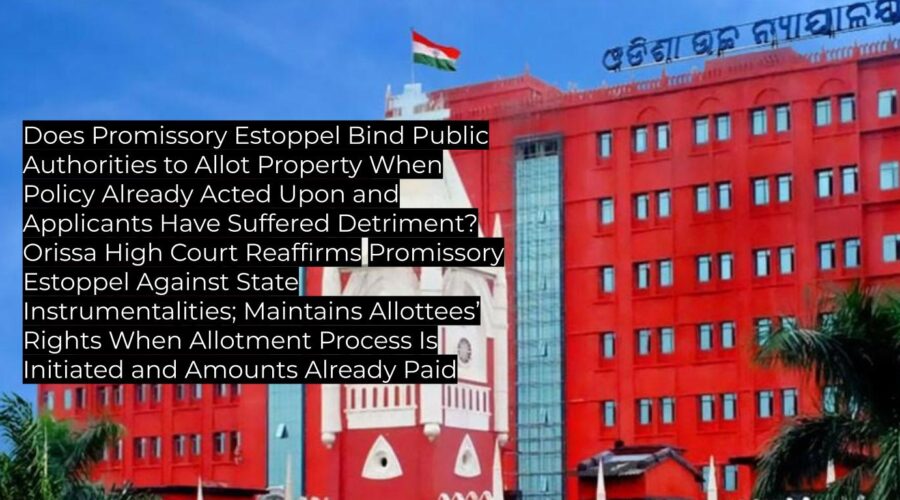
Does Promissory Estoppel Bind Public Authorities to Allot Property When Policy Already Acted Upon and Applicants Have Suffered Detriment? Orissa High Court Reaffirms Promissory Estoppel Against State Instrumentalities; Maintains Allottees’ Rights When Allotment Process Is Initiated and Amounts Already Paid

Promissory estoppel applies to public sector entities like LIC when applicants have altered their position relying on a published housing scheme and remitted substantial payments; subsequent changes in policy after removal of legal impediments cannot defeat such claims. The Orissa High Court declines to treat the principle of alternate remedy as an absolute bar to […]

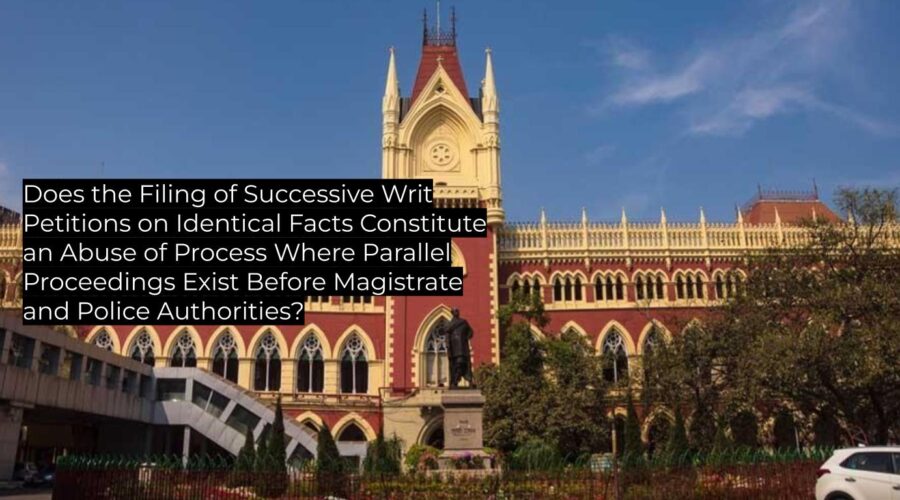
Does the Filing of Successive Writ Petitions on Identical Facts Constitute an Abuse of Process Where Parallel Proceedings Exist Before Magistrate and Police Authorities?

The Calcutta High Court reaffirms that where a writ petition on identical facts has previously been dismissed, and executive as well as police authorities are already acting on the matter, subsequent writ petitions are not maintainable and the dispute should be left to statutory authorities. This judgment upholds the existing precedent and is binding authority […]

Does Cancellation of a Railway Selection Panel Require Prior Notice and Detailed Reasons When Based on Alleged Irregularities? Calcutta High Court Reaffirms Strict Compliance with Principles of Natural Justice and Railway Board Instructions

The Calcutta High Court upheld that any cancellation of a selection panel for railway promotions, even on grounds of alleged irregularities or vigilance reports, cannot be sustained unless affected candidates are given due notice outlining specific reasons, as mandated by RBE No. 192/2019 and principles of natural justice. This decision reaffirms precedent, clarifies existing law, […]

When Must Courts Examine the Legality of Seizure Lists Under the Essential Commodities Act Before Conviction? — Reaffirmation of Scrupulous Compliance and Evidentiary Standards

The Calcutta High Court held that a conviction under Section 7(1)(a)(ii) of the Essential Commodities Act cannot be sustained if the seizure list—the foundation of prosecution—is not shown to comply with legal requirements. The judgment sets a binding precedent, emphasizing strict evidentiary standards for seizure procedures in E.C. Act cases and nullifying convictions resting on […]

Does Subsequent Acquisition of Property by Landlord After Filing an Eviction Petition Defeat the Ground of Bona Fide Requirement?

The Court held that in eviction proceedings, the bona fide requirement of the landlord is assessed as on the date of filing the eviction petition; subsequent acquisition of property during the pendency of the proceeding does not defeat such a claim. Reaffirms established precedent, confirming this as binding authority for rent matters.   Summary Category […]

Can Judgment-Debtors Challenge Execution of a Decree by Raising Fraud or Heirship Objections Already Decided in the Original Suit? Affirms Supreme Court Precedent, Upholds Finality of Decrees, and Clarifies Maintainability of Applications under Repealed Section 48 CPC—Binding Authority for Punjab & Haryana Subordinate Courts

The Punjab and Haryana High Court reaffirmed that judgment-debtors cannot invoke pleas of fraud or disputed heirship in execution proceedings when those issues have been finally adjudicated in the original suit and appeals. Applications under repealed Section 48 CPC are not maintainable. The Court aligns with Supreme Court law, confirming settled principles of finality and […]

Can Regular Bail Be Granted Under Section 483 of the Bharatiya Nagarik Suraksha Sanhita, 2023, When the Trial Is at Its Fag End?

The High Court reaffirms that when prosecution evidence is closed and trial is at its end stage, granting regular bail is not warranted; this judgment follows established principles and serves as binding precedent for subordinate courts considering bail at comparable procedural stages in criminal matters.   Summary Category Data Case Name CRM-M/49481/2025 of ARSHDEEP SINGH […]