Can Revenue Authorities in Ex-Princely States of Odisha Entertain Mutation Applications on the Basis of Un-Probated Wills? — Precedent Upheld by Orissa High Court, 2025

Orissa High Court reaffirms that in ex-princely (Gadajat) districts, mutation proceedings can be initiated on un-probated wills; probate is not a legal precondition. Prior judgments are upheld and binding guidelines reiterated for all revenue authorities in these areas.   Summary Category Data Case Name WP(C)/28257/2025 of SK.ABDUL OBRAD @ OHID Vs STATE OF ODISHA CNR […]
Does an Administrative Order Canceling a Certificate Without Considering the Petitioner’s Reply Violate Principles of Natural Justice?

The Patna High Court has held that cancellation of a work experience certificate by a public authority, without due consideration of the petitioner’s response to a show cause notice, constitutes a non-application of mind and a breach of natural justice. The Court set aside the ex parte order and remanded the matter for a fresh […]

Does an Acquiring Body’s “Pick and Choose” Approach in Land Acquisition Appeals Constitute Discriminatory Conduct? Clarification and Application of Compensation Principles: Binding Value for Land Acquisition Cases

The Bombay High Court has reaffirmed that an acquiring authority cannot selectively accept certain Reference Court awards while challenging similar awards in other matters arising from the same land acquisition proceedings, as such conduct is discriminatory. The Court has further clarified the methodology for determining compensation for both dry and seasonally irrigated lands, affirming the […]

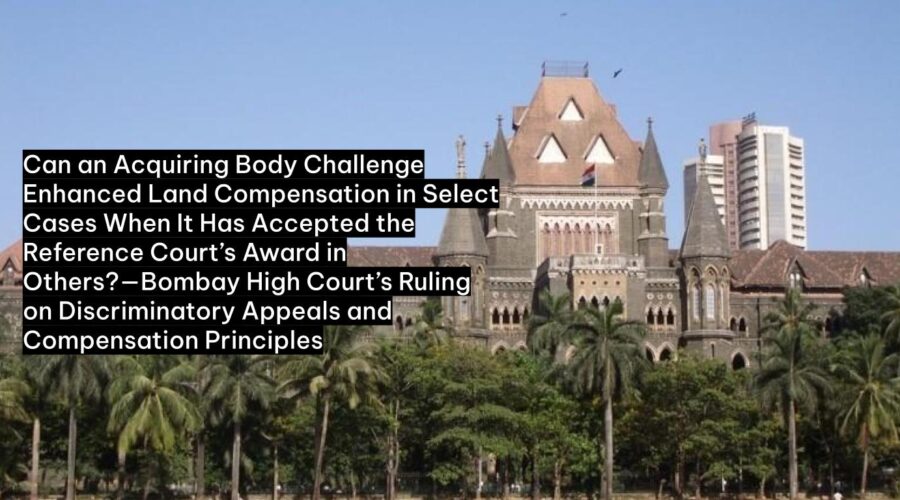
Can an Acquiring Body Challenge Enhanced Land Compensation in Select Cases When It Has Accepted the Reference Court’s Award in Others?—Bombay High Court’s Ruling on Discriminatory Appeals and Compensation Principles

The Bombay High Court has reiterated that State authorities cannot discriminate among similarly situated landowners by adopting a “pick and choose” approach in appeals against compensation enhancement awards under the Land Acquisition Act. Relying on binding Supreme Court precedent, the Court held that such selective challenges by the acquiring body are impermissible and confirmed the […]

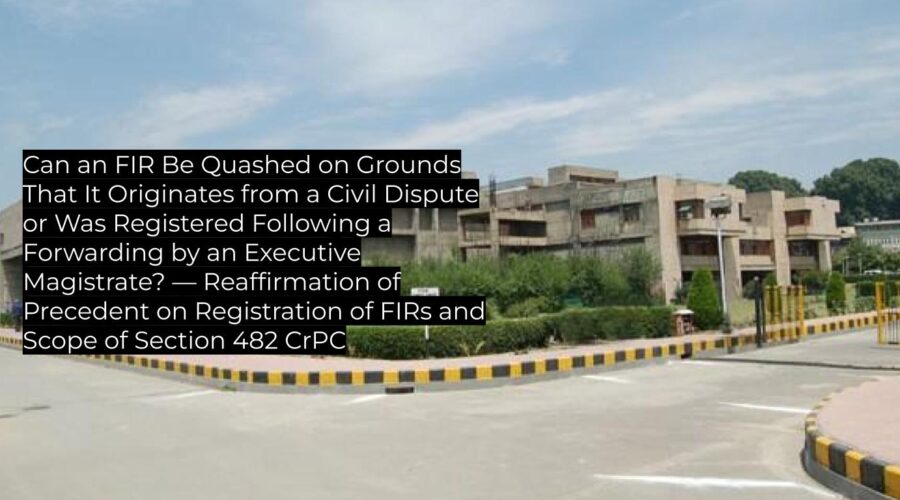
Can an FIR Be Quashed on Grounds That It Originates from a Civil Dispute or Was Registered Following a Forwarding by an Executive Magistrate? — Reaffirmation of Precedent on Registration of FIRs and Scope of Section 482 CrPC

The Court reaffirmed that police are duty-bound under Section 154 CrPC to register an FIR on receiving information of a cognizable offence, irrespective of administrative forwarding by an Executive Magistrate, and that a criminal investigation is not precluded merely because the dispute also has civil aspects. The judgment upholds established precedent, serving as binding authority […]

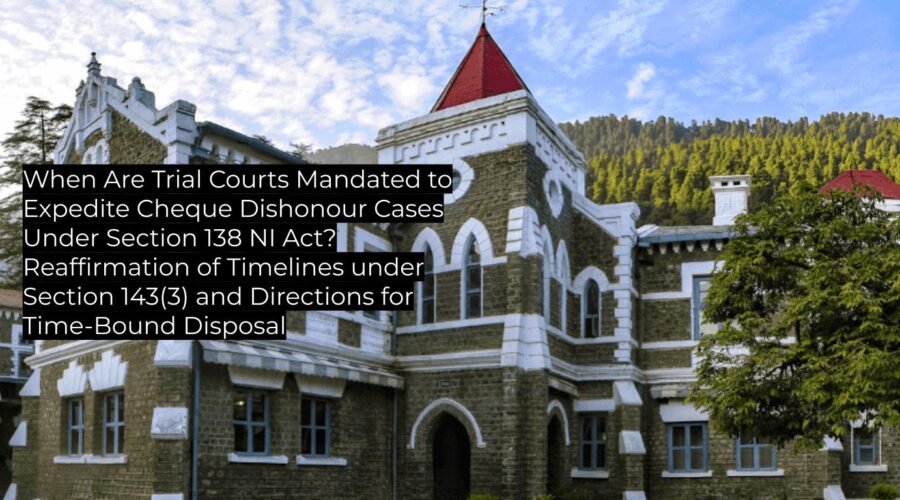
When Are Trial Courts Mandated to Expedite Cheque Dishonour Cases Under Section 138 NI Act? Reaffirmation of Timelines under Section 143(3) and Directions for Time-Bound Disposal

The Uttarakhand High Court reiterates that trial courts must endeavour to conclude Section 138 Negotiable Instruments Act cases within six months as per statutory mandate, and directs all subordinate courts to conclude long-pending matters within one year. This judgment upholds existing law and serves as binding authority for subordinate courts handling cheque bounce complaints.   […]

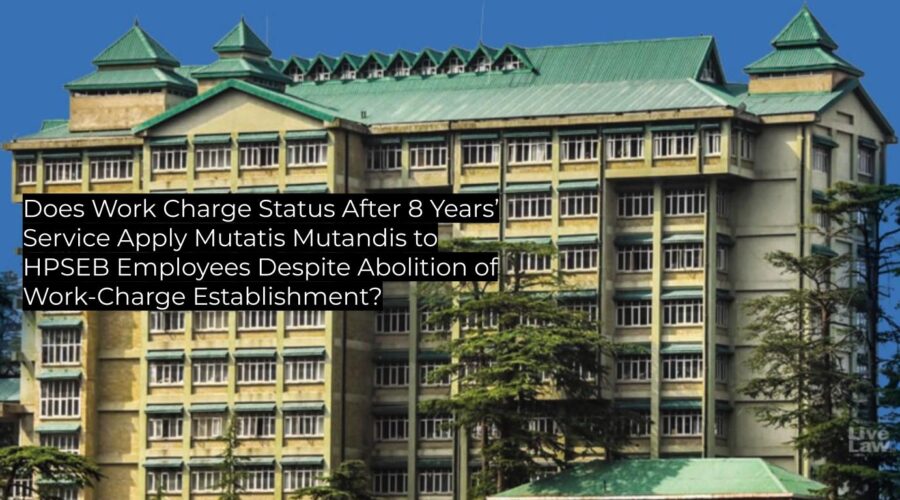
Does Work Charge Status After 8 Years’ Service Apply Mutatis Mutandis to HPSEB Employees Despite Abolition of Work-Charge Establishment?

The Himachal Pradesh High Court reaffirms that directions for grant of work-charge status after 8 years’ continuous service, as set out by the Supreme Court in Surajmani and Nanak Chand, apply to HPSEB employees even after abolition of the work-charge establishment. The decision maintains existing precedent and provides binding authority for similar employment claims in […]

When Is a Civil Writ Versus a Criminal Writ Petition Maintainable in High Court Regarding State Investigative and Police Actions?—Jharkhand High Court Clarifies Jurisdictional Boundaries and Roster Compliance

The Jharkhand High Court holds that writ petitions challenging actions arising out of or relating to powers exercised under criminal law (such as police investigation, search, and seizure under BNSS/CrPC) are maintainable only as Criminal Writ Petitions, not Civil Writs; the Court upholds existing Supreme Court and High Court precedent, emphasising the centrality of bench […]

Does a Trial Court Have to Issue Bailable Warrants Instead of Non-Bailable Warrants When Accused Are Joined via Section 319 CrPC Based on Evidence, and Multiple Investigations Have Not Led to Chargesheeting? – High Court Clarifies Discretion and Interim Protection

High Court affirms, relying on Inder Mohan Goswami v. State of Uttaranchal, that courts possess discretion to issue bailable warrants in appropriate cases, especially where the accused are joined under Section 319 CrPC despite earlier non-charging after investigation. Judgment provides binding authority for bail applications seeking conversion of non-bailable to bailable warrants in similar procedural […]

Does a Bail Application Merit Rejection When the Victim’s Testimony Fully Supports Prosecution in Serious Offences Under POCSO Act and B.N.S.?

The Jharkhand High Court reaffirmed that bail must be refused where the prosecutrix’s testimony fully supports grave allegations of gang rape and kidnapping under POCSO Act and B.N.S. The ruling upholds existing standards for bail in serious sexual offences and operates as binding precedent for subordinate courts handling similar matters.   Summary Category Data Case […]

When Can a Court Dismiss an Appeal for Non-Compliance with Office Objections?

A clarified affirmation by the High Court of Karnataka that failure to comply with office objections, despite repeated opportunities and peremptory orders, justifies dismissal of a first appeal under the Land Acquisition Act. This judgment upholds procedural discipline in appellate practice and serves as binding authority for all subordinate courts dealing with similar procedural defaults. […]

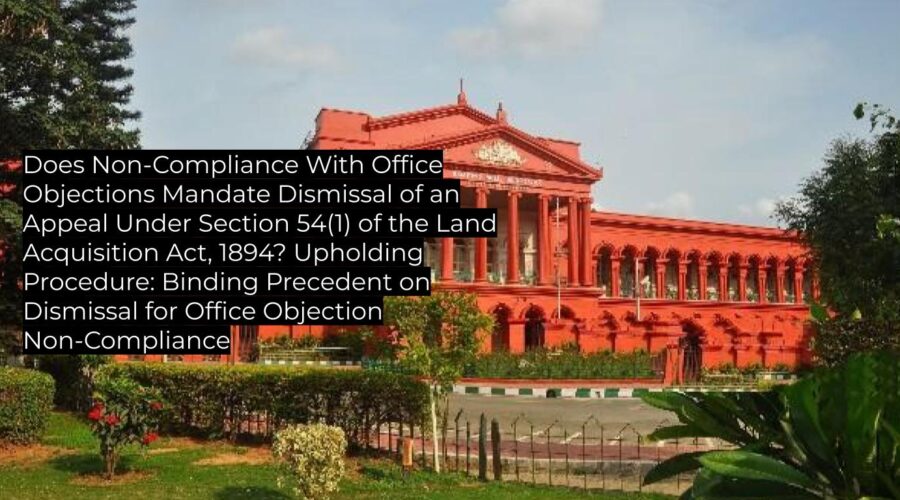
Does Non-Compliance With Office Objections Mandate Dismissal of an Appeal Under Section 54(1) of the Land Acquisition Act, 1894? Upholding Procedure: Binding Precedent on Dismissal for Office Objection Non-Compliance

The High Court of Karnataka reaffirmed that failure to comply with office objections, even after repeated adjournments and clear warnings, justifies dismissal of an appeal under Section 54(1) of the Land Acquisition Act, 1894. This decision follows established procedural law, serving as binding authority for subordinate courts within Karnataka and persuasive precedent elsewhere, especially in […]