Does Failure to Decide a Foundational Jurisdictional Fact Render Disengagement Orders Invalid Despite Arguments of “Useless Formailty” and Absence of Prejudice? Orissa High Court Reaffirms Limits to “No Prejudice” Doctrine in Administrative Law Reviews

The Court holds that violation of natural justice cannot be justified on the “useless formality” ground when the very basis for adverse action—such as the cohort or post to which an employee belongs—is factually disputed and unadjudicated. Reaffirms the necessity of a fair hearing in such circumstances; clarifies boundaries of the “no prejudice” exception. Upholds […]
When Can Criminal Proceedings Arising from Contractual Disputes Be Quashed Under Section 482 CrPC?

The Orissa High Court reaffirmed that criminal proceedings grounded in civil or contractual disputes lacking basic criminal ingredients are liable to be quashed under Section 482 CrPC. The judgment follows and applies settled Supreme Court precedents, providing binding authority within the State for distinguishing between civil and criminal liability in business transactions.   Summary Category […]

Can High Courts Intervene in NGT-Related Matters for Breach of Natural Justice Despite Section 22 of the NGT Act? Precedent Affirmed—High Court’s Writ Powers Not Ousted by Statutory Appeals; Natural Justice Enforcement Remains a Valid Ground

The Orissa High Court reaffirmed that alternative remedies under Section 22 of the National Green Tribunal Act, 2010, do not bar writ jurisdiction under Article 226 where there is a violation of natural justice, following established Supreme Court precedents. This ruling upholds the maintainability of writ petitions in such scenarios and serves as binding authority […]

Does Disposal of Multiple Connected Writ Petitions Without Detailed Reasons Establish Any New Law or Affect Precedent?

The judgment summarily disposes of a batch of writ petitions without entering into the merits or recording substantive findings, thereby neither setting nor overruling precedent; practical value is limited except for procedural closure in these specific matters within the Orissa High Court.   Summary Category Data Case Name WP(C)/23455/2014 of SHILA TAPPO Vs STATE CNR […]

Orissa High Court clarifies that rejection of a second Order 7 Rule 11 application is unsustainable if the earlier petition was on distinct legal grounds—Issue must instead be adjudicated at trial if it requires evidence. Judgment reaffirms precedents, serving as binding authority for subordinate courts.

The Court held that a second petition under Order 7 Rule 11 CPC cannot be dismissed by simply citing the pendency or rejection of a previous Order 7 Rule 11 petition if the grounds are not identical. Contentious grounds requiring evidence must be decided at trial, following established precedent. The judgment upholds existing law and […]

When Can Criminal Proceedings Be Quashed at the Initial Stage? High Court Reaffirms Narrow Scope of Section 482 CrPC Powers

The High Court reiterates that powers to quash criminal proceedings under Section 482 CrPC must be exercised sparingly, typically only in rare cases where no prima facie case is made out. The judgment upholds existing Supreme Court precedent, confirming that serious allegations require a full trial rather than premature quashing. This remains binding authority for […]

Is Failure to Communicate the Rejection of a Detenu’s Representation within a Reasonable Time a Sufficient Ground to Vitiate Preventive Detention Orders under the Jammu and Kashmir Public Safety Act?

The High Court of Jammu & Kashmir holds that non-communication or delayed communication of the government’s decision on a detenu’s representation violates Article 22(5) of the Constitution and vitiates the detention order. This judgment reaffirms binding precedent, relying on Supreme Court authorities, and clarifies strict compliance requirements under preventive detention laws—serving as binding authority for […]

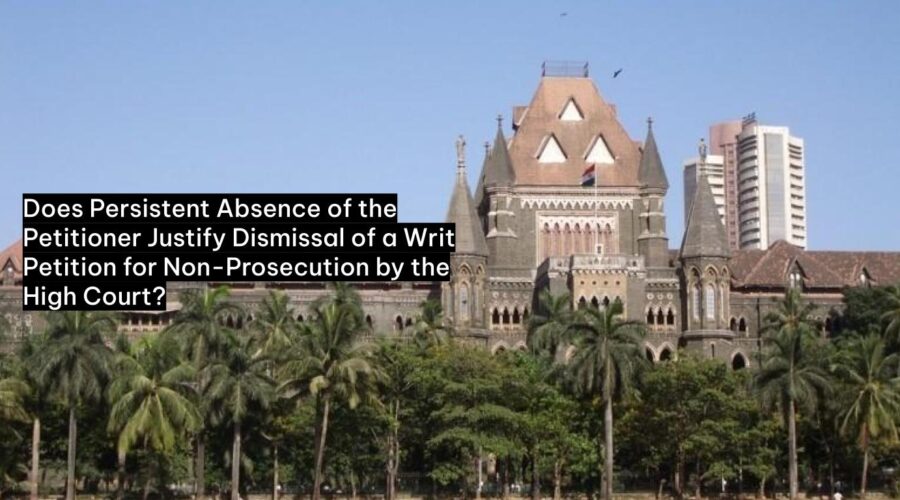
Does Persistent Absence of the Petitioner Justify Dismissal of a Writ Petition for Non-Prosecution by the High Court?

Consistent non-appearance of the petitioner, even after admission and service of notice, entitles the High Court to dismiss the writ petition for non-prosecution. Judgment affirms established procedure on dismissal for default in the Bombay High Court, providing binding authority for subordinate courts and future writ matters.   Summary Category Data Case Name WP/243/2013 of TRUPTI […]

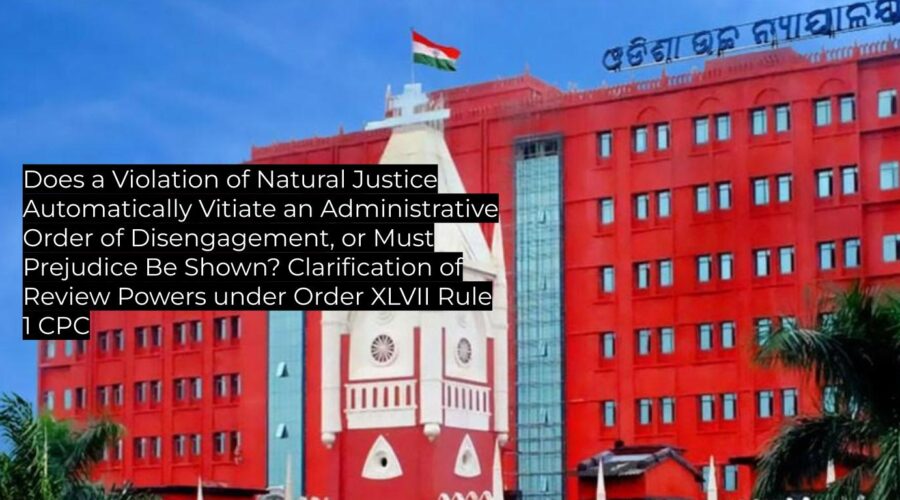
Does a Violation of Natural Justice Automatically Vitiate an Administrative Order of Disengagement, or Must Prejudice Be Shown? Clarification of Review Powers under Order XLVII Rule 1 CPC

The Orissa High Court holds that, where a breach of audi alteram partem is alleged, the test of prejudice remains paramount—review may be granted where a vital jurisdictional fact is overlooked by the original judgment. Judgment clarifies the circumstances in which the “useless formality theory” does not apply; reaffirms review powers under Order XLVII Rule […]

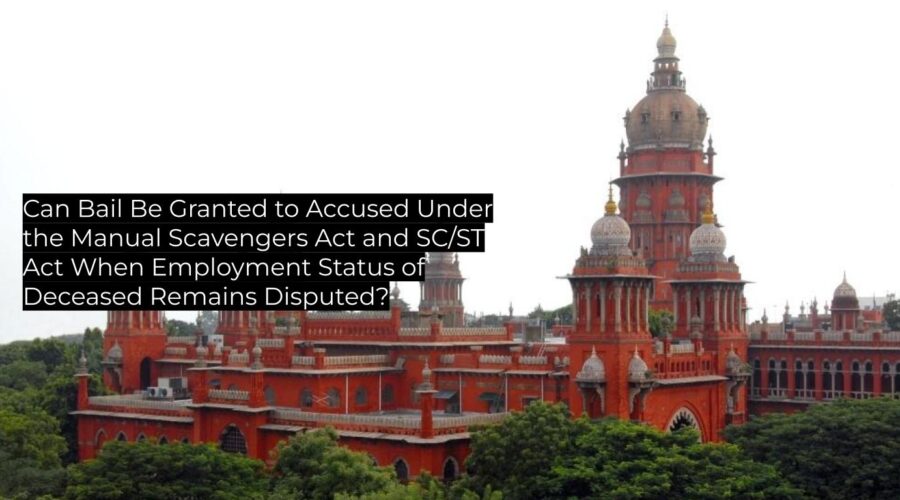
Can Bail Be Granted to Accused Under the Manual Scavengers Act and SC/ST Act When Employment Status of Deceased Remains Disputed?

The Madras High Court held that bail may be granted in cases involving multiple statutory offences—including under the Prohibition of Employment as Manual Scavengers and Their Rehabilitation Act and the SC/ST (Prevention of Atrocities) Act—where the employment status of the deceased is disputed, the accused has no bad antecedents, and further investigation is warranted. The […]

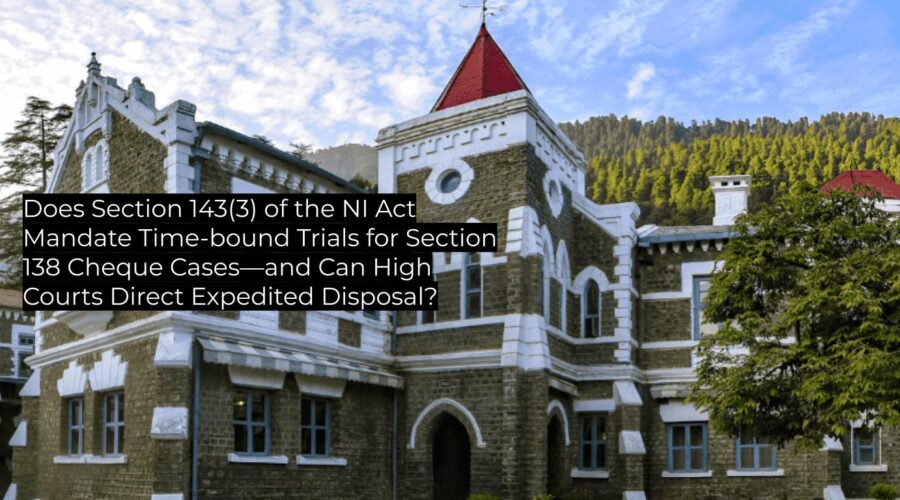
Does Section 143(3) of the NI Act Mandate Time-bound Trials for Section 138 Cheque Cases—and Can High Courts Direct Expedited Disposal?

The Uttarakhand High Court has reaffirmed the legislative mandate of Section 143(3) of the Negotiable Instruments Act, requiring expeditious trial in cheque bounce cases under Section 138, and directed subordinate courts to conclude long-pending matters within a prescribed outer limit. This order upholds statutory precedent, reinforces speedy justice in commercial disputes, and is binding on […]

Does Section 143(3) of the Negotiable Instruments Act Mandate Expedient Trials in Cheque Dishonour Cases, and Can High Courts Direct Subordinate Courts to Time-Bound Disposal?

The Uttarakhand High Court reaffirms the statutory mandate of Section 143(3) of the N.I. Act requiring prompt disposal of cheque dishonour cases and exercises its supervisory jurisdiction to order all subordinate courts concerned to conclude long-pending Section 138 cases within one year, reinforcing binding authority on timelines for such matters.   Summary Category Data Case […]