What Is the Effect of Dismissal of Second Appeal for Default Under Section 100 CPC? Does Such an Order Have Precedential Value?

When a second appeal is dismissed for default due to non-appearance of parties, the High Court does not adjudicate the merits or address substantive legal issues. Such dismissal does not create binding precedent and has no precedential value for future cases. The order merely disposes of the individual appeal as per procedure.   Summary Category […]
Can the Nature of Offence Alone Be the Sole Ground to Deny Parole to Convicts Under the POCSO Act? High Court Clarifies Principles and Reaffirms Humanistic Approach

The Himachal Pradesh High Court, reaffirming the Supreme Court’s position, holds that the mere fact of conviction for a serious offence—by itself—cannot automatically justify denial of parole; decision must instead consider reformation prospects, conduct, and objective risk factors. This judgment upholds prevailing law, provides binding authority within Himachal Pradesh, and is highly relevant for criminal […]

Can a Sub-Registrar Lawfully Refuse to Receive Property Deeds for Registration Based on Anticipated Future Land Use or Executive Instructions? – Orissa High Court Upholds Statutory Rights and Clarifies Limits

The Orissa High Court reaffirms that Sub-Registrars have a statutory obligation under the Registration Act, 1908 to receive documents presented for registration and cannot refuse to do so orally or based on executive instructions, circulars, or presumptions about future intended uses of the property. This binding authority clarifies and upholds the legal position, ensuring stronger […]

Clarifies and Upholds Limited Scope of Judicial Review; Reinforces Precedent on High Court Non-Interference under Articles 226/227

The Orissa High Court reaffirms that High Court jurisdiction under Articles 226/227 does not extend to re-appreciation of statutory eviction or cancellation orders regarding public premises unless there is demonstrable illegality, manifest perversity, or denial of natural justice. This judgment meticulously follows Supreme Court authority (Municipal Council, Neemuch v. Mahadeo Real Estate; Kamla Nehru Memorial […]

Does an Appellate Court Enhance Compensation for Railway Accident Victims?

The Orissa High Court clarified and upheld the principles for awarding compensation to railway accident claimants, directing an enhanced compensation with specified interest. This judgment affirms existing legal standards on compensation under the Railways Act and serves as a binding precedent for subordinate courts addressing similar railway claim matters.   Summary Category Data Case Name […]

Can Courts Interfere in Commercial Decisions of Autonomous Cooperative Societies? Reaffirming Limits on Judicial Review in Writ Petitions

Where a cooperative society autonomously resolves to undertake commercial development (e.g., demolition and construction of shops), courts will not interfere through writ jurisdiction in the absence of illegality or public interest violation. The judgment affirms existing precedent, narrows judicial intervention to cases involving statutory breach or public harm, and is binding authority within Uttarakhand.   […]

Can Parole Be Denied Solely on Pending Criminal Cases? Himachal Pradesh High Court Reaffirms Limits on Parole Rejection Under Article 226

Parole cannot be denied only on the ground of pending criminal cases unless supported by reasonable, specific grounds; mere registration of other FIRs or unfounded apprehensions do not automatically justify rejection. The judgment upholds binding Supreme Court precedent and clarifies procedural fairness, and serves as binding authority for subordinate courts in Himachal Pradesh and persuasive […]

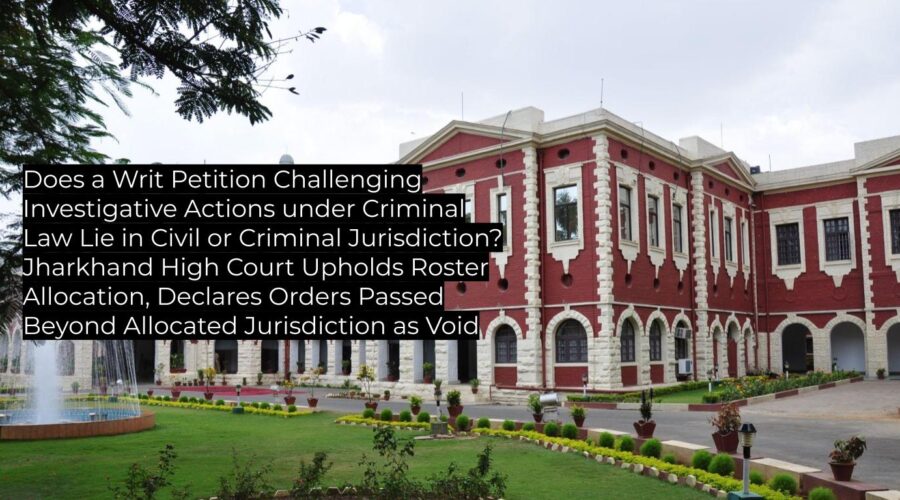
Does a Writ Petition Challenging Investigative Actions under Criminal Law Lie in Civil or Criminal Jurisdiction? Jharkhand High Court Upholds Roster Allocation, Declares Orders Passed Beyond Allocated Jurisdiction as Void

The High Court of Jharkhand clarifies that writ petitions arising from or relating to investigative actions under criminal statutes, such as search and seizure or sealing of property, are maintainable only as Criminal Writ Petitions. The judgment affirms that Chief Justice’s roster allocation is binding, and any adjudication by a Bench acting beyond its assigned […]

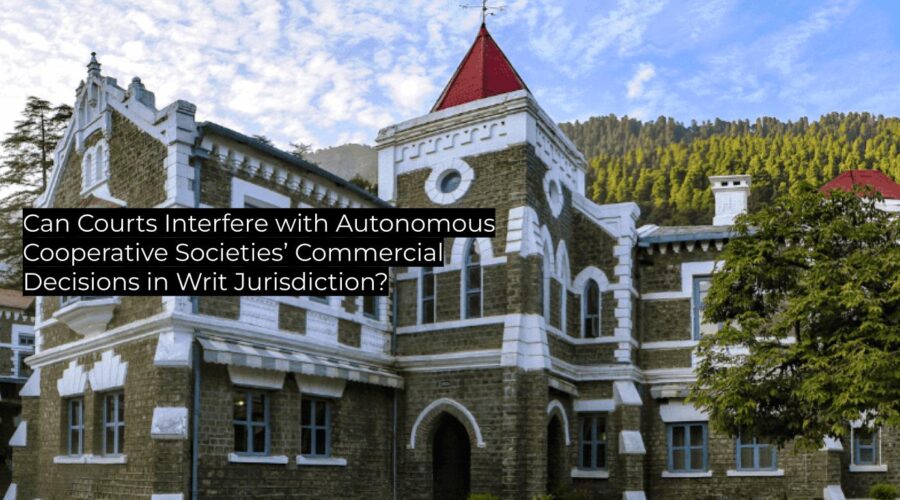
Can Courts Interfere with Autonomous Cooperative Societies’ Commercial Decisions in Writ Jurisdiction?

The High Court of Uttarakhand reaffirmed the principle that commercial decisions taken by autonomous cooperative societies, such as redevelopment and income augmentation projects, are not subject to judicial interference in writ jurisdiction unless clear public interest violations are shown. This judgment maintains settled precedent, clarifies lack of locus for individual members absent public interest, and […]

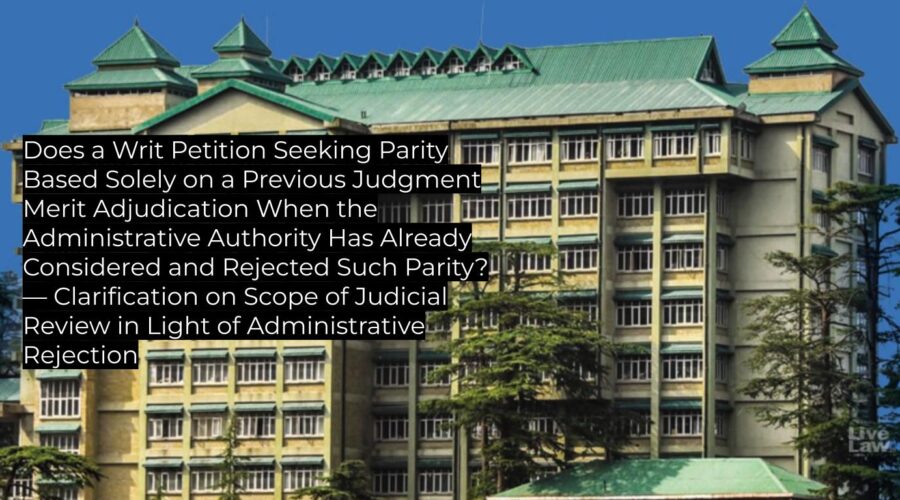
Does a Writ Petition Seeking Parity Based Solely on a Previous Judgment Merit Adjudication When the Administrative Authority Has Already Considered and Rejected Such Parity? — Clarification on Scope of Judicial Review in Light of Administrative Rejection

The court clarified that when an administrative authority considers a petitioner’s claim in light of a cited precedent and rejects it through a reasoned order, a writ petition seeking similar relief is rendered infructuous, subject to the petitioner’s right to challenge that specific order. The judgment upholds existing precedent and reiterates established administrative law principles, […]

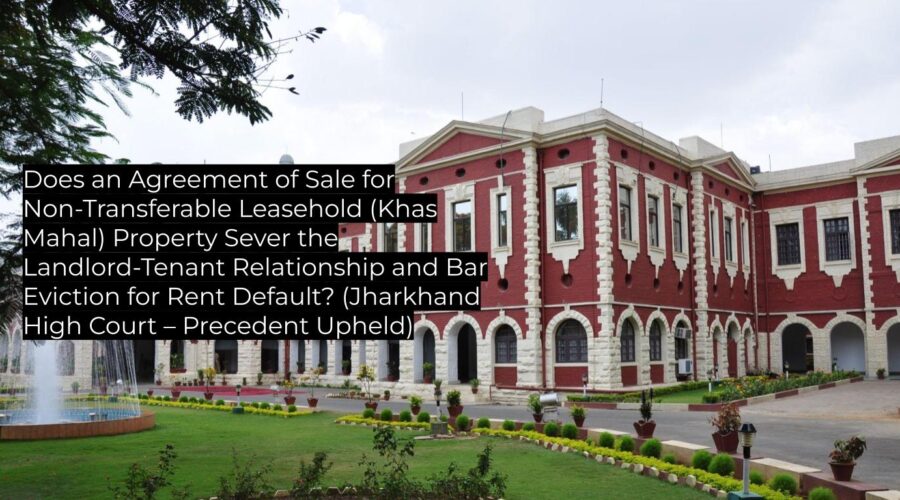
Does an Agreement of Sale for Non-Transferable Leasehold (Khas Mahal) Property Sever the Landlord-Tenant Relationship and Bar Eviction for Rent Default? (Jharkhand High Court – Precedent Upheld)

Clarifies that an agreement of sale, when void ab initio for government leasehold (Khas Mahal) property, does not extinguish the landlord-tenant relationship; eviction and arrears of rent can be decreed on default. Upholds existing Supreme Court and statutory interpretations that, in rent control proceedings, landlord’s title is not examined beyond the landlord-tenant nexus. Binding precedent […]

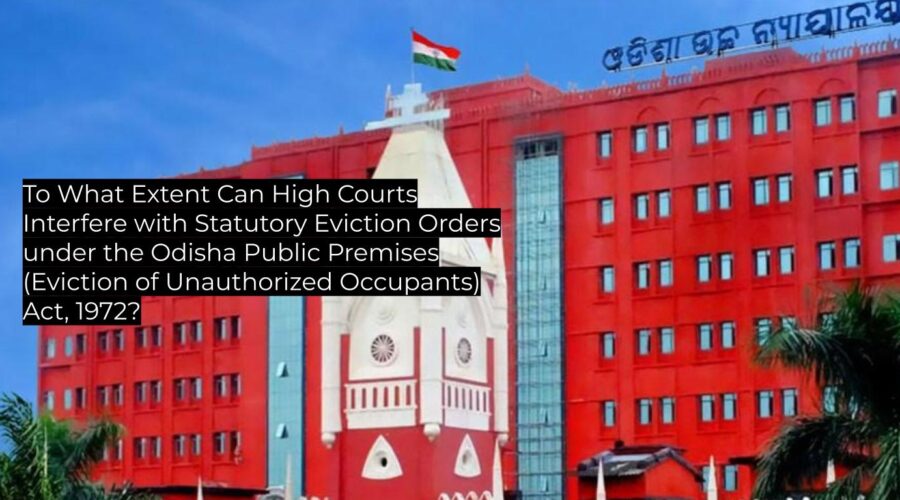
To What Extent Can High Courts Interfere with Statutory Eviction Orders under the Odisha Public Premises (Eviction of Unauthorized Occupants) Act, 1972?

The Orissa High Court reaffirmed that writ intervention against eviction from public premises under the OPP(EUO) Act, 1972 is permissible only in cases of manifest illegality, jurisdictional error, or breach of natural justice, not on the merits of allottee grievances. The decision upholds and applies Supreme Court precedent, offering binding guidance for industrial allotment disputes […]