To What Extent Can Acquittal Be Granted in a Conspiracy-Cum-Corruption Case Involving Departmental Deviations — Clarification on the Standard of Proof and Procedural Violations

The Madras High Court, in a detailed appellate judgment, has reaffirmed that acquittal must be granted to accused when the prosecution fails to produce concrete evidence of conspiracy, pecuniary gain, or procedural rule violations, and the benefit of doubt is available. The judgment follows and clarifies existing precedent regarding acquittal standards under Indian criminal law, […]
Can Administrative Authorities Refuse Employee Transfer Solely Due to Non-Availability of a Reliever? High Court Reaffirms Limits on Discretion in Government Service Transfers

The Uttarakhand High Court has clarified that rejection of a transfer request cannot be based solely on the absence of a reliever; competent authorities must proactively ensure relief arrangements, especially where the employee has served for an extended period. The decision upholds established precedent and serves as binding authority within Uttarakhand, providing guidance for service […]

Can Evidence of Age in Motor Accident Claims Prefer Post-Mortem Reports over Family Registers and Aadhaar? – Precedent Reaffirmed by Uttarakhand High Court

Affirming settled law, the Uttarakhand High Court holds that in motor accident claims, the age of the deceased assessed in post-mortem reports may be given preference over family register or Aadhaar entries, especially when authenticity of the latter is unproven. The Court clarifies that deduction towards personal expenses must consider actual dependency, reaffirming Supreme Court […]

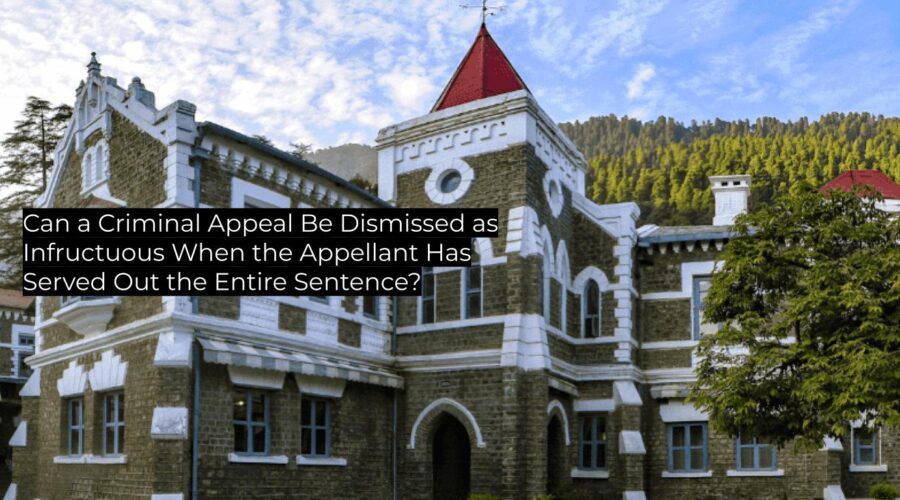
Can a Criminal Appeal Be Dismissed as Infructuous When the Appellant Has Served Out the Entire Sentence?

The Court held that where an appellant has served the full sentence and is not represented, the criminal appeal may be dismissed as infructuous. This judgment upholds and applies existing procedural precedent, specifically within the administration of criminal appeals under the U.P. Gangsters and Anti-Social Activities (Prevention) Act, and has a binding effect within the […]

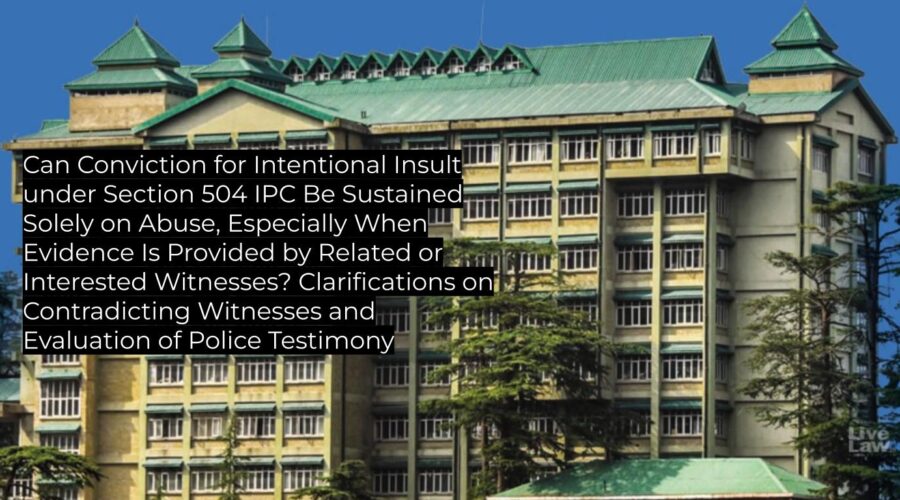
Can Conviction for Intentional Insult under Section 504 IPC Be Sustained Solely on Abuse, Especially When Evidence Is Provided by Related or Interested Witnesses? Clarifications on Contradicting Witnesses and Evaluation of Police Testimony

The Himachal Pradesh High Court has reaffirmed that mere use of abusive language does not meet the threshold for conviction under Section 504 IPC unless it is shown to intentionally provoke breach of peace, following the latest Supreme Court jurisprudence. The court has clarified the evidentiary standard for contradicting witnesses and reiterated the reliability of […]

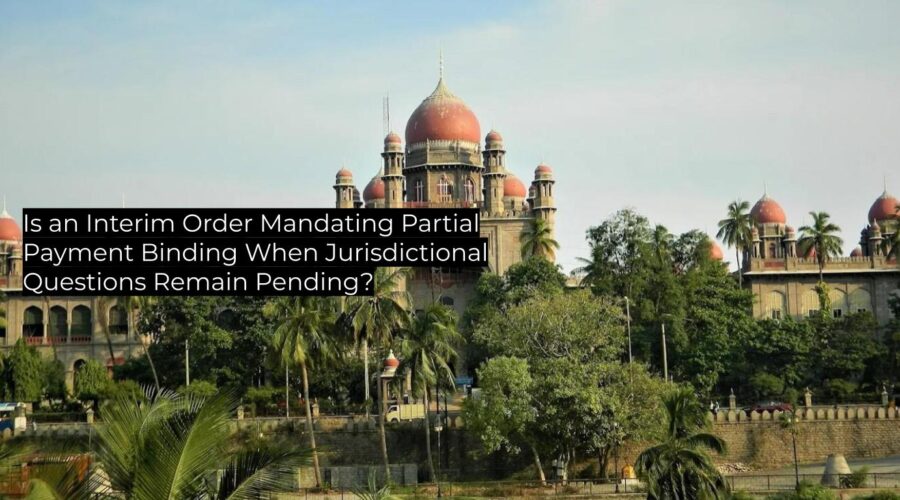
Is an Interim Order Mandating Partial Payment Binding When Jurisdictional Questions Remain Pending?

The High Court declined to interfere with a Single Judge’s interim order requiring payment of 40% of a disputed surcharge, clarifying that appellate review over such interim orders is limited, especially where core jurisdictional questions remain pending before the Single Judge. The decision affirms existing precedent on non-interference with interlocutory directions, holding practical binding value […]

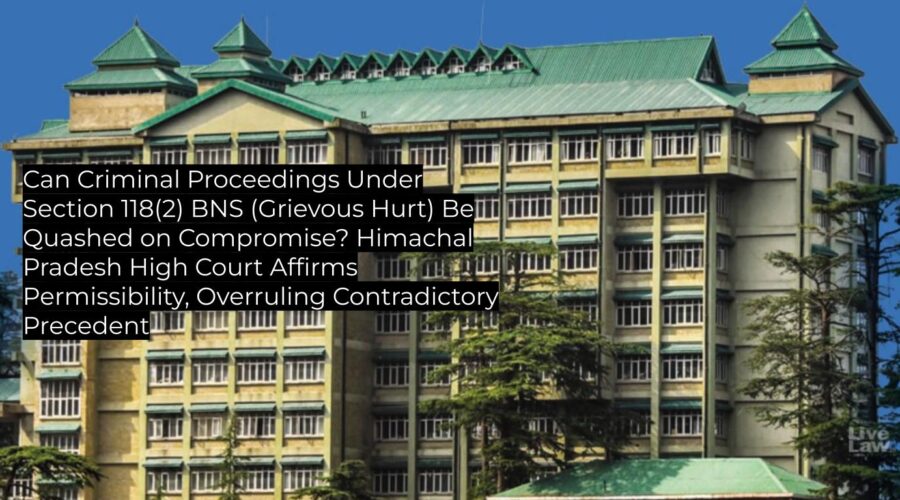
Can Criminal Proceedings Under Section 118(2) BNS (Grievous Hurt) Be Quashed on Compromise? Himachal Pradesh High Court Affirms Permissibility, Overruling Contradictory Precedent

The Himachal Pradesh High Court holds that offences corresponding to grievous hurt under Section 118(2) of the Bhartiya Nyaya Sanhita, 2023, can be quashed based on compromise between parties, reaffirming and clarifying its position in view of Supreme Court authority and Division Bench rulings. This judgment overrules prior contrary state precedent and now stands as […]

Does a “No Confidence” Motion Against Village Panchayat Sarpanch/Upsarpanch Require Rounding Up Fractional Majority to the Next Whole Number Under Section 35 of the Maharashtra Village Panchayat Act?

The Bombay High Court has affirmed that the required 3/4th majority under Section 35 of the Maharashtra Village Panchayat Act must be rounded up to the next whole number when resulting in a fractional figure. This upholds administrative rigor and is binding precedent for Maharashtra Village Panchayat proceedings.   Summary Category Data Case Name WP/4572/2024 […]

Does a District Magistrate Have the Authority to Order Externment Under the Repealed BCC Act Based Solely on Police Proposals Without Independent Judicial Application of Mind? – Existing Law Affirmed as to the Stringency of ‘Anti-Social Element’ Under Section 2(d), and Mandate for Individual Assessment

Patna High Court underscores that externment orders under the repealed Bihar Control of Crimes Act, 1981 (BCC Act) cannot be justified by mere police proposals or conjectural fears of law and order issues; emphasises the necessity for the District Magistrate to independently determine whether the accused fits the statutory definition of ‘anti-social element’ and ‘habitual […]

Can Military Service Rendered Without Receipt of Retiral Benefits Be Counted as Qualifying Service for Pension under Rule 19 of CCS (Pension) Rules, 1972? (Principle Reaffirmed and Clarified by the Himachal Pradesh High Court — Binding Authority)

The Court reaffirmed that only ex-servicemen who have received military pension, gratuity, or other retiral benefits can count prior military service as qualifying service for civil pension under Rule 19 of the Central Civil Services (Pension) Rules, 1972, upon re-employment; this principle is binding on all subordinate courts and clarifies the distinction from benefit extension […]

When Can an Appeal Be Dismissed for Non-Prosecution? Clarification of High Court’s Approach and Its Precedential Utility

The High Court reaffirms the principle that persistent failure to prosecute an appeal, despite repeated adjournments and ample opportunities, warrants dismissal for non-prosecution. The judgment upholds existing practice and serves as binding authority on timely prosecution of appeals in motor accident claim matters.   Summary Category Data Case Name CMA(MD)/313/2013 of M/S. THE NEW INDIA […]

Does the Dismissal of an Appeal for Non-Prosecution Establish or Clarify Legal Principles on Motor Accident Claims Appeals under Section 173 of the Motor Vehicles Act?

The Madras High Court dismissed a motor accident appeal for non-prosecution alone, without entering into the merits of the case or clarifying any law. This order does not alter or affirm existing precedent and carries no precedential value on substantive legal issues—serving only as a procedural instance.   Summary Category Data Case Name CMA(MD)/313/2013 of […]