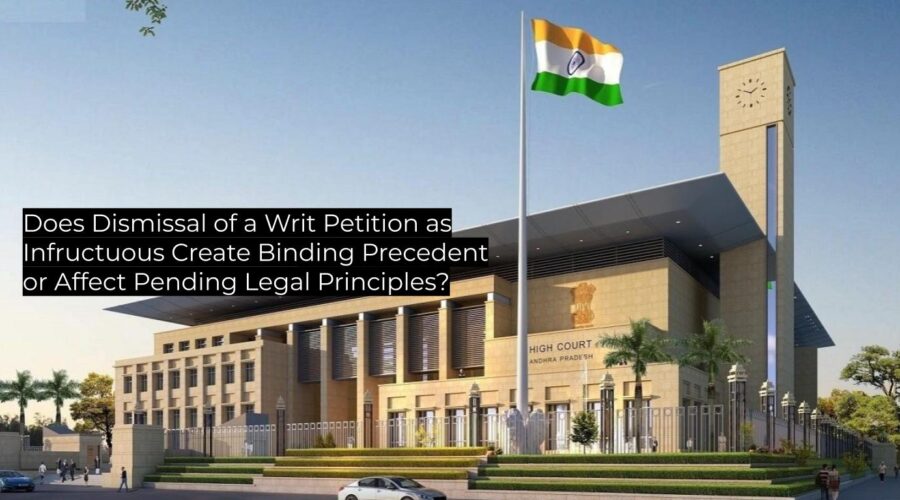
Does Dismissal of a Writ Petition as Infructuous Create Binding Precedent or Affect Pending Legal Principles?

A writ petition dismissed as infructuous by the Andhra Pradesh High Court, without entering into the merits or issues of law, does not operate as binding precedent nor clarify, overrule, or affirm any substantial legal principle; its precedential value is minimal for future advocacy.   Summary Category Data Case Name WP/12010/2019 of Shaik Hussain Bee, […]
Can a Railway Employee Withdraw a Notice of Voluntary Retirement Before Its Effective Date Under Rule 67 of the Railway Services (Pension) Rules, 1993—Even After Acceptance by the Authority? (Law Upheld; Binding Authority)

The High Court of Chhattisgarh reaffirms that, under Rule 67 of the Railway Services (Pension) Rules, 1993, a notice of voluntary retirement can be withdrawn at any time before it becomes effective, notwithstanding prior acceptance by the competent authority, unless retirement has actually taken effect. This decision follows and applies settled Supreme Court precedent, confirming […]

Does Closure of an Industrial Undertaking Entitle Retrenched Workers to Reinstatement in Other Units? Scope of Section 25FFF Clarified and Limits of High Court Review Affirmed

The Andhra Pradesh High Court reiterates that closure of a unit for bona fide reasons, compliant with Section 25FFF of the Industrial Disputes Act, only mandates compensation—not reinstatement or absorption in other units. The judgment firmly affirms established Supreme Court precedent and clarifies that writ jurisdiction under Article 226 does not extend to re-appreciation of […]

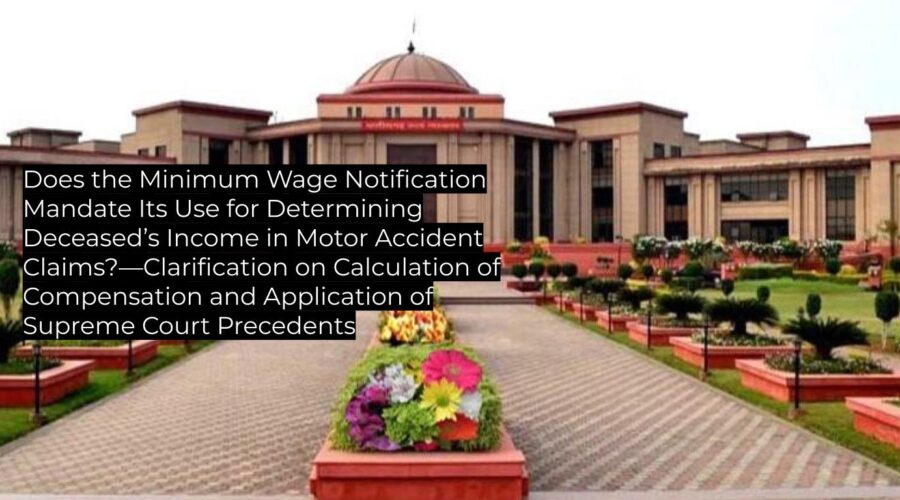
Does the Minimum Wage Notification Mandate Its Use for Determining Deceased’s Income in Motor Accident Claims?—Clarification on Calculation of Compensation and Application of Supreme Court Precedents

The Chhattisgarh High Court clarifies that, where documentary proof is absent, the statutory minimum wage notification must guide income assessment of deceased victims in motor accident claims. The judgment affirms and applies Supreme Court decisions (Pranay Sethi, Sarla Verma, Magma General Insurance), establishing practical precedent for enhanced compensation calculation across tribunals.   Summary Category Data […]

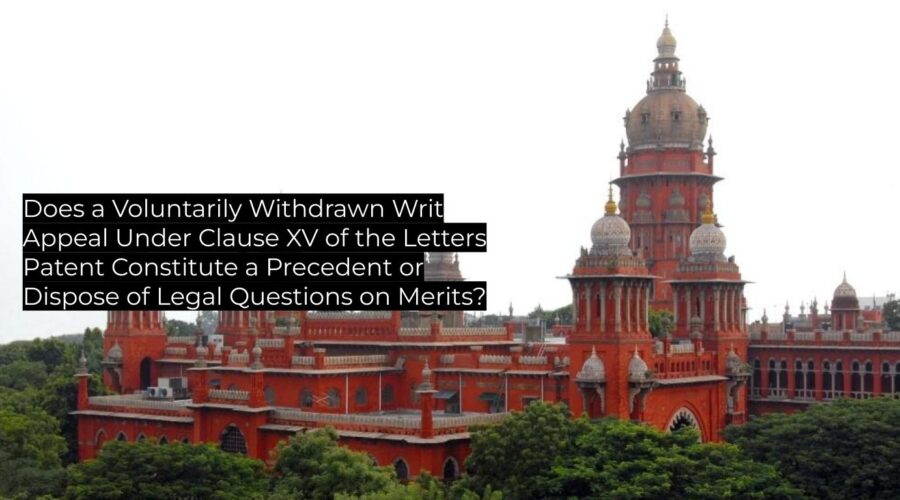
Does a Voluntarily Withdrawn Writ Appeal Under Clause XV of the Letters Patent Constitute a Precedent or Dispose of Legal Questions on Merits?

A writ appeal filed before the Madras High Court was dismissed as withdrawn on the basis of a request from the appellants; the Court did not adjudicate on the merits of the legal issues raised. The decision does not operate as precedent and does not disturb or affirm any settled principles of law within the […]

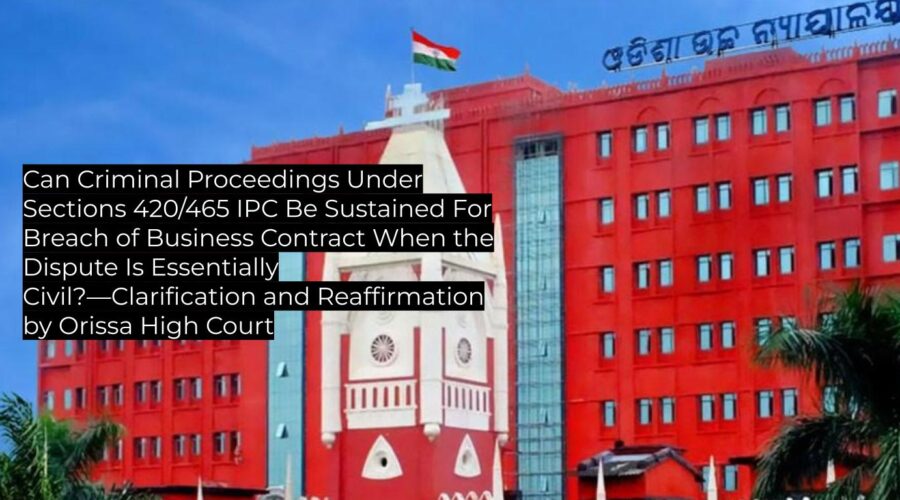
Can Criminal Proceedings Under Sections 420/465 IPC Be Sustained For Breach of Business Contract When the Dispute Is Essentially Civil?—Clarification and Reaffirmation by Orissa High Court

The Orissa High Court has reaffirmed that a mere breach of contractual obligations in a business transaction, without evidence of fraudulent or dishonest intent at inception, does not attract criminal liability under Sections 420 or 465 IPC. This judgment upholds established Supreme Court precedent, emphasizing that civil disputes should not be given a criminal colour, […]

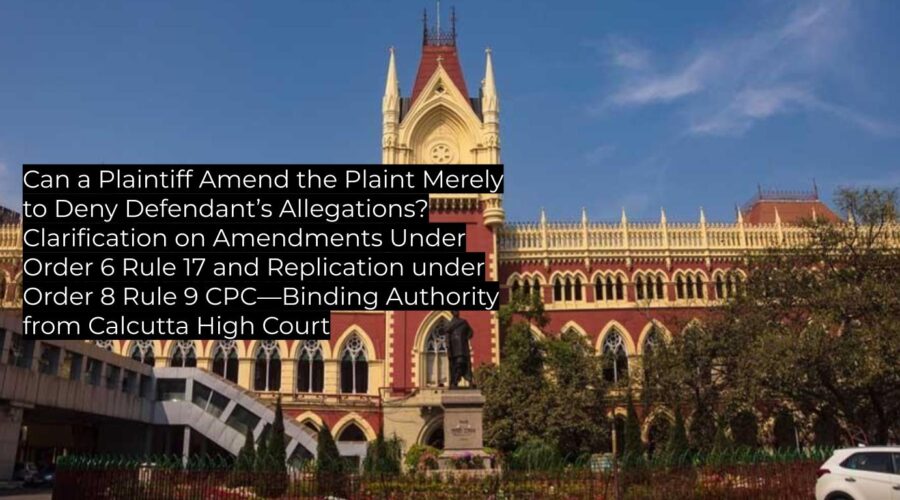
Can a Plaintiff Amend the Plaint Merely to Deny Defendant’s Allegations? Clarification on Amendments Under Order 6 Rule 17 and Replication under Order 8 Rule 9 CPC—Binding Authority from Calcutta High Court

The Calcutta High Court has categorically held that plaintiffs cannot amend their plaint solely to deny allegations in the written statement, reaffirming that such denials are presumed and need not be specifically pleaded. The judgment upholds settled precedent, clarifies the permissible scope of amendments and replications, and serves as binding authority for all subordinate courts […]

Is an Executing Court Justified in Granting Police Help for Delivery of Possession When No Stay Operates on an Ex Parte Decree?

Calcutta High Court upholds that in the absence of an order staying execution, the executing court is empowered to proceed—including use of police help under Rule 208 of the Civil Rules and Orders—for effective delivery of possession pursuant to a decree. This judgment affirms existing precedent, reinforcing expeditious enforcement of decrees where no judicial stay […]

Is a Retired Employee Entitled to Interest on Delayed Provident Fund Payment by a Government Company? Calcutta High Court Reaffirms Legal Right to Interest Through Writ Jurisdiction

The Calcutta High Court, in exercise of its writ jurisdiction, has reaffirmed the legal entitlement of a retired employee to interest on delayed payment of provident fund by a government company, specifying the applicable interest rates and the consequences of further delay. This judgment upholds existing legal principles and serves as binding precedent within West […]

Does Delay in Payment of Provident Fund Entitle Superannuated Employees to Statutory Interest? Calcutta High Court Affirms Right to Interest on Delayed Terminal Benefits—Binding Authority for West Bengal Service Matters

The Calcutta High Court has held that superannuated employees are entitled to interest at 6% per annum from the date of retirement to the date of actual payment for delayed provident fund disbursement by state authorities, with an increased penal rate for further default. This affirms the consistent principle of compensatory interest in service jurisprudence […]

Can Proceedings Against In-Laws Under Section 498A IPC Be Quashed for Vague, General Allegations? Clarification and Reaffirmation of Supreme Court Precedents on Abuse of Process – Binding Authority from Calcutta High Court

The Calcutta High Court, applying Supreme Court guidance, reaffirmed that criminal prosecution of in-laws in matrimonial cruelty cases must not proceed where allegations are omnibus, unspecific, and unsupported by material evidence. The Court quashed proceedings as an abuse of process where such general allegations were made, while allowing trial against the husband where specific charges […]

Can Administrative Authorities Deviate from Seniority-Based Promotion in District Judiciary Without Statutory Rules? – Calcutta High Court Reaffirms High Court’s Power and Upholds Merit-Cum-Seniority

The Calcutta High Court held that, in the absence of statutory rules, promotions to posts such as District Sheristadar need not be governed solely by seniority if administrative notifications/directives mandate merit-based selection. The judgment affirms that directions issued by the High Court, even if contrary to prevailing conventions or Commission recommendations, are binding on subordinate […]