Can a High Court Grant Arrears of Secretarial Pay to Retired University Employees by Applying a Previous Judgment Mutatis Mutandis?

The High Court of Himachal Pradesh has reaffirmed that where reliefs, issues, and grievances are identical, previously adjudicated judgments must be applied mutatis mutandis to subsequent cases. The Court directed arrears of Secretariat Pay to be paid to retired university employees, following its earlier precedent. This judgment upholds and extends existing precedent, providing clear binding […]
Can A High Court Entertain a Writ Petition Against Violation of an Interim Injunction Order Passed by a Civil Trial Court?

The Calcutta High Court reiterated that where a trial court’s interim injunction subsists, aggrieved parties must seek redress before the appropriate forum rather than resorting to writ jurisdiction; the judgment upholds existing civil procedural law principles, serving as binding precedent for similar writ petitions relating to enforcement of civil court orders.   Summary Category Data […]

Does Transfer of a Minor’s Immovable Property Without Court Permission Render the Deed Void or Voidable? Calcutta High Court Upholds Existing Precedent That Such Sale Is Voidable, Not Void Ab Initio—Practical Authority for Mutation Proceedings

The Calcutta High Court has clarified that a transfer of immovable property belonging to a minor, executed by a natural guardian without prior court permission under Section 8 of the Hindu Minority and Guardianship Act, 1956, is not void ab initio but voidable at the instance of the minor. This reaffirms the limited scope of […]

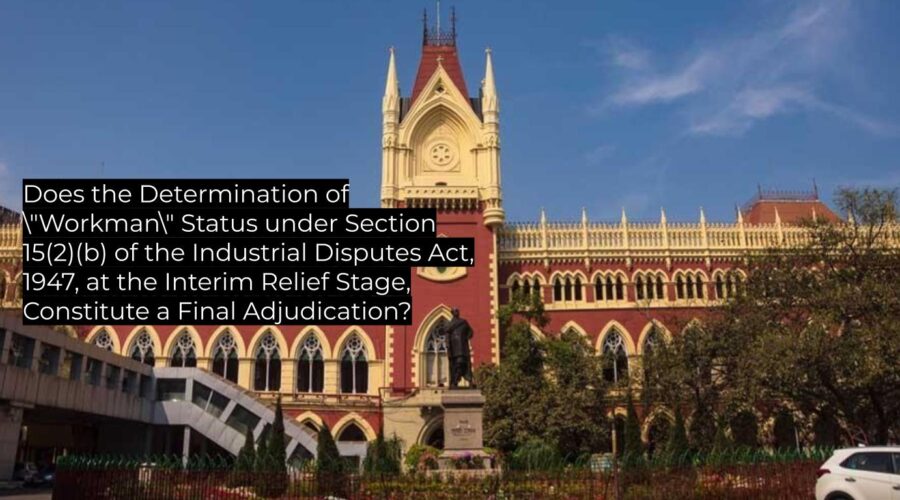
Does the Determination of “Workman” Status under Section 15(2)(b) of the Industrial Disputes Act, 1947, at the Interim Relief Stage, Constitute a Final Adjudication?

The Court has reaffirmed that the determination of “workman” status under Section 15(2)(b) of the Industrial Disputes Act, 1947, at the stage of granting interim relief by the Tribunal, is a provisional decision based on a strong prima facie case and does not amount to final adjudication of status; however, the order granting interim relief […]

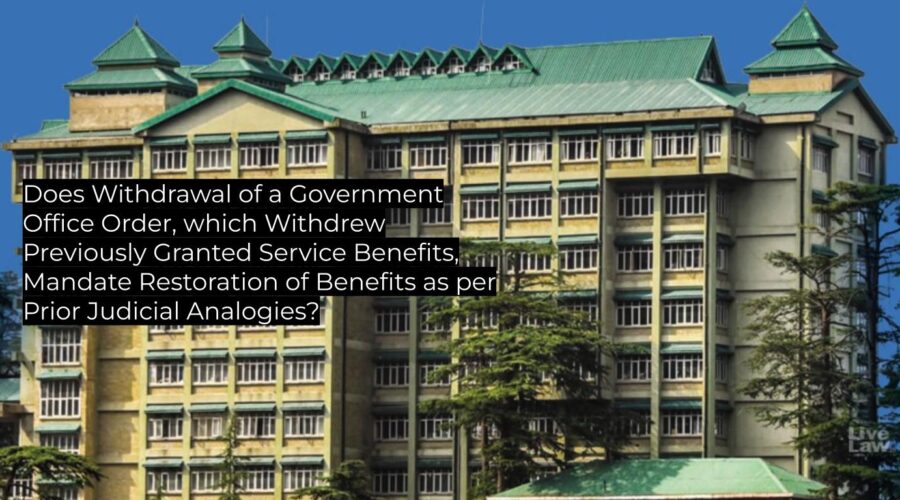
Does Withdrawal of a Government Office Order, which Withdrew Previously Granted Service Benefits, Mandate Restoration of Benefits as per Prior Judicial Analogies?

The High Court held that after the government’s withdrawal of the impugned office order that discontinued service benefits, restoration and extension of those benefits—on the same analogy as previously decided cases—must be ensured. This judgment upholds earlier precedents, confirming that such administrative withdrawals mandate compliance with court-directed analogies, and serves as binding authority for subordinate […]

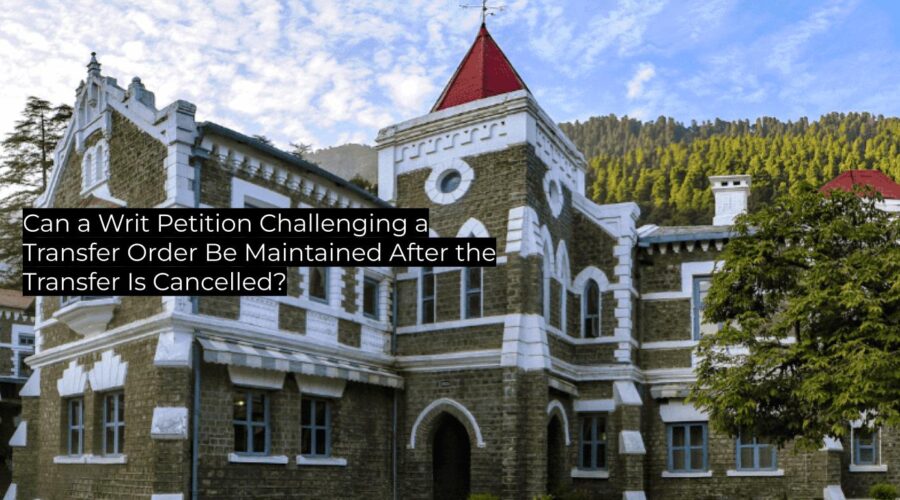
Can a Writ Petition Challenging a Transfer Order Be Maintained After the Transfer Is Cancelled?

The High Court of Uttarakhand has clarified that when a transfer order under challenge is cancelled during the pendency of the writ petition, no useful purpose would be served by continuing with the litigation, and the petition is liable to be dismissed as infructuous. This decision upholds existing precedent and is binding on subordinate courts […]

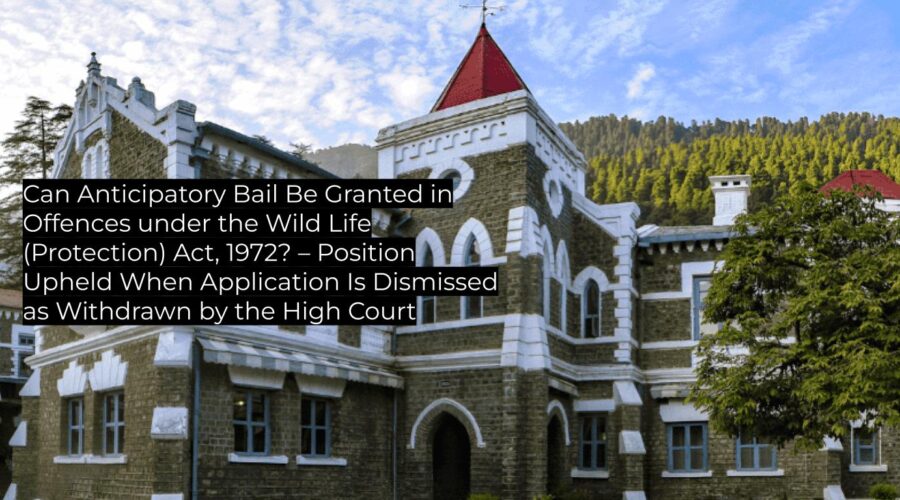
Can Anticipatory Bail Be Granted in Offences under the Wild Life (Protection) Act, 1972? – Position Upheld When Application Is Dismissed as Withdrawn by the High Court

The High Court allowed withdrawal of the anticipatory bail application filed under the Wild Life (Protection) Act, 1972, without rendering a decision on merits, thereby maintaining the legal status quo. This order affirms existing procedure and does not disturb any established precedent; its value is procedural and not binding precedent on substantive law.   Summary […]

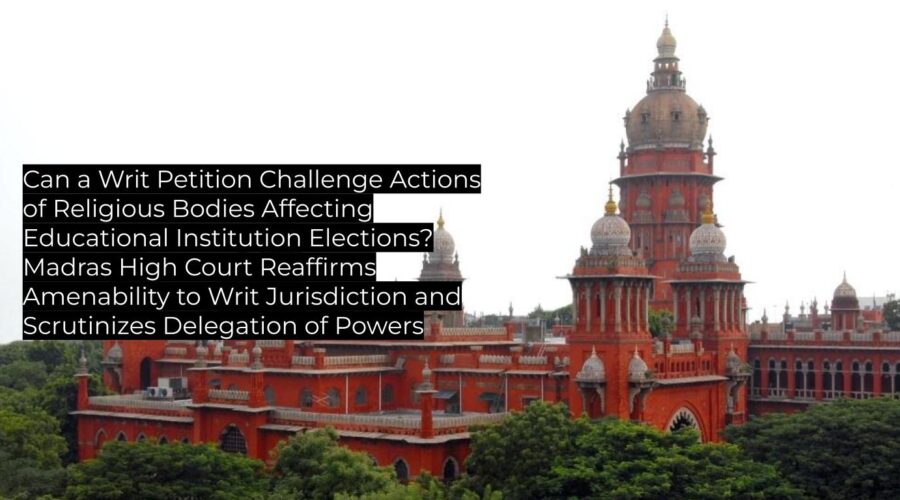
Can a Writ Petition Challenge Actions of Religious Bodies Affecting Educational Institution Elections? Madras High Court Reaffirms Amenability to Writ Jurisdiction and Scrutinizes Delegation of Powers

The Madras High Court reaffirmed that bodies running educational institutions, even if religious and unincorporated, are subject to writ jurisdiction for acts impacting public functions such as elections to their councils. The Court held that actions affecting the electoral process of such bodies can be challenged by writ, even if taken by religious authorities, especially […]

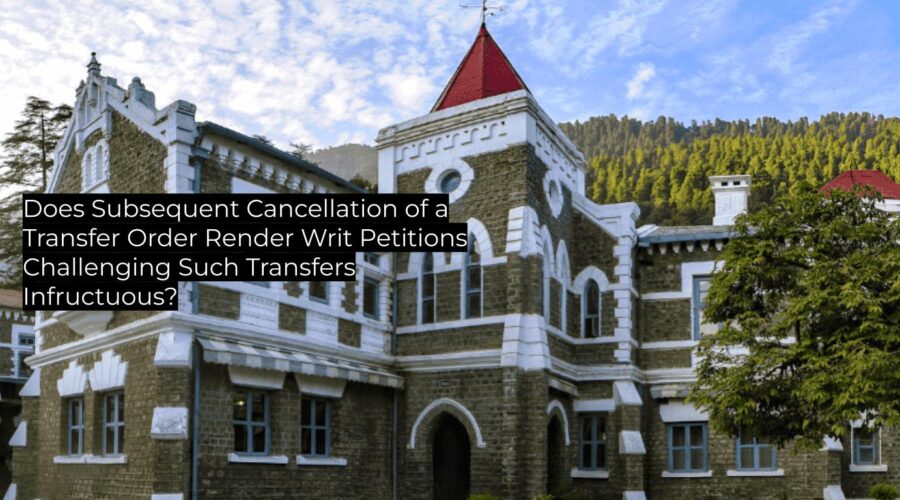
Does Subsequent Cancellation of a Transfer Order Render Writ Petitions Challenging Such Transfers Infructuous?

The Uttarakhand High Court reaffirmed that when an impugned transfer order is cancelled during the pendency of a writ petition, continuation of such litigation serves no useful purpose and must be dismissed. This decision confirms established precedent and holds binding value for similar cases in administrative and public service law contexts.   Summary Category Data […]

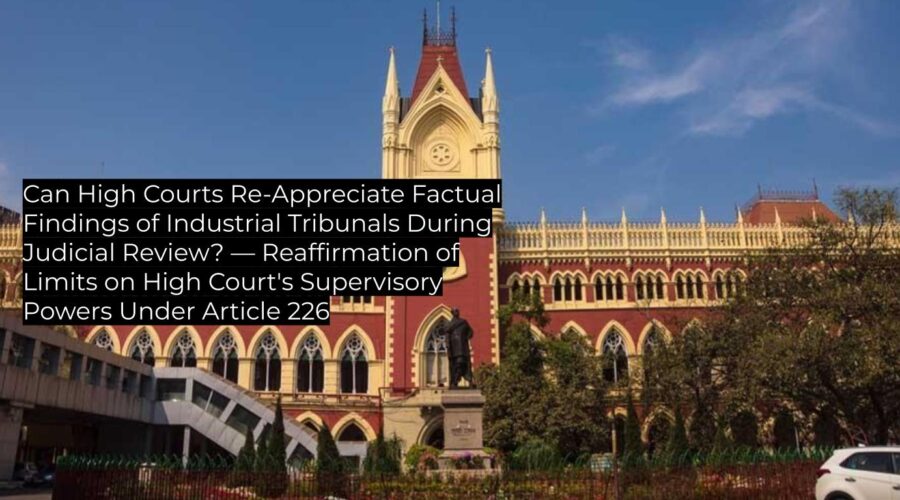
Can High Courts Re-Appreciate Factual Findings of Industrial Tribunals During Judicial Review? — Reaffirmation of Limits on High Court’s Supervisory Powers Under Article 226

Calcutta High Court reasserts that, in the context of industrial disputes, High Courts may not substitute their own factual assessments for those of tribunals unless there is manifest perversity or jurisdictional error. Upholds existing precedent on restraint in writ jurisdiction; judgment has binding authority within West Bengal and persuasive value for other jurisdictions in service […]

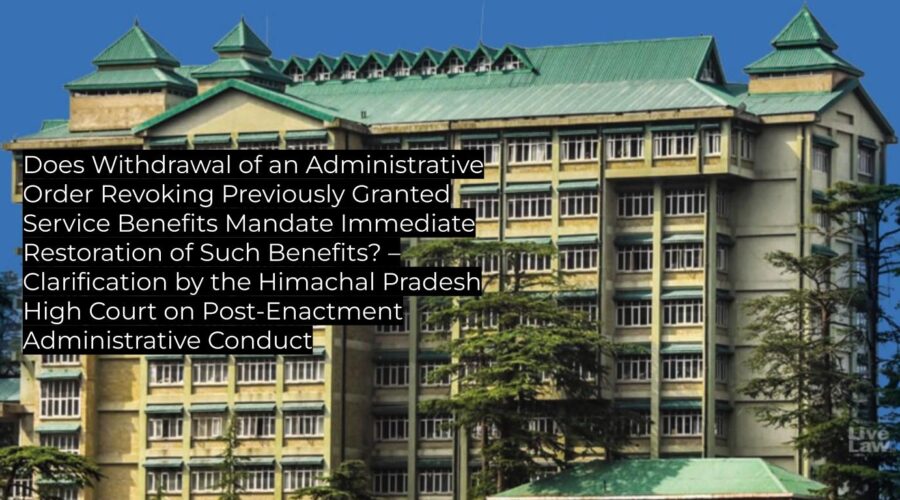
Does Withdrawal of an Administrative Order Revoking Previously Granted Service Benefits Mandate Immediate Restoration of Such Benefits? – Clarification by the Himachal Pradesh High Court on Post-Enactment Administrative Conduct

Immediate restoration of previously withdrawn service benefits is required where the impugned withdrawal order has itself been declared infructuous and withdrawn by subsequent administrative orders; Himachal Pradesh High Court upholds established precedent and directs compliance. The judgment functions as binding authority for similar service matters within the state, particularly involving government employees affected by analogous […]

Does Withdrawal of an Administrative Order Rescinding Prior Service Benefits Warrant Restoration of Benefits and Directions for Timely Compliance? Clarifies binding requirements on authorities following reversal of executive actions affecting existing service benefits—precedent for restoration and compliance orders; does not create new law, but affirms settled principles.

When an administrative order withdrawing previously granted service benefits is itself withdrawn as infructuous, the High Court holds that all such withdrawn benefits must be restored and extended to similarly situated persons in a time-bound manner, in line with earlier judicial pronouncements. This decision reiterates and applies existing precedent; it serves as binding authority for […]