Reaffirmation of Precedent: No Appeal Lies Against Such Orders; Dismissal for Non-Maintainability is Binding Authority

The Calcutta High Court has restated that an order rejecting an application under Order VII Rule 10 of the CPC is not appealable under Order XLIII or any other provision. This judgment upholds the existing legal position, reinforcing that challenges must be brought through other appropriate forums and confirms binding precedent for subordinate courts.   […]
Is an Order Rejecting an Application Under Order VII Rule 10 CPC Appealable Under the Code?

The Court clarified that an order rejecting an application under Order VII Rule 10 of the Code of Civil Procedure is not appealable, either under Order XLIII or any other provision of the CPC; thus, any challenge must be brought before the appropriate forum through the correct procedural route. This holding upholds the settled position […]

Can Co-Sharers Seek Partition of Ancestral and Self-Acquired Properties After Long Delay When Ouster Is Not Pleaded or Proved?

The Court clarified that unless ouster is specifically pleaded and proved, the mere passage of time or separate possession does not bar a co-sharer’s suit for partition. The case partially overrules the trial court’s findings, reinforcing the requirement of explicit evidence for ouster, while upholding the principle that partition deeds not executed by a party […]

Does the Dismissal of a Second Appeal Without Reasoned Order Establish Binding Precedent on Substantive Law?

A High Court Single Judge’s summary dismissal of a second appeal without discussions or findings does not create binding authority on any question of law and does not set a precedent for subordinate courts or future litigants. Affirms the limited precedential value of non-speaking dismissal orders in civil procedure appeals in Telangana.   Summary Category […]

Can Dismissal of an Appeal as Withdrawn Prejudice Merits in a Pending Writ Petition? — Clarification on the Legal Effect of Withdrawal of Appeals

The Calcutta High Court has affirmed that withdrawal and dismissal of an appeal does not operate as a decision on merits, nor does it prejudice the ongoing writ petition before the Single Judge. This judgment upholds existing precedent and clarifies the procedural consequences of dismissal as withdrawn, providing authoritative guidance to litigators on the precedential […]

When Can a High Court Review Its Second Appeal Order for Exceeding Jurisdiction Without Framing a Substantial Question of Law? (Binding Precedent – Calcutta High Court Clarifies Scope of Review in Second Appeals)

The Calcutta High Court clarified that when a second appellate court exceeds its jurisdiction by deciding a question of fact without framing a substantial question of law—as required by Section 100 CPC—such a decision qualifies as “sufficient reason” under Order 47 Rule 1 CPC for review. The judgment upholds the established principle that second appeals […]

Can State Employees Be Re-Transferred to Hard & Tribal Areas After Prior Service There? Himachal Pradesh High Court Affirms Bar on Re-Posting; Judgment as Binding Authority for Future Transfer Challenges

The court holds that, when a government servant has already served in a hard and tribal area, re-transferring them to a similar area—particularly at the fag end of their career—is impermissible in the absence of justification, and quashes such an order. This judgment upholds existing administrative norms and will serve as binding precedent within the […]

Does Absence of Reconveyance Clause in a Registered Deed Bar Interim Injunction in Loan-Collateral Disputes?

The court affirmed that where a registered deed of conveyance lacks any express condition of reconveyance on repayment, a plaintiff seeking interim injunction cannot, prima facie, assert a right to that relief, even if the underlying suit contends the transaction was a loan secured by the property. This judgment follows prevailing law, reinforcing current precedent […]

Can Visitation Rights Be Judicially Enforced When the Minor Child Expresses Reluctance to Meet the Non-Custodial Grandparent?

The Uttarakhand High Court reaffirmed that courts must not judicially enforce custody or visitation rights against the clear wishes of a minor, especially when supported by counseling reports. This judgment affirms established Supreme Court precedent, with direct implications for family courts handling guardianship and visitation disputes.   Summary Category Data Case Name AO/580/2023 of GAJENDRA […]

When Do Criminal Revision Proceedings Abate Upon the Death of the Petitioner? – Clarification of Procedural Law and Its Binding Value

The High Court reaffirmed that criminal revision proceedings abate following the petitioner’s death, resulting in dismissal on abatement grounds. This upholds settled procedure and acts as binding authority for courts and practitioners handling similar posthumous abatement issues in criminal revisions.   Summary Category Data Case Name CR.R/54/2015 of R.D SHARMA Vs SURENDER SINGH JAMWAL CNR […]

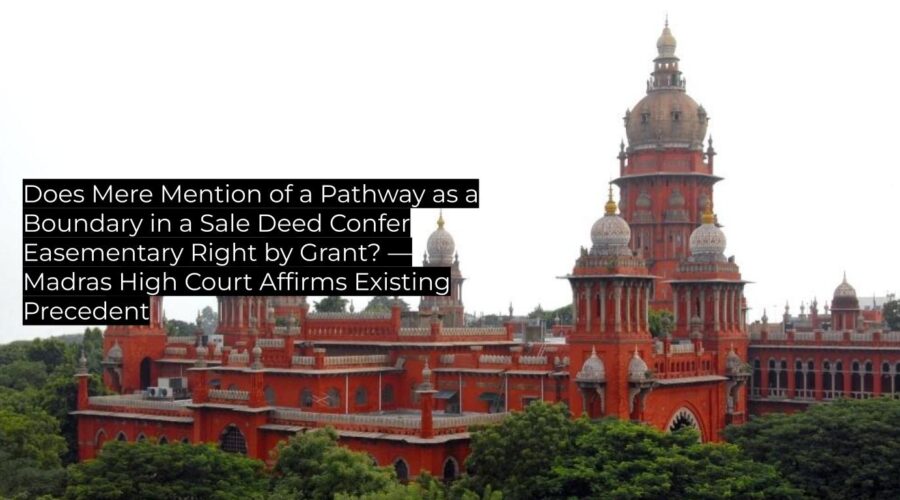
Does Mere Mention of a Pathway as a Boundary in a Sale Deed Confer Easementary Right by Grant? — Madras High Court Affirms Existing Precedent

The Madras High Court clarifies that the mere reference to a pathway (battai) as a boundary in a sale deed does not itself confer an easementary right of way by express or implied grant, especially where the property in question is not a public road or shown to be set apart as a common way. […]

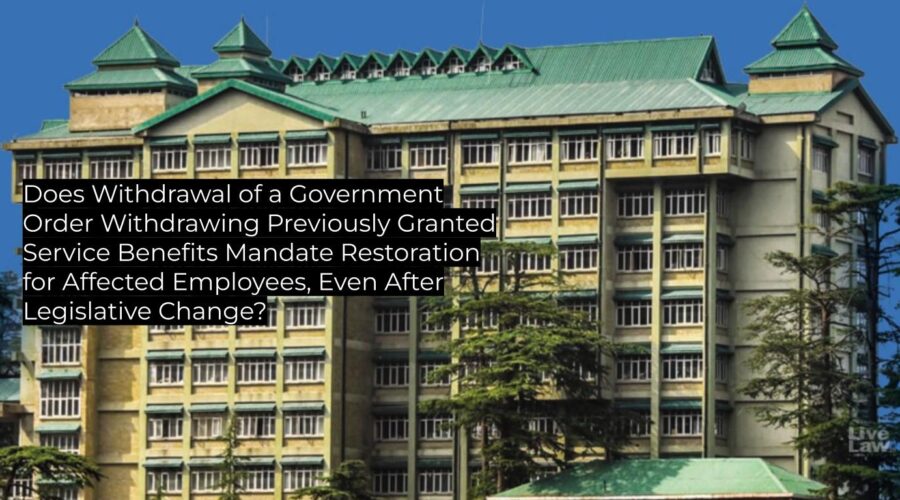
Does a Subsequent Withdrawal of Government Office Order Nullifying Reduction in Service Benefits Require Automatic Restoration of All Previously Withdrawn Benefits? — Precedent Set by the Himachal Pradesh High Court

The Himachal Pradesh High Court affirms that once an impugned office order withdrawing service benefits is withdrawn by the government through a subsequent order, all previously withdrawn benefits must be restored to affected parties in a time-bound manner. This judgment clarifies implementation obligations for the government and employees in the service law context and establishes […]