


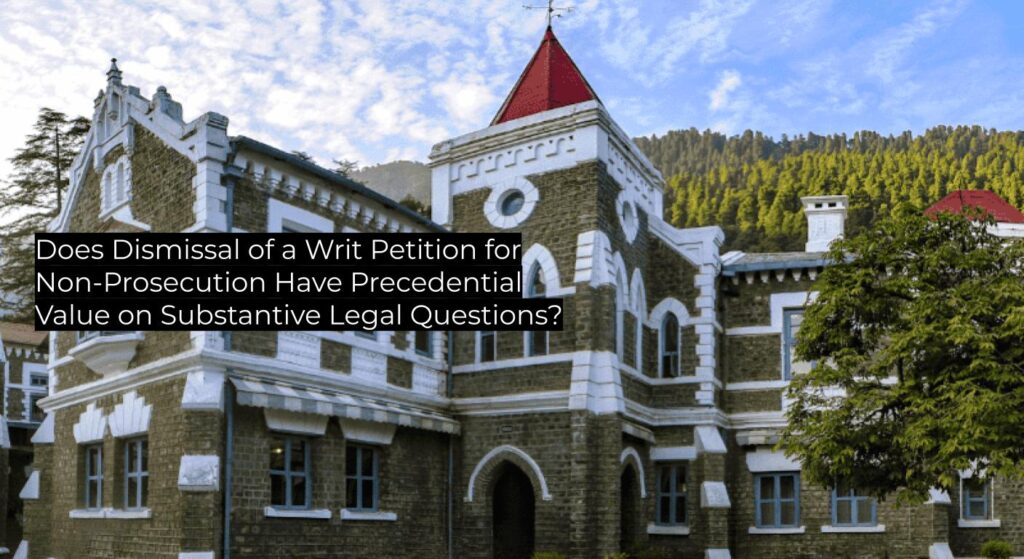
Dismissal of a writ petition by reason of non-prosecution does not constitute a pronouncement on the merits or questions of law, and thus does not create binding precedent. This judgment upholds established procedural law and clarifies that such dismissals have no substantive legal effect for future cases.
Summary
| Category | Data |
|---|---|
| Case Name | WPMS/527/2014 of KARAM SINGH Vs STATE OF UTTARAKHAND |
| CNR | UKHC010015012014 |
| Date of Registration | 11-03-2014 |
| Decision Date | 31-10-2025 |
| Disposal Nature | DISMISSED IN DEFAULT |
| Judgment Author | HON’BLE MR. JUSTICE PANKAJ PUROHIT |
| Court | High Court of Uttarakhand |
| Precedent Value | No precedent on questions of law; procedural dismissal only |
| Type of Law | Procedural; Writ Jurisdiction |
| Ratio Decidendi |
The writ petition was dismissed due to the absence of the petitioner when the matter was called for hearing. There was no appearance on behalf of the petitioner even after the matter was revised on the list. The court therefore dismissed the petition for non-prosecution, explicitly stating this as the reason. No examination of merits, facts, or legal questions occurred. The interim order, if any, was vacated as a consequence. |
| Facts as Summarised by the Court |
On the date of hearing, none appeared for the petitioner. The State was represented by counsel. The court proceeded to dismiss the writ petition for non-prosecution following a call and revision of the list. |
Practical Impact
| Category | Impact |
|---|---|
| Binding On | Procedural only; does not bind subordinate courts or have substantive legal effect |
| Persuasive For | Not persuasive authority on merits or points of law |
What’s New / What Lawyers Should Note
- The judgment reiterates that dismissal of a writ petition for non-prosecution does not amount to a decision on the merits and cannot be cited as precedent on questions of law.
- Any interim orders passed during the pendency of the petition are vacated by such a dismissal.
- Lawyers must ensure diligent appearance and prosecution to avoid dismissal in default and consequent loss of interim protection.
Summary of Legal Reasoning
- The court noted the absence of the petitioner or counsel when the matter was called and again after the list was revised.
- The presence of State counsel was recorded, yet the absence of representation for the petitioner led to dismissal for non-prosecution.
- The court did not address or make any findings on questions of law, facts, or merits of the petition.
- The procedural order included the vacation of any interim orders passed earlier in the matter.
Arguments by the Parties
Petitioner
- No arguments recorded, as no one appeared for the petitioner at the hearing.
Respondent (State)
- Representation by learned Standing Counsel, Mr. S.K. Nailwal, was recorded, but no substantive arguments are noted in the judgment.
Factual Background
- The writ petition was listed before the High Court of Uttarakhand.
- On the date of hearing, neither the petitioner nor any counsel appeared to prosecute the case.
- The State of Uttarakhand was represented by its standing counsel.
- After the case was called and the list revised, the court dismissed the writ petition due to non-prosecution and vacated any interim order.
Statutory Analysis
- The judgment is based purely on procedural action (dismissal for non-prosecution).
- No statutory provisions or substantive law were interpreted or analyzed in the order.
Dissenting / Concurring Opinion Summary
- None; the decision was rendered by a single judge (HON’BLE MR. JUSTICE PANKAJ PUROHIT) with no dissenting or concurring opinion presented.
Procedural Innovations
- None indicated in the judgment; dismissal followed standard procedure for non-appearance.
Alert Indicators
- ✔ Precedent Followed – The judgment applies established procedural law regarding dismissals for default; no change or conflict with prior rulings.